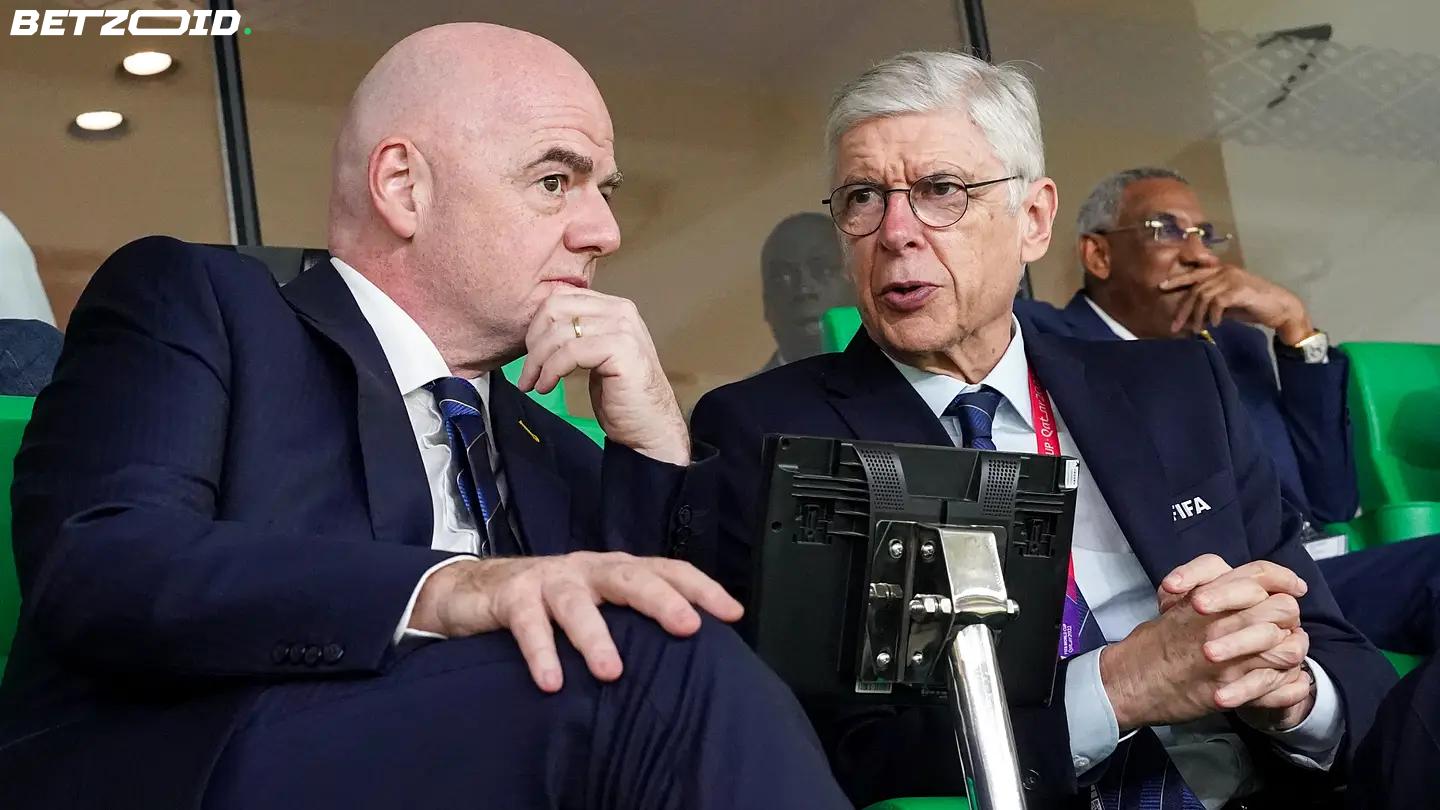
"I was not involved in this strategic plan and first became aware of the project through media reports." That's Arsène Wenger, current FIFA Chief of Global Football Development, finally going on record about Gianni Infantino's collapsed scheme to sell off a 20% stake in the World Cup to private investors.
It took him a week to say it. That gap matters.
The privatization plan — effectively treating the sport's flagship tournament as a commercial asset to be parcelled out to private capital — was dead on arrival. UEFA called it "selling the soul" of soccer. National associations across multiple confederations expressed fury not just at the proposal itself, but at the process: almost every member claimed they heard about it through journalists, not FIFA's own channels. The scheme was formally withdrawn after exclusives from The Times and the Financial Times forced a hastily drafted press release.
Why the One-Week Delay?
Wenger offered no explanation for waiting seven days before issuing his statement. He simply said "recent events at FIFA deserve some clarity from my side." But the timeline is telling.
On Monday, Wenger was among the recipients of a written legal warning from UEFA, which stated it is "actively considering legal action, arbitration, and/or regulatory complaints." His public clarification landed the following day. Draw your own conclusions.
The English press had already started asking uncomfortable questions about why a man widely associated with principles of sporting integrity hadn't yet condemned a plan so clearly at odds with those principles. The legal warning may have focused the mind.
What Wenger Actually Does at FIFA
Hired by Infantino in 2019, Wenger moved quickly this week to draw a clear line between his role and any governance overreach. "At FIFA, I am the Chief of Global Football Development," he said, outlining a remit that covers data analysis, online coaching resources, and youth academies across 60 countries.
That work — whatever you think of some of his more controversial ideas like biennial World Cups and offside law reform — is a long way removed from boardroom schemes to monetize the sport's crown jewel.
Meanwhile, Infantino's position grows more precarious by the day. Over 200 letters of support from FIFA's 211 member associations have been steadily retracted, replaced by legal warnings. Presidential elections are scheduled for March 17, 2027. The scramble to fill any vacuum is already underway.
Wenger, pointedly, declined to say whether Infantino should stay in the job.