

A 7/2 chance in the 8am show that goes off at 4/1 tells you more about horse racing betting sites than any banner ever will: either your bookmaker's best odds guaranteed window was already open, or you've just handed back about £5 on a £10 win single. That one rule, together with each-way place terms, is where most of the real money sits for UK punters.
Across this comparison the Betzoid editorial team works from the published racing terms rather than the advertising: when best odds guaranteed starts and which meetings it covers, whether extra place offers apply automatically or need an opt-in, what live streaming demands from your account, and how much of an advertised "bet £10, get £30" is genuinely spendable. Coverage matters too, because a site that handles Cheltenham brilliantly can still list nothing but win and each-way on a Tuesday card at Catterick. The shortlist below is our current pick of operators; the sections that follow show you how to read those terms for yourself before you stake anything.
Recommended Horse Racing Betting Sites (October 2026)







What Sets Horse Racing Betting Sites Apart
Four settlement details separate racing-led bookmakers from sportsbooks that treat the sport as filler: the best odds guaranteed window, each-way and extra place terms, ante-post rules on non-runners, and the conditions attached to streaming. Deduction scales for withdrawn runners are industry-standard, so your edge comes from prices and concessions rather than the small print on Rule 4.
Market depth is the visible half. A Saturday Grade 1 might carry win, each-way, forecast, tricast, without-the-favourite, place-only, winning distance and jockey markets. A Monday card at Southwell is where sites diverge: the specialists still price a forecast and pay five places in a 16-runner handicap, while general books shrink to a win market and a thin each-way list. If your betting is mostly midweek all-weather value, that trimming removes exactly the bets you want.
The other half is how the site behaves under pressure. Between 2:00 and 4:00 on a Saturday you may want three bets across two meetings in the time it takes a market to move a point. Race cards that show the going, course-and-distance form and trainer records on one screen save you the tab-hopping that costs you 7/2 while you scroll. Judge that on an ordinary weekday afternoon rather than on Festival Friday, when every platform looks busy and slow.
Odds Value: Early Prices Versus Starting Prices
Early prices reward you when a horse shortens, the starting price protects you when it drifts, and best odds guaranteed is the term that lets you have both. Take one worked example: a handicapper you back at 7/2 in the morning that is returned at 4/1 at the off. The same £10 win single settles at four different amounts depending on when and where you placed it.
| When you bet | What you're taking | How BOG changes it | Return on a £10 win single |
|---|---|---|---|
| Ante-post, weeks out | 5/1, with non-runner risk unless NRNB is stated | Usually excluded from BOG | £60 |
| Early price, inside the BOG window | 7/2 plus the guarantee | Paid at 4/1 because the SP is bigger | £60 |
| Early price, before the window opens | 7/2 locked in | No fallback price | £45 |
| Board price near the off | 9/2 as the market drifts | You keep the bigger price anyway | £55 |
| Starting price | Whatever the market returns | Irrelevant — you already have the SP | £50 |
What the rows can't show is the risk attached to each line. The ante-post 5/1 looks strongest until the horse is withdrawn and, without non-runner-no-bet, your stake disappears. Waiting for the board price only works on drifters; back a horse that shortens from 7/2 to 5/2 and you lose the value you spotted first. The guarantee is the only line that never punishes you for being early, which is why the window's opening time carries more weight than a headline price. If you already hunt down the sharpest prices in other sports, the same habit of comparing before you click transfers straight into racing.
Best Odds Guaranteed Windows and Extra Places
BOG is not one product. Two bookmakers can both advertise it and settle the same bet differently, because the differences live in timing, qualifying meetings and stake caps.
- When the window opens: some operators guarantee prices from the first show on the morning of the race, others only from a fixed hour such as 8am, 10am or noon. Overnight and early-morning bets fall outside the later windows entirely.
- Which meetings qualify: most guarantees cover British and Irish racing only. French, American and Australian cards, virtual racing and ante-post bets are commonly excluded, so check before you use the promotion as a reason to bet internationally.
- Stake and payout caps: a guarantee limited to a maximum extra payout, or to singles only, behaves very differently from an unlimited one once you start placing £50 bets or each-way doubles.
- Extra places, automatic or opt-in: automatic enhanced place terms settle themselves; opt-in versions require you to click before the off, and a forgotten click on a 16/1 shot that finishes fifth is money you'll remember.
- How the extra place pays: some sites settle the extra place as cash at the normal each-way fraction, others pay it as a free bet, which is worth noticeably less than the same figure in withdrawable funds.
The arithmetic makes the point. A £5 each-way bet at 16/1 in a race paying five places at one fifth returns £21 on a £10 outlay if your horse finishes fifth — and nothing at all where only four places count. Guarantees and place terms both reward the same behaviour: read the qualifying conditions once, then place your bets inside the window instead of hoping a promotion applies.
Coverage of British, Irish and World Racing
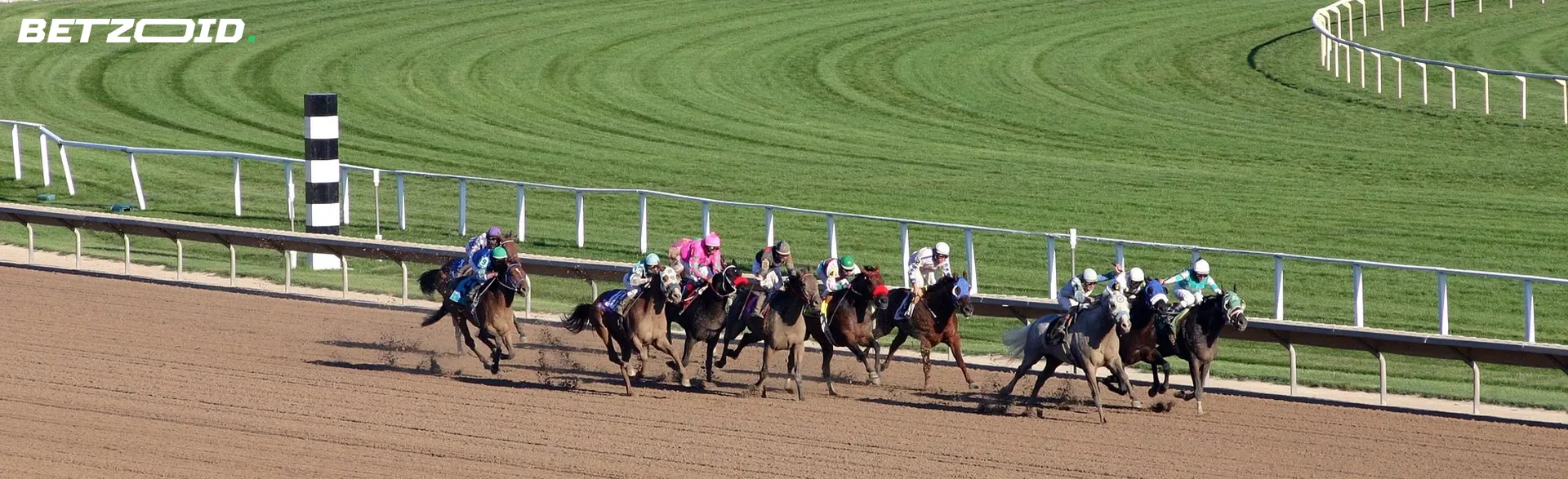
Coverage is best judged by the quiet days. British racing runs roughly 1,400 fixtures a year across about 60 courses, and the sites worth an account price up the small Monday and Tuesday cards with the same market list they give a Saturday. Beyond that, the sensible way to compare bookmakers for Irish and international racing is to open a weekday page and count the non-British meetings, then check the bet types offered on them. Plenty of operators list a French or American card with a win market only, which is coverage in name rather than in practice.
Festival Weeks at Cheltenham and Ascot
Deciding where to bet on Cheltenham and Royal Ascot races rests on two things: whether the non-runner-no-bet rules on ante-post markets are clear, and whether the promotions you're relying on still apply during the meeting. Festival weeks bring hundreds of markets per race, from match bets to top-jockey and top-trainer specials, and they also bring promotional exclusions that quietly narrow best odds guaranteed or place offers. Check the terms for the meeting itself, not the standard year-round page.
Irish Cards and Overnight Meetings
Irish racing is where price differences are most visible, because fewer bookmakers push their margins on a Thurles Thursday than on a Kempton Saturday. Look for early prices on Irish cards rather than SP-only markets, and check that the guarantee extends across the Irish Sea. Overnight fixtures from Australia, Hong Kong and Japan fill the British morning, but they usually sit outside both BOG and extra place promotions. Treat them as separate betting, priced on their own merits, instead of assuming your usual concessions travel with you.
Live Streaming and Apps on Busy Saturdays
Streaming rules matter more than streaming quality, because access conditions decide whether you can watch at all. The common models are a funded account with a minimum balance, a qualifying bet on the race in question, or a bet placed on the day within a set window. Each has a cost: a £1 bet requirement per race is cheap on four races and expensive across a full card if you were only watching to build form knowledge.
Replay archives are the underrated feature. A site that keeps replays for months lets you check how a horse handled heavy ground last December before you take 12/1 today; one that clears them after a few weeks leaves you relying on written comments alone. If you study form, ask how far back the archive goes before you judge picture quality.
On phones, the practical test is placing a bet across two meetings while a race is being shown, without losing the card you were reading. Picture-in-picture, a persistent bet slip and a tracked-horses list do more for your Saturday than a redesigned homepage. Our separate round-up of racing apps for UK punters goes deeper into the interface differences. New racing bookmakers in the UK often arrive with the slickest app in the group and the thinnest concessions behind it, so compare their terms against an established book before you move your main balance.
Welcome Offers: What the Terms Actually Cost
Two offers with the same headline can differ by half their face value once you work through the conditions, so treat any advertised promotion as a claim to verify on the operator's terms page before you deposit — availability and wording change without notice.
- Qualifying bet odds: a minimum price of 1/2 or evens on the first bet pushes you off short-priced favourites. If you'd normally back an 8/11 shot, the offer has already changed your selection, and that cost belongs in your calculation.
- Stake not returned on free bets: a £30 free bet at 3/1 pays £90 in winnings, not £120, because the stake is not part of the return. The face value is roughly the same as £22–£24 of your own money.
- Expiry windows: seven-day expiry on three £10 tokens forces bets you wouldn't otherwise place. A 30-day window lets you wait for the Saturday cards you actually fancy.
- Sport and market restrictions: racing-only tokens sometimes exclude ante-post, forecasts and each-way, which are the bets many racing punters use most.
- Payment exclusions: deposits by some e-wallets frequently fail to qualify, and withdrawals normally have to return to the method you deposited with.
Run the numbers before the sign-up, not after. A £20 token you can use on a Saturday handicap you'd have backed anyway beats a £40 token tied to short expiry and minimum odds you dislike. And if a large qualifying stake is the sticking point, starting at bookmakers with no fixed minimum deposit is a cleaner way to test a platform than stretching your bankroll to unlock a bonus.
Checks Worth Making Before Your First Bet
Five checks, in this order, will tell you whether an account is worth opening — each takes a couple of minutes on the operator's own pages.
- Confirm the licence. Stick to bookmakers licensed by the UK Gambling Commission and search the public register for the company name behind the brand, since one licensee often runs several sites.
- Read the BOG clause. Note the opening time, the qualifying meetings, whether each-way and multiples count, and any cap on the extra payout. This single clause decides more settled bets than any welcome offer.
- Check the each-way and extra place rules. Look for the standard place fractions, how many places are paid in big-field handicaps, and whether enhanced terms are automatic or need an opt-in before each race.
- Test the streaming conditions. Find out whether a funded balance, a daily bet or a per-race bet unlocks the feed, and how long replays stay available for form study.
- Set your limits and check the cash-out route. Apply a deposit limit in account settings on day one, confirm withdrawal times to your chosen method, and check whether limit increases carry a cooling-off period.
The order matters because it moves from the non-negotiable to the personal: licence first, settlement terms second, then the features you'll use weekly. Verification is a licence condition in Britain, so expect identity checks even at sites advertised as a quicker alternative to a full registration form — the difference is when the checks happen, not whether they happen. Doing all five before your first stake beats discovering a noon BOG start after your 9am bet has already been settled at the shorter price.
Value in British racing comes from three things working together: a guarantee that opens early and covers the meetings you bet, place terms that pay automatically in big fields, and streaming you can reach without a bet on every race. Everything else — app polish, market counts, free bet size — is secondary to those settlement rules. Use the comparison above to pick two accounts with different price strengths, check the terms on the exact meetings you follow, and keep your welcome offer maths honest about stake-not-returned tokens. Set a deposit limit while you're in the settings for the first time; it's easier to choose that figure calmly than during a losing Saturday.