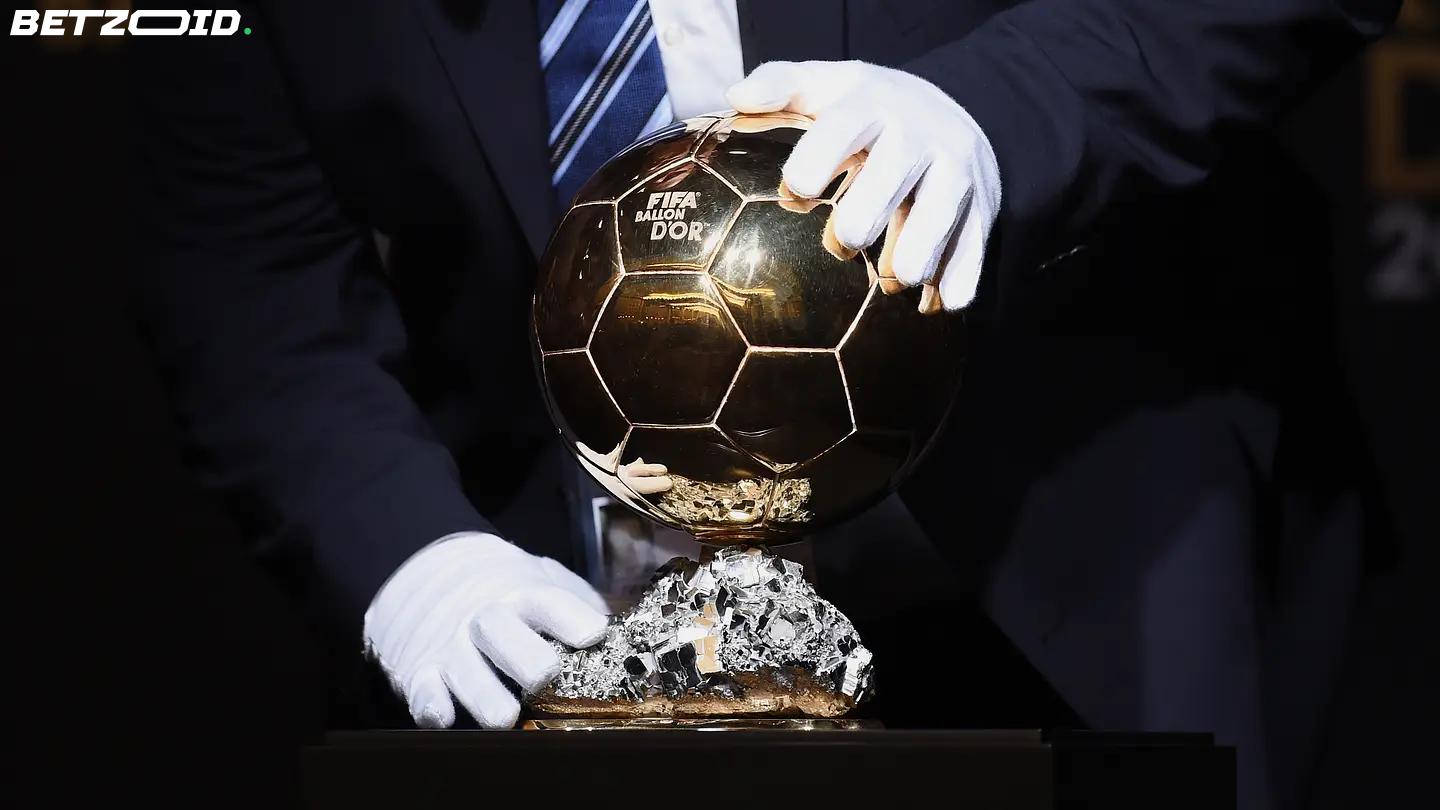
Few prizes in sport get picked apart quite like the Ballon d'Or. Ever since journalists Gabriel Hanot and Jacques Ferran dreamed up an award to crown Europe's finest player back in the mid-1950s, the voting has rarely gone by without an argument. Organised each year by France Football and decided by a panel of journalists, it's now the sport's most significant individual honour, well ahead of FIFA's The Best Awards. No winner has ever been unanimous, and the list of head-scratching calls, oversights and rule changes over the decades is a long one. Here's a countdown of the biggest.
10. The Lack of Non-Europeans
The award was originally restricted to European players in Europe, a rule that only changed in 1995. That made sense when broadcasting was limited, but it left out the likes of Pelé, Diego Maradona, Mario Kempes and Romário long after the best South Americans and Africans were playing in Europe's top leagues. Argentine-born stars such as Alfredo Di Stéfano and Omar Sívori did win it, thanks to dual citizenship.
9. Keegan's Back-to-Back Awards
Kevin Keegan is one of only four Englishmen to win the Ballon d'Or and one of just nine players to retain it, doing so in 1979. His first win, in 1978, still raises eyebrows: after his British-record move to Hamburg, Keegan won no club honours that year, and England didn't even qualify for the World Cup. Meanwhile Kenny Dalglish, his Liverpool replacement, scored 31 goals including the winner in the European Cup final -- and finished eighth in the voting.
8. Haaland Snubbed
Erling Haaland scored 52 goals in 53 appearances as Manchester City won a historic treble, yet voters handed Lionel Messi his eighth Ballon d'Or by some distance, largely on the back of his World Cup win with Argentina.
7. Sneijder Misses the Podium
Messi won again in 2010 as the vote split between Spain's World Cup winners Andrés Iniesta and Xavi. The bigger surprise was Wesley Sneijder -- a treble winner with José Mourinho's Inter Milan and a key figure in the Netherlands reaching the World Cup final -- finishing fourth with just 14.5% of the vote. Diego Milito, Serie A's Footballer of the Year and a Champions League final scorer, wasn't even nominated.
6. Owen Wins Over Raúl
Michael Owen remains the last Englishman to win the award, taking it in 2001 after an impressive year for club and country, including a hat-trick against Germany in World Cup qualifying. But Real Madrid's Raúl, who dominated La Liga and was named both the league's best player and top scorer that season, arguably had the stronger case. Spanish media ran headlines like "Stolen Ballon d'Or," and the decision is still argued over in Madrid.
5. Henry Overlooked
In 2003, Pavel Nedvěd won the Ballon d'Or after helping Juventus win Serie A and reach the Champions League final. Thierry Henry finished second despite a remarkable Premier League season in which he became the first player to reach 20-plus goals and 20-plus assists in a single campaign. Paolo Maldini came third.
4. Ferenc Puskás Misses Out
Luis Suárez -- the Spanish one, not the Uruguayan -- won the 1960 award for his form with Barcelona, but Ferenc Puskás finishing second is hard to fathom. The Hungarian was La Liga's top scorer with Real Madrid, netting 47 goals in 36 games across 1959-60, including four in the European Cup final. Puskás never won a Ballon d'Or, despite that record.
3. Real Madrid Throw a Tantrum
Vinícius Jr was overlooked for the 2024 Ballon d'Or in favour of Spain midfielder Rodri, the driving force behind Spain's Euro 2024 win. Real Madrid, whose Brazilian forward had been central to their La Liga and Champions League triumphs, were furious enough to boycott the ceremony in Paris entirely. "It is clear that Ballon d'Or-Uefa does not respect Real Madrid. And Real Madrid does not go where it is not respected," the club said in a statement.
2. Voting Extension Hands Ronaldo the Win
Cristiano Ronaldo remains the last player to win the Ballon d'Or without lifting a single club trophy that year. He did score 55 goals in 55 games during 2012-13, but France Football extended the voting deadline to include the 2014 World Cup play-offs, in which Ronaldo scored four goals to beat Sweden -- likely tipping a tight three-way race with Lionel Messi and Bayern Munich treble winner Franck Ribéry in his favour.
1. COVID Cancellation
The biggest controversy of all was the year there was no award. France Football scrapped the 2020 Ballon d'Or entirely, citing organisational difficulties during the pandemic. That decision landed hardest on Robert Lewandowski, who had posted extraordinary numbers in Bayern Munich's treble-winning season and was the clear favourite before the cancellation. He came back even stronger the following year, breaking Gerd Müller's Bundesliga scoring record with 41 goals in 29 games -- only for voters to hand the award to Messi instead, following Argentina's Copa América win.