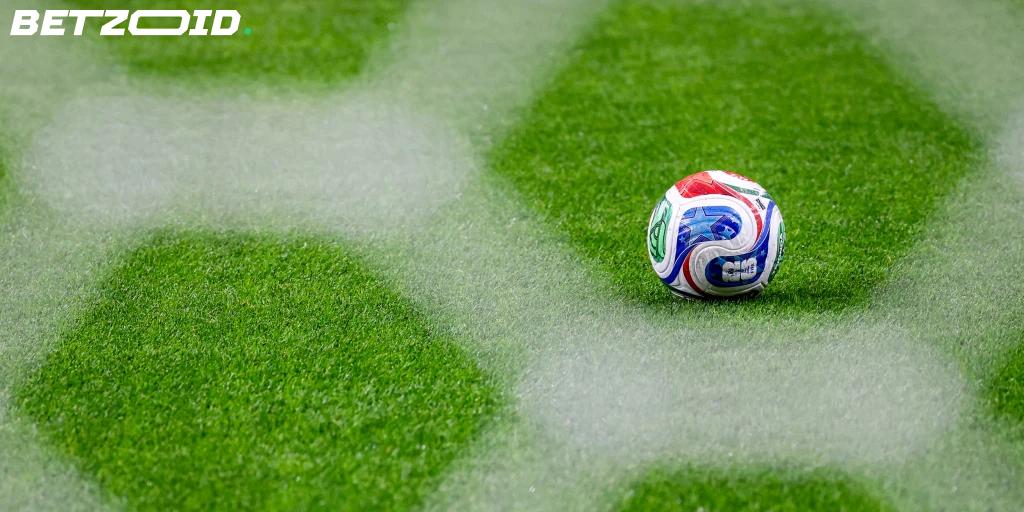
"It's an easy target to blame the ball," says John Eric Goff, a professor at Purdue University's sports engineering center who has tested every World Cup ball since 2010. He's right — and the numbers back him up.
Goals are up at this World Cup, and the internet has done what it always does: pointed at the Adidas Trionda, this tournament's shiny new match ball. Four panels, an embedded microchip, data-transmitting tech. It looks different, so it must fly different, right? Not according to anyone who's actually tested it.
Goff ran the aerodynamics. The Trionda behaves almost identically to the ball used in the Premier League. Nothing like the 2010 Jabulani — that South African nightmare that goalkeepers were still complaining about in their sleep — which genuinely did move in ways physics had to apologize for. This one? Balanced. Predictable. Boring in the best possible way.
The pitch is doing more work than the ball
Here's what people aren't talking about: the quality of playing surfaces has transformed. Every World Cup match is played on rolled-out grass laid over concrete stadium floors, and that grass is significantly better than anything players were slipping around on in the 1970s. Fewer muddy bogs. More consistent surfaces. More controlled conditions, which means more controlled football — which generally means more goals.
Andy Harland, a professor of sports technology at Loughborough University and consultant to professional leagues, puts it plainly: "The quality of the pitch has changed as well and the quality of the cleats." Both have improved dramatically. Neither gets the credit.
That said, North America brings its own complications. Several host cities are baking in summer heat, drying pitches out faster than groundskeepers would like. Others are wrestling with humidity thick enough to slow a defender's turn by half a step — which might explain why viewers watching the U.S. vs. Turkey match in Los Angeles saw players going down like they'd hit ice.
Altitude, conditioning, and what the knockout stage might bring
Altitude adds another layer. Cities like Mexico City sit at elevation where lower air density makes the ball travel faster and curve less predictably. But researchers haven't found a clean statistical link between high-altitude venues and higher scorelines — so that theory stays a hypothesis for now.
The more convincing explanation for the goal surge is less glamorous: players are simply better prepared. Sports science, recovery protocols, smarter tactical analysis — teams are squeezing more out of every 90 minutes than they were a decade ago. Faster, sharper, more clinical in front of goal.
- The Trionda has four panels and an embedded microchip for data transmission
- Its aerodynamics are comparable to the Premier League's match ball, per independent testing
- Field quality, footwear technology, and athletic conditioning have all improved significantly
- Altitude in cities like Mexico City can affect ball movement but hasn't demonstrably increased scoring
- Most goals in past tournaments came during the group stage — but high-scoring games carried into knockout rounds too
With the knockout stage underway, the goal rate could stay elevated. History suggests it won't collapse either way. The ball will keep getting blamed. The pitch will keep getting ignored. And the goals will keep going in.