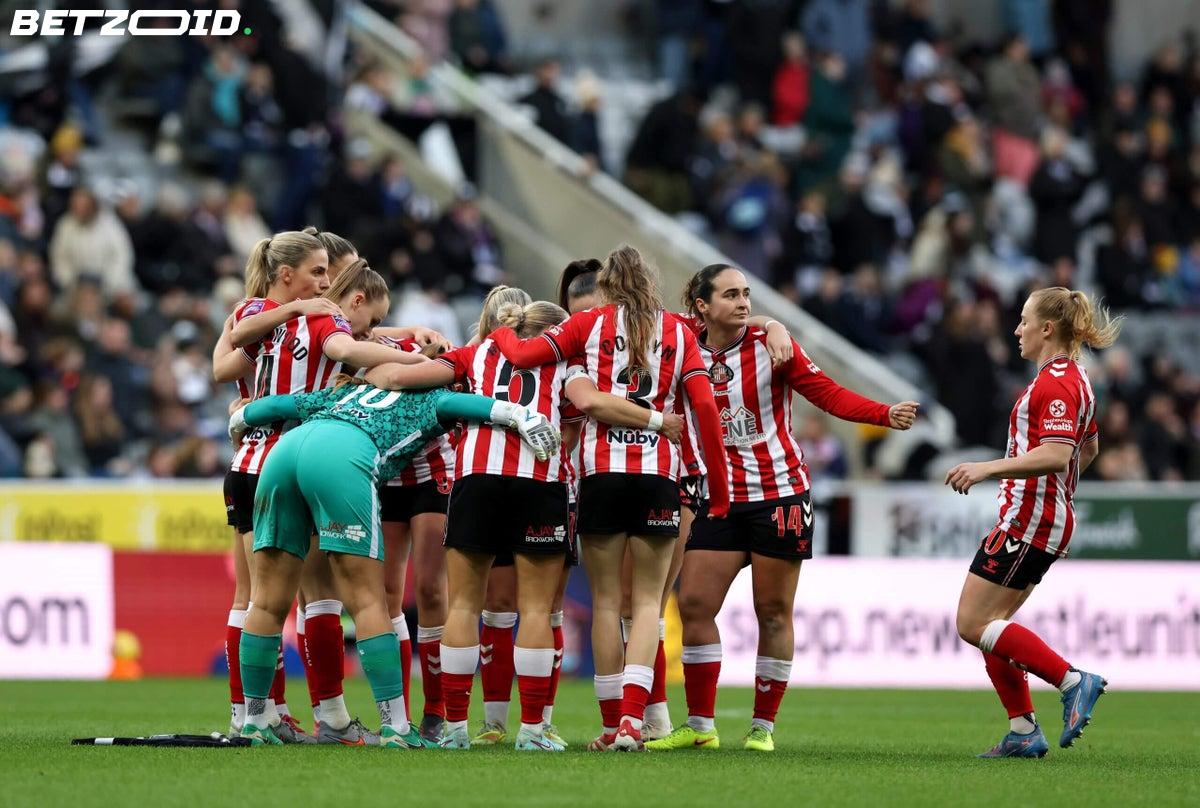
"I'd love to be sitting there one day and the Stadium of Light is sold out and everyone's coming to watch the women play." That's Kay Cossington, the head of Bay Collective, the new majority owners of Sunderland Women. It's a bold thing to say about a club that hasn't played in the Women's Super League since 2017 and currently hosts most of its home games at a ground with 250 seats.
But Cossington isn't naive. She spent 20 years at the FA, helped appoint Sarina Wiegman, and coached the under-19 side that won a European Championship in 2009 — a squad that included a teenage Lucy Bronze and Jordan Nobbs, both products of Sunderland's academy. She knows the club. She knows the gap. And she knows exactly how much work this takes.
Bay Collective — backed by U.S. investment firm Sixth Street, the same group that paid a then-record $53 million expansion fee for Bay FC in the NWSL — has now completed its 80% majority takeover of Sunderland Women, with WSL approval granted. Sunderland AFC retains a 20% minority stake, a deliberate structural choice that makes this deal more complicated than a typical majority buyout — and arguably more interesting.
What this deal actually looks like
Five commercial contracts govern the relationship between Bay Collective and Sunderland AFC, covering intellectual property rights, commercial revenue splits, and infrastructure use. It's not a clean handover — it's a partnership with guardrails. Sunderland CEO Tom Burwell was blunt about why: "There were complexities in negotiating how somebody would come in and buy control, but not end up with all of the control you and I would normally expect."
The club's revenue in 2024-25 was £872,000. Burwell described the sale price as "a revenue multiple we're very proud of" without giving a number. Draw your own conclusions.
Hannah Forshaw, formerly Everton Women's CEO and a decade-long Liverpool executive, has joined as senior adviser. Commercial and football operations are being built out now the deal is closed. These aren't vanity hires — they're the scaffolding for something more serious.
Sustainable, but not slow
Cossington is deliberately managing expectations on the money side. No wave of cash into player wages in year one. Infrastructure first, foundations before trophies. "Patient capital" is the phrase she uses. It's a sensible framing — and one that reflects what Sixth Street actually did at Bay FC, where a state-of-the-art performance centre is due to open in 2027 after years of groundwork.
Sunderland Women already train at the Academy of Light alongside the men's setup, and there's genuine space to develop it further for the women's programme. The younger girls' teams are currently split between the Academy of Light and the Beacon of Light, a community facility run by the Foundation of Light charity — which has been quietly funding the girls' academy for three years off the back of a single private donation from a supporter. That's not a sustainable model. Everyone involved knows it.
Promotion to the WSL is the first concrete target, described as something they want "as early as is feasibly possible." If they get there, a groundshare agreement at the Stadium of Light for all league home games is already in place. The Championship betting markets for next season just got a name worth watching.
Sunderland has produced Bronze, Nobbs, Jill Scott, Demi Stokes, Lucy Staniforth — an extraordinary pipeline from one region. Bay Collective didn't buy a blank canvas. They bought a club with real bones. Whether the flesh follows is what the next three years will answer.