"A bird that has flown leaves no trace." It's a Japanese proverb, and at every World Cup since 2018, it's also been the most consistent storyline the tournament has produced — regardless of what happens on the pitch.
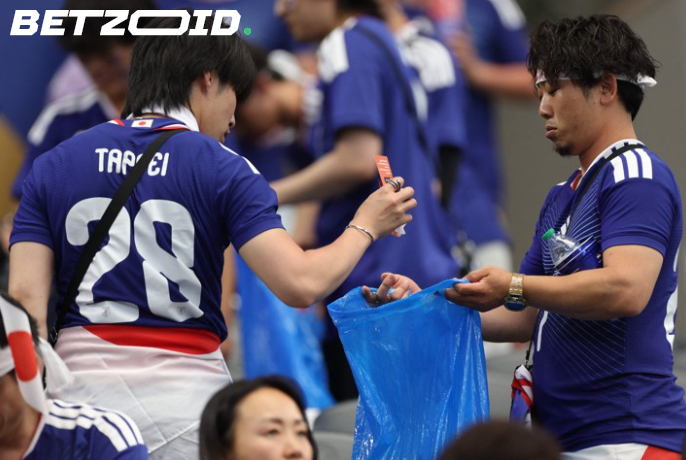
After Japan's Group F match against the Netherlands at Dallas Stadium on June 15th, the cameras found what they always find: Japanese supporters on their hands and knees, filling trash bags with other people's rubbish. Then the team photos emerged — the locker room left spotless, posted to FIFA's own social media. Thank-you notes. Paper cranes. Not a wrapper out of place.
This isn't performance — it's infrastructure
CNN called Japan "the cleanest team" at this World Cup, which is accurate, and also kind of misses the point. This isn't about the squad. The fans do it too, independently, because this is just how they were raised.
Japanese-American culture expert Nozomi Morgan explained it well: Japanese schoolchildren clean their own classrooms, corridors, and bathrooms. Each kid has a named rag. The habit isn't instilled through lectures — it's instilled through practice, every single day, from age six. By the time you're sitting in a World Cup stand in Arlington, Texas, you don't think twice about taking your trash home.
Tsunoda Hirokazu has been doing this at Olympic and World Cup venues since 2008. His take on the critics who call it performative is blunt: "Just try it once yourself. The stadium becomes cleaner, and volunteers and cleaning staff can go home sooner. No one loses." He carries spare trash bags. He notes that plenty of non-Japanese supporters join in once they see it happening.
Former captain Hasebe said it best in 2018
"I am proud of the spirit that Japanese people and Japanese society possess. I feel pride as a Japanese citizen before I am a footballer." Makoto Hasebe said that at the Russia World Cup, and it still lands. Seven years later, nothing's changed — not the habit, not the reaction it draws, and not the quiet dignity behind it.
Japan's World Cup results will be debated. Their locker room, as usual, will be left in better shape than they found it.