Diana Ross missed an open goal in front of 750 million people. Oprah Winfrey fell through a hole in the stage. O.J. Simpson led police on the most televised car chase in American history — on the same afternoon the tournament kicked off. And somehow, USA '94 still ended up being one of the greatest World Cups ever staged.
With the 2026 World Cup returning to North America this summer, it's worth revisiting the tournament that the football world didn't want, didn't trust, and ultimately couldn't stop watching.
The opening ceremony nobody will ever forget
FIFA handed America the World Cup on July 4, 1988, beating Morocco and Brazil with a combination of broadcast money ($300 million in TV revenue), razzmatazz, and access to the one major market football hadn't cracked. The reaction from traditional football nations was somewhere between horror and contempt. One contemporary study ranked soccer as America's 67th favourite sport — one place behind tractor-pulling.
The opening ceremony on June 17 at Chicago's Soldier Field did nothing to quiet the sceptics. Oprah Winfrey, hosting proceedings, turned to leave the stage and fell straight through a plastic-covered hole. The cameras missed it — they were already on Diana Ross, who then sprinted the length of the pitch to take a ceremonial penalty, skied it wide of a comically oversized goal, and kept running while the goal dramatically collapsed anyway, having been pre-rigged to explode in celebration whether or not the ball went in.
Later that evening, American viewers switching away from Spain vs South Korea at the Cotton Bowl found their NBA Finals broadcast sharing a split-screen with live footage of O.J. Simpson being pursued through Los Angeles in a white Ford Bronco. The World Cup had been in existence for less than twelve hours.
Maradona, Escobar, and the darker currents
On the pitch, the tournament caught fire fast. Bulgaria stunned Germany. Brazil edged the Netherlands 3-2 in an end-to-end quarter-final. Roberto Baggio — the Divine Ponytail — carried Italy to the final almost single-handedly, scoring a penalty in extra time against Nigeria that remains one of the tournament's defining moments.
But two stories cut through everything else, for entirely different reasons.
Diego Maradona arrived in the United States for his fourth consecutive World Cup at 33, no longer physically dominant but still magnetically compelling. His goal against Greece was vintage — instinctive, brilliant, celebrated by sprinting to a pitchside camera and screaming directly into the lens with an expression that made more than a few viewers uneasy. They were right to be. After the Nigeria game, Maradona tested positive for five variants of ephedrine and was expelled from the tournament. One of football's most mythologised careers ended not with a trophy, but with an anti-doping report.
Colombia's exit was altogether more devastating. Defender Andrés Escobar diverted a cross into his own net against the United States in a 2-1 defeat that sent the Colombians — one of the pre-tournament favourites — home in the group stage. Escobar accepted responsibility publicly, with dignity. Ten days later, he was shot dead outside a nightclub in Medellín, allegedly on the orders of a local drug lord. The tragedy never really leaves the tournament's memory, no matter how many years pass.
The rules that still run the game today
What gets forgotten, amid all the spectacle and chaos, is how much USA '94 quietly rebuilt the sport's architecture. Three points for a win — introduced here for the first time at a World Cup. The ban on goalkeepers picking up deliberate back-passes. Both rules designed to force attacking football, and both still running the global game more than three decades later.
They worked. The tournament averaged 2.71 goals per game and produced a cast that's hard to forget: Oleg Salenko scoring five goals in a single game against Cameroon; Roger Milla still finding the net at 42; Hristo Stoichkov playing every minute of every game like someone had personally wronged him; Romário and Bebeto giving the world the rocking-the-baby celebration.
USA '94 also produced the first World Cup final decided by a penalty shootout — Baggio stepping up, needing to score, and drilling the ball high over the Pasadena crossbar. Brazil were champions. Italy were devastated. And the image of Baggio standing alone, head bowed, hands on knees, became the tournament's enduring photograph.
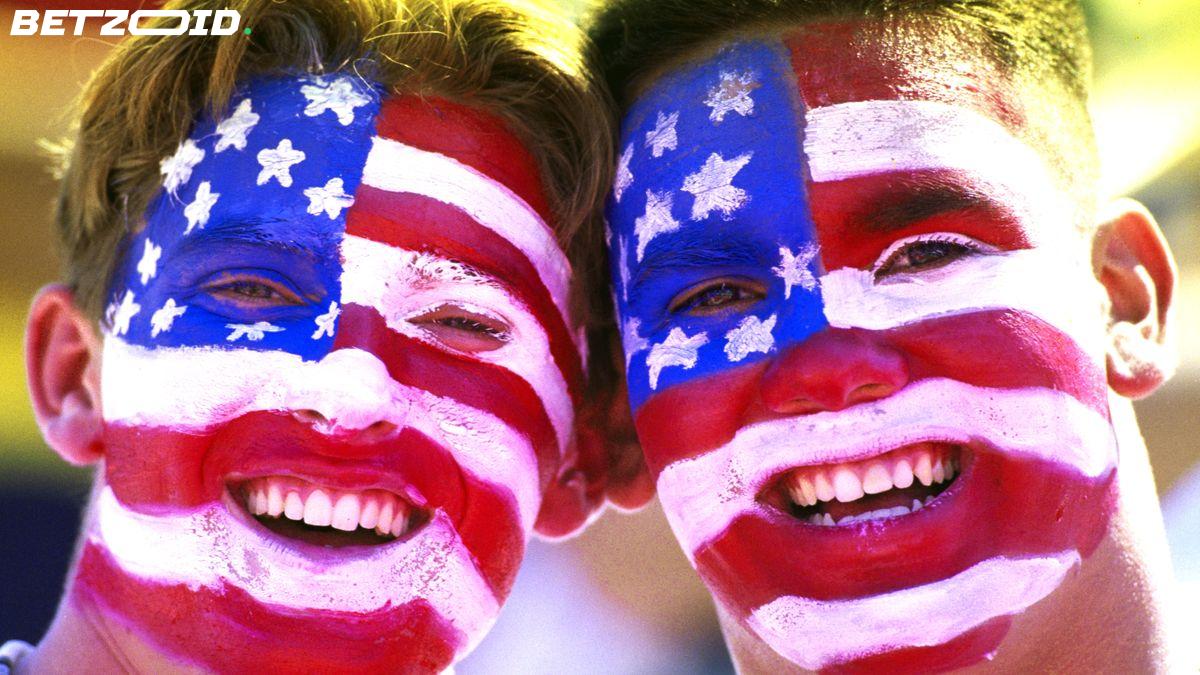
The attendance figures still haven't been touched. An average crowd of 68,991 across the tournament, more than 3.5 million total — records that stand to this day, not broken by Germany, South Africa, Brazil or Qatar. A country that ranked soccer below tractor-pulling filled its stadiums beyond what any host nation has managed since.
MLS launched two years later. Thirty years after that, Lionel Messi plays in it. The 2026 World Cup arrives in a country where soccer is big business, not a curiosity. USA '94 didn't just survive the chaos of its opening day. It built the foundation everything else sits on.