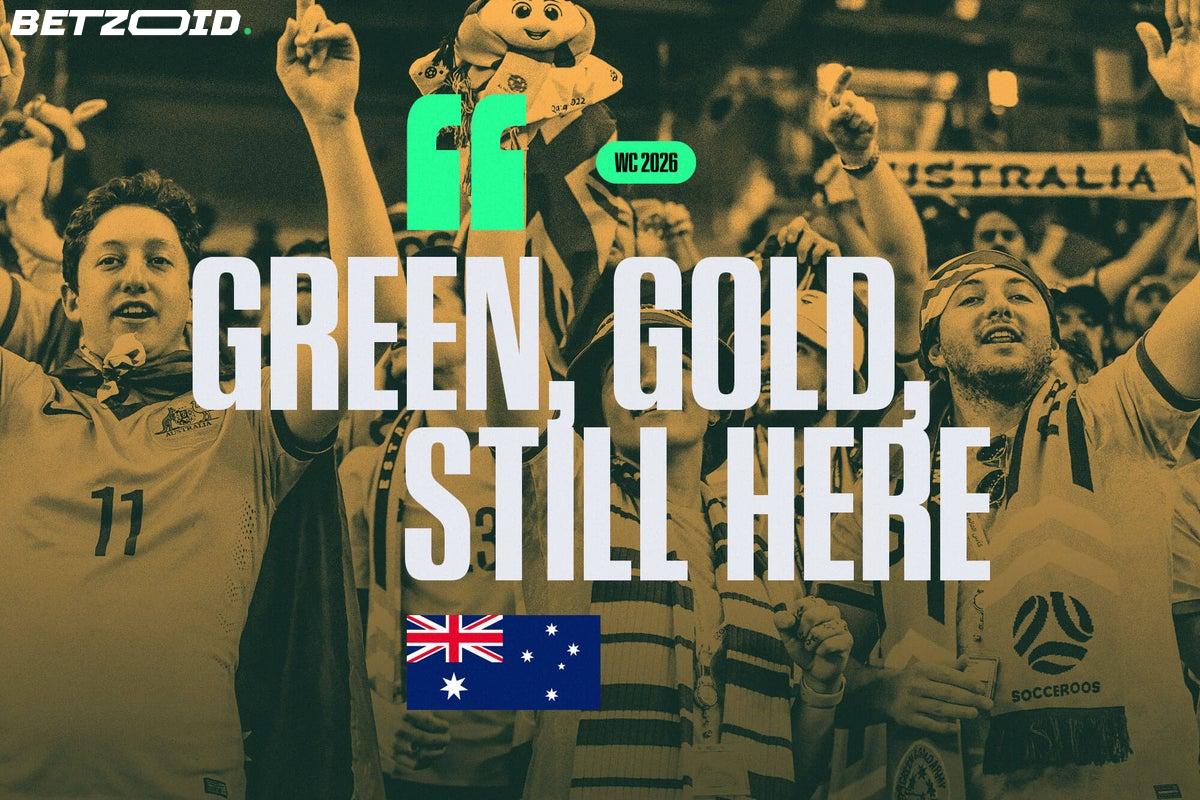
"Football was embedded in racism when it first came to this country," says Sydney FC supporter Michelle Morris. "People didn't want a bar of it." That's not ancient history — it's the foundation on which every Socceroos fan has built their passion.
Soccer in Australia has never been handed anything. Not mainstream media coverage, not cultural legitimacy, not even the right to call itself "football" without confusion. Rugby league, AFL — those are "footy". Soccer has always had to justify itself, and heading into the 2026 World Cup, that fight isn't entirely over.
A sport that built itself from the outside in
The story of soccer in Australia is inseparable from immigration. South Melbourne FC — founded by the Greek community — gave Ange Postecoglou his playing and coaching roots. Clubs like Brunswick Juventus, FC Melbourne Srbija, Sydney Olympic, and Gwelup Croatia didn't just play football; they kept it alive when mainstream Australia actively didn't want it. Without those migrant communities, there likely is no Socceroos story worth telling.
Alex Papalia, a 22-year-old Perth Glory fan and futsal coach, captures the tension well: "People assume I care more about Italian football because that's my heritage, but there's something special about being here in Australia, trying to help grow the sport." He describes World Cup moments when friends who "couldn't give a stuff" about the A-League suddenly have Australian flags out and beers open. They don't know the player names. They don't care. They want to see their country win.
That's both the beauty and the frustration of Australian soccer — it can fill Federation Square for a World Cup night and still struggle to fill A-League stands the following weekend.
The media problem, the money problem, the respect problem
Stuart Ritchie, attending his sixth World Cup this summer — his father watched Australia's 1974 debut in West Germany — puts the media bias plainly: "I feel the media here likes to highlight any perceived negative. Had it been a football-related event, they would've had a very different spin." He's referring to AFL fans storming a field after a record try being treated as a celebration, while soccer crowds facing food wrappers thrown at active supporters during a Matildas game at Adelaide Oval barely raised eyebrows.
Morris is blunt about the structural problems holding the game back. A season at a local park league can cost $500 AUD. Academy fees exceed $3,000 for children. "My dad and I say that if Lionel Messi grew up here, he would never have got the chance to play because he couldn't have afforded it." Soccer is Australia's highest-participation sport, yet it prices out the communities that built it.
"Sometimes our biggest enemy is not the NRL, it's not the AFL, it's ourselves," she adds. Hard to argue.
What 2026 actually means
The Socceroos have qualified for every World Cup since switching from the Oceania Football Confederation to the Asian Football Confederation in 2006 — before that, their sole appearance was 1974. That shift changed everything. But entry-level respect is still all they get internationally. When the 2026 draw paired Australia with the United States in Group D, an American pundit called it a "layup". Ritchie's response: "I'm confident it won't be a layup — but yeah, we probably get more respect for the country we're in than the team we put out."
Australia reached the last 16 at Qatar 2022. Getting further in 2026 would be a first for the men's team. The group also features Turkey and Paraguay, making it genuinely competitive — not a formality for anyone. From a betting standpoint, Australia advancing from the group is far from guaranteed, but far from unlikely either. Their physical versatility — most kids play multiple sports at school level — gives them an edge opponents routinely underestimate.
James Renton, 22, who co-hosts a Perth Glory podcast, frames the stakes clearly: "The media and establishment don't like the idea of seeing soccer or soccer fans on the rise, because they feel their sport would be threatened. That's probably why Socceroos fans get a bad rap."
The Victorian government tried to ban World Cup screenings at Federation Square in Melbourne this year, citing past incidents from "a small number of people". The ban was reversed within 24 hours after public pressure. The fact that it was attempted at all tells you everything about the environment Australian soccer operates in.
"They don't realise we've made every World Cup since 2006," Morris says. Some countries are still riding kangaroos and throwing rugby balls in their mental image of Australia. This summer, the Socceroos will be looking to update that picture — whether anyone outside Australia is ready for it or not.