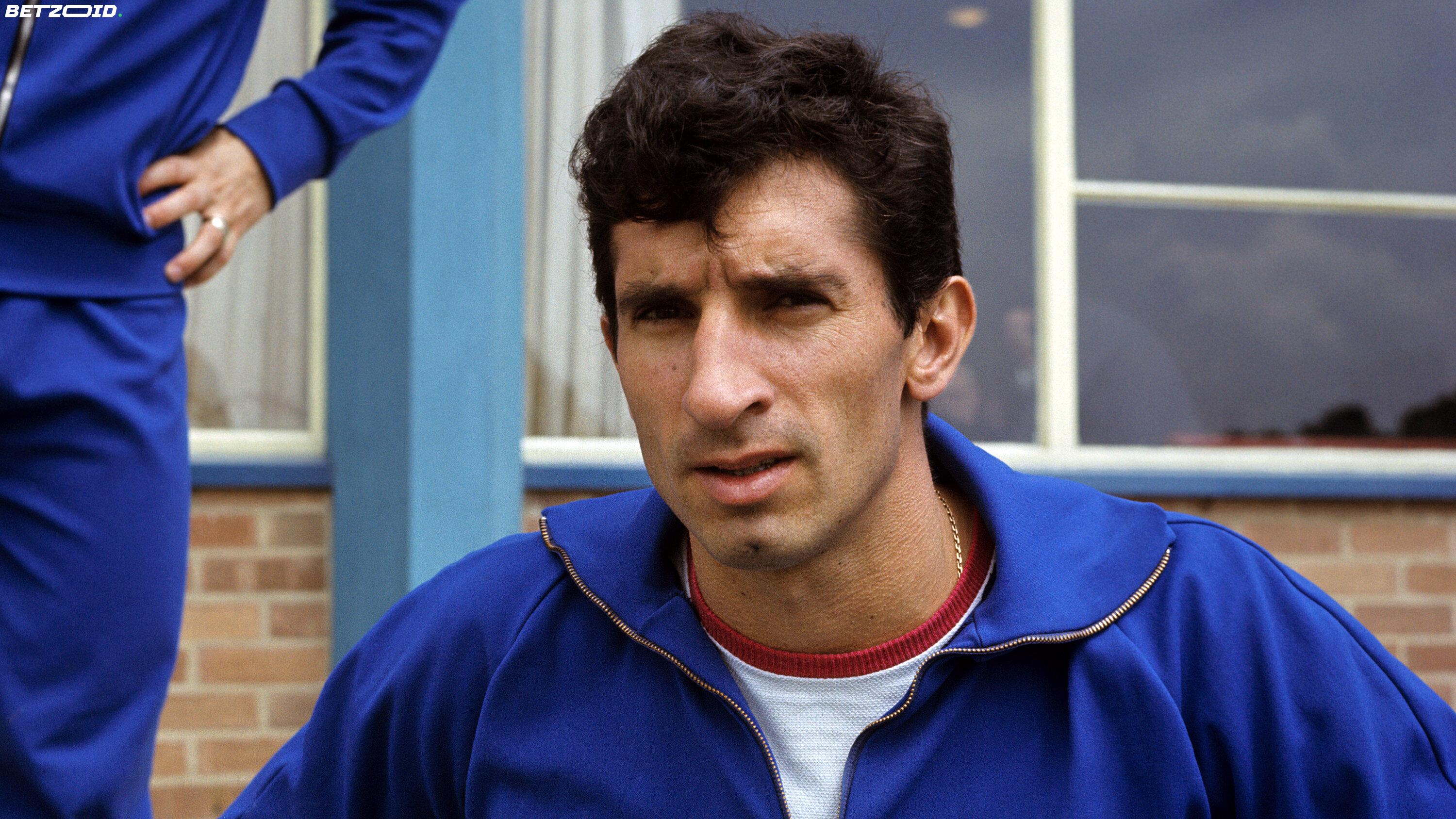
"I believed seeing in his face" that he was insulting me. That was German referee Rudolf Kreitlein's explanation for ejecting Antonio Rattín from the 1966 World Cup quarterfinal — despite not speaking a word of Spanish. It was chaos. And out of that chaos came the yellow and red card system that now governs every level of the game.
Rattín died on July 11 in Vicente López, Buenos Aires, aged 89. The Argentine Football Association confirmed his passing. Argentina wore black armbands in his honour during their quarterfinal win over Switzerland the same weekend — a match that set up yet another Argentina vs England semifinal, the latest chapter in a rivalry Rattín himself helped ignite nearly six decades ago.
The Sending-Off That Rewrote the Rulebook
Wind back to July 23, 1966, at Wembley Stadium. Rattín, Argentina's captain and a commanding six-foot-three midfielder, was furious at what he saw as one-sided refereeing. At the 35-minute mark, Kreitlein awarded England a penalty. Rattín wanted answers. Kreitlein, speaking no Spanish, ejected him for what he logged as "violence of the tongue."
Rattín refused to leave. He sat on the red carpet reserved for the Queen's viewing area for several minutes. Two police officers eventually escorted him off under a shower of chocolates from the stands. He grabbed one, ate it, and threw the wrapper back. On his way out, he grabbed a Union Jack pennant and rubbed it between his fingers. Beer cans followed.
It was, by any measure, one of football's great exits.
The head referee overseeing the match, Ken Aston, watched the whole mess unfold and decided something had to change. Inspired by traffic lights, he invented the yellow and red card system. Every booking you've ever seen — every controversial red, every last-minute yellow that's wrecked an accumulator — traces back to that afternoon at Wembley.
More Than One Infamous Afternoon
In much of the world, Rattín is remembered only for that match. In Argentina, that feels like a disservice. He spent his entire club career at Boca Juniors, winning five national titles and representing his country in two World Cups, 1962 and 1966. Argentina lost that quarterfinal 1-0 with ten men, and England went on to lift the trophy. The rivalry between these two nations — still alive in this summer's tournament — has never fully cooled since.
After the game, Rattín walked around central London expecting hostility. Instead, he said, taxi drivers and shop owners embraced him. "I found out very quickly that the Englishman is a very special person," he told The Evening Standard years later.
Time softened his feelings about 1966. During a trip to Britain in 2000, he insisted it was all behind him. But he acknowledged what the incident said about who he was: "I'd always been a passionate figure, never afraid to say what I thought."
Born in Tigre on May 16, 1937, he trained as an electrician before Boca's youth setup came calling. He retired as a player in 1970, later worked in insurance, served in Argentina's National Assembly from 2001 to 2005, and sat as a council member in Vicente López until 2009. A full life, mostly lived outside the spotlight — except for those eight minutes at Wembley that neither football nor the referee system ever forgot.