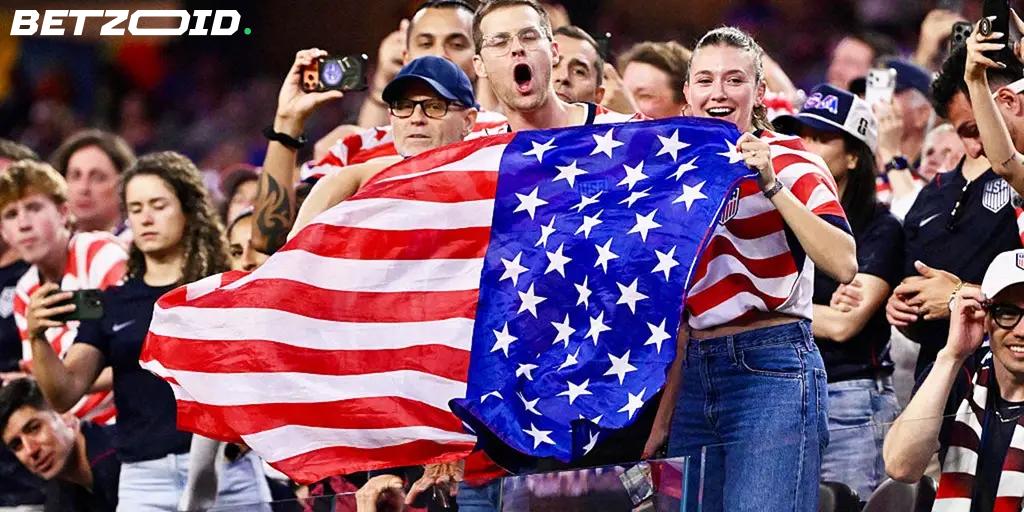
American soccer spent decades begging for this. Now that it's here, some of its loudest voices are trying to give it back.
The USMNT is into the knockout stages of a World Cup on home soil. Bars are packed. Flags are out. Casual fans who couldn't name a single player on the roster two weeks ago are suddenly invested. That's the dream scenario, right? That's what every soccer evangelist in this country has been demanding for thirty years.
Apparently not.
The wrong fans showed up
The Guardian ran a piece framing the broadcast battle between Thierry Henry and Alexi Lalas as "the World Cup's most compelling story" — calling Lalas a "MAGA hack" and defining American soccer's natural audience as "migrants, urban liberals" and people "too scrawny" for other sports. USA Today declared the United States had "already lost" the World Cup due to "greed and hostility." The Athletic asked who, exactly, this tournament is even for.
That last question answers itself, and the answer is ugly: the implication is that it's not for you, if you found soccer through Fox, or you're waving a flag a little too enthusiastically, or you don't already know the offside trap.
The WNBA ran this same play with Caitlin Clark. The league had spent years pleading for mainstream relevance — more coverage, more casual fans, more of everything. Clark delivered all of it. She brought Iowa fans, gamblers, families, people who had never watched a regular-season WNBA game in their lives. She made the league appointment television. And a significant chunk of the league's media ecosystem spent most of her rookie season treating those new fans like an infestation rather than an opportunity. One commentator said this week the WNBA "would be better off without Caitlin Clark."
That is the same energy driving the World Cup think-pieces right now.
Mainstream popularity doesn't come with a vetting process
Here's the uncomfortable truth both situations expose: a lot of people who claimed to want growth actually wanted approved growth. Fans who arrived pre-educated, who already understood the culture, who expressed their enthusiasm in the correct register. What they got instead was the actual mainstream — loud, tribal, imperfect, and impossible to curate.
That's how every major American sport works. The NFL doesn't screen its fanbase for football IQ. College football doesn't require a loyalty test. When Team USA hockey won Olympic gold and the 2026 Stanley Cup Playoffs saw a measurable surge in interest, nobody wrote op-eds questioning whether those new hockey fans were the right kind of fans.
The USMNT's run to the knockout stage is exactly the kind of moment that converts casual observers into long-term supporters. Some of those new supporters will call it soccer. Some will chant "USA" too much. Some will vote Republican and watch Fox News. None of that disqualifies them.
If American soccer genuinely wants to become a mainstream sport in this country, it doesn't get to choose its audience any more than the WNBA did. The gatekeepers lost the room the moment the casual fan walked in. That was supposed to be the victory.