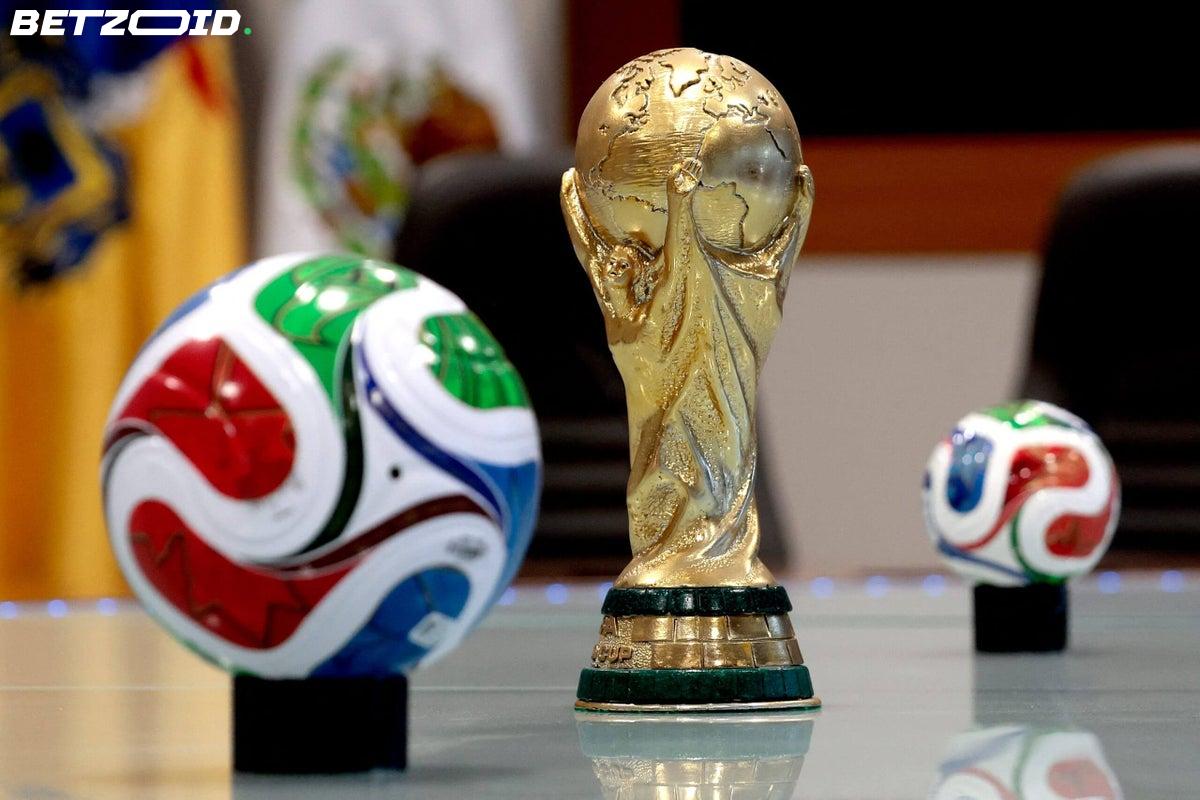
New York City is about to host the World Cup final. You'd barely know it. Walk through Manhattan today and you won't find flags, colours, or any real sense that the biggest sporting event on the planet is thirty days away. One countdown clock inside a shopping mall near Columbus Circle. That's it.
That contrast — between what this tournament could be and what it currently feels like — is the tension running through everything about the 2026 World Cup. The football will be there. Whether the atmosphere will be is a genuine open question.
The price tag problem
The fans who create World Cup atmosphere — the ones who travel across continents, paint their faces, and sing in train stations at midnight — are being priced out. Tickets, hotels, transport: the cost of attending has reached a level that makes this feel like an event designed for corporate hospitality packages rather than actual football supporters. That's not a minor complaint. Those fans are the tournament. Without them, you get half-empty stadiums and a sterile product that no broadcaster can dress up.
There are other anxieties stacking up. Political tensions around how foreign visitors will be treated on U.S. soil. Logistical nightmares — Toronto's transit system is already being watched nervously. The possibility that matches could be disrupted by severe weather, as happened at the Club World Cup. This edition of the tournament has more variables than most.
Who's actually going to win it
France are the pick of most serious observers — and not without reason. They beat Brazil 2-1 and Colombia 3-1 in March, the latter with what amounted to a second-string side. Their depth is the issue for every other team: the players they leave on the bench are better than most nations' starters. Their forwards are ridiculous, their midfield runs deep, and Kylian Mbappé only needs to turn up for the knockout rounds to change a game.
Spain are the counter-argument. Euro 2024 champions, carrying a squad that blends experience with genuinely frightening young talent. Lamine Yamal is heading into this tournament as one of the most exciting players on the planet. If Spain carry the same collective confidence they showed in Germany, they're the last team anyone wants to face in MetLife on July 19.
Germany are quietly building a case too — seven straight wins, Jamal Musiala looking elite, and a crop of young players who haven't yet experienced a major tournament collapse. That could cut both ways.
- Group H looks the most predictable: Spain and Uruguay past Saudi Arabia and Cape Verde.
- Group D is the tournament's pressure cooker — the USA, Turkey, Australia, and Paraguay, with no safe game in sight.
- Group A carries a subplot: Mexico's camp is already in disarray over a player availability dispute with Liga MX clubs, which adds genuine uncertainty to the co-hosts' chances.
- Group B is the great unknown: host Canada, Bosnia and Herzegovina, Qatar, and Switzerland — a group where the result of every game is genuinely hard to call.
The teams worth watching closely
The USMNT sit at the centre of everything. They demolished Uruguay 5-1 in November. They also let Belgium and Portugal back into games they were controlling in March, and paid for it. The squad has real attacking quality but has shown it can't consistently close out games when the opposition adjusts. Playing at home in front of partisan crowds could be the difference — but the pressure of being hosts has broken teams before.
Canada are improved under Jesse Marsch and defensively they've been solid, conceding just three goals across their last eight matches. The concern is injury: Alphonso Davies and Moise Bombito have both had fitness issues, and Jonathan David's debut season at Juventus has been underwhelming. Canada's own expectations internally are to win a World Cup match for the first time ever. Anything less will feel like failure.
England have Thomas Tuchel, Harry Kane in brilliant form, and a perfect qualifying record — eight wins, zero goals conceded. They also have a group of attacking players who largely had poor club seasons and a defence that looks shakier than it did under Gareth Southgate. Tuchel's teams historically go deep in tournaments. Whether this squad has enough when Kane is marked out of the game is unresolved.
One name to watch outside the traditional powers: Arda Güler. The 21-year-old Turkish midfielder has the ability to slow a game down and then accelerate it in one touch — the kind of player who can decide a knockout match from nothing. Turkey are emotionally volatile and hard to predict, which makes Group D even more combustible.
The tournament starts June 11. The football, at least, should be worth the price of admission — whatever that price turns out to be.