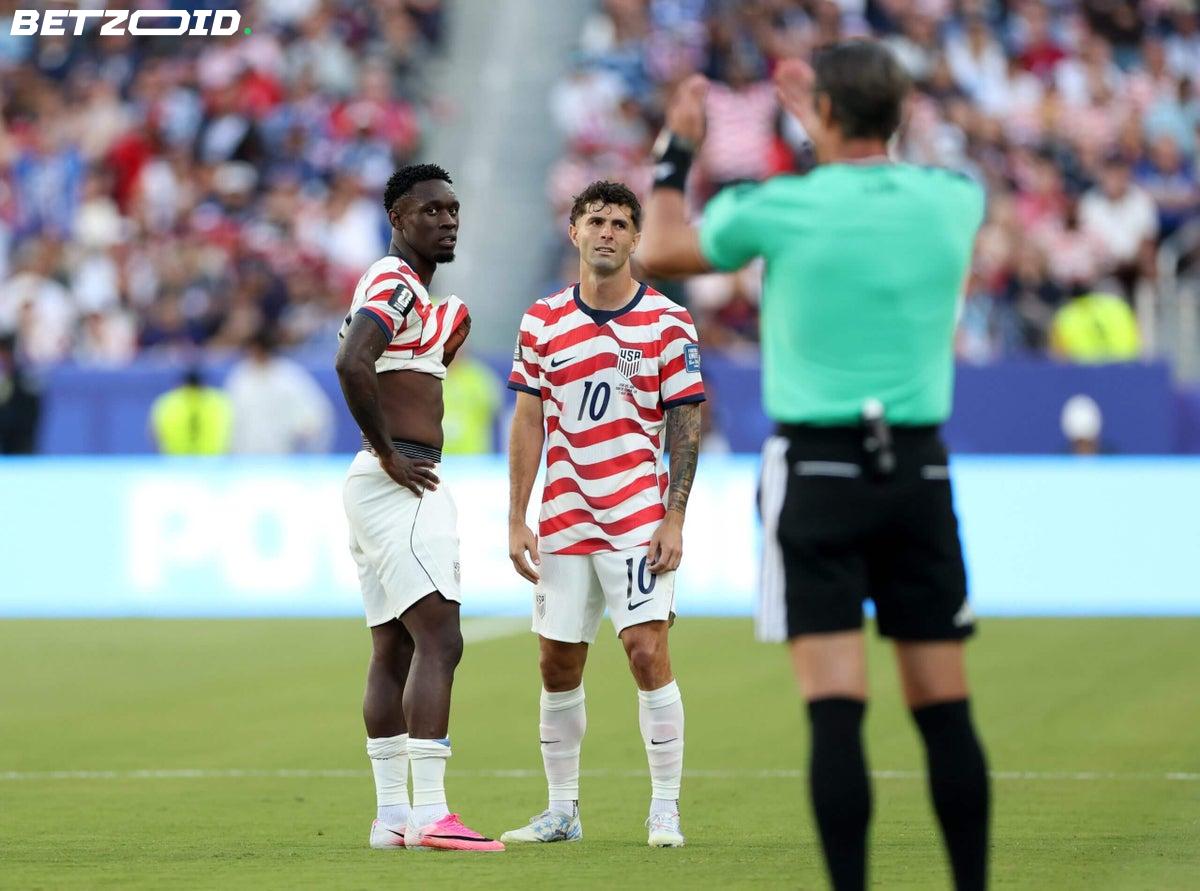
"When you get this type of situation, it opens up space for people to say 'ah ha, this sort of thing happens all the time'." Howard Webb didn't hold back. England's refereeing chief is worried, and honestly, he has every right to be.
Folarin Balogun was shown a red card on July 1 against Bosnia and Herzegovina — a challenge most observers described as clumsy rather than malicious, but one Webb says he understood. The card stood. Then Donald Trump called Gianni Infantino. Then the suspension vanished.
FIFA insisted its disciplinary committee acted independently and in line with its own rules. Trump, for his part, took credit anyway. That contradiction — a politician admitted to applying pressure, a governing body denied it mattered — is exactly the kind of gap that conspiracy theories are built inside.
What actually troubles Webb isn't the red card
It's the process. Or rather, the lack of one. Webb pointed out that the suspension was lifted through a mechanism that "seemingly didn't exist before." That's the core problem. Not whether Balogun deserved the ban — but that the route used to remove it had no clear precedent, no transparent rulebook, and happened to coincide with a call from the most powerful political figure on the planet.
Premier League CEO Richard Masters put his finger on the structural absurdity: FIFA has no red card review process. Most major leagues do. That gap meant there was no legitimate channel to challenge a potential miscarriage of justice — so when pressure was applied, it went straight to the top, through an informal route that left everyone guessing.
Webb has spent years trying to protect referees from the worst corners of social media — the abuse, the conspiracy accusations, the bad-faith outrage. His argument is simple: officials' decisions are increasingly judged not as right or wrong, but as honest or corrupt. The Balogun affair hands ammunition to exactly the people making those accusations.
Belgium's 4-1 win felt like a verdict, but it isn't the point
There was widespread sympathy for Belgium heading into the round-of-16, and a grim satisfaction in some quarters when they dismantled the USMNT. Justice served, some said. But whether the result felt fair doesn't resolve the institutional damage. FIFA got away with a messy, unexplained decision because the on-pitch outcome happened to appease critics.
That won't always be the case. And the next time a controversial call goes a certain way, in a certain match, involving a certain country — Webb's referees will hear about it.
"That's the thing that affects the 90 minutes, the game," Webb said. "The fact that that influence can be had. That's just really not reflective of the game I know."