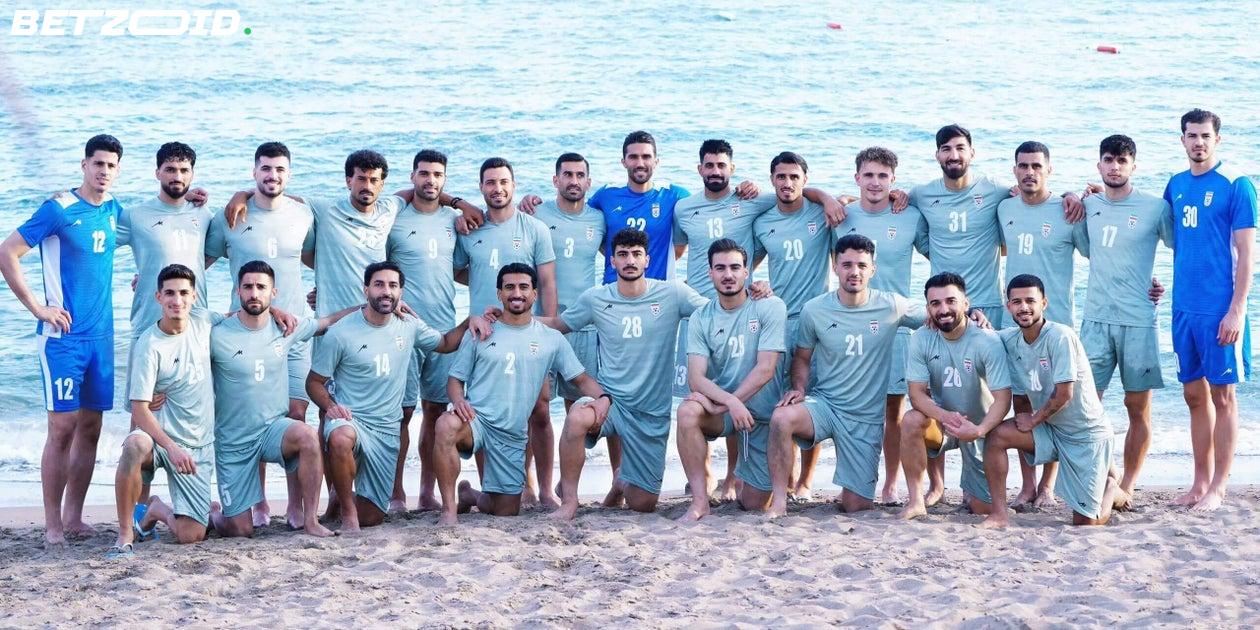
Thirteen members of Iran's World Cup delegation still don't have US visas. Players and coach Amir Ghalenoei got clearance. Two analysts, executives, and media officials did not — and a White House statement declaring the administration would not allow anyone to "sneak terrorists" into the country didn't exactly ease tensions in the Iranian camp.
That's the backdrop against which Iran boarded a flight from Antalya to Tijuana on Saturday. Not your typical pre-tournament story.
From Tehran to Turkey — the hard way
When the war with the US began on February 28, Iran's participation at this World Cup was genuinely in doubt. Their solution for getting the squad out of Tehran? A 40-hour bus journey over the Turkish border. Goalkeeper Alireza Beiranvand — all 6ft 5in of him — spent stretches of it lying in the aisle just to fit.
They've been in Antalya's Mardan Palace hotel since mid-May. Five-star Mediterranean views. A cinema where Ghalenoei showed the squad a documentary about Iraq's 2007 Asian Cup-winning team and told them to use it as motivation. Whatever else is going on, the coach has kept them training at least once a day, sometimes twice.
Seventeen of the 26-man squad are Iran-based players who have effectively been in camp since March, with the domestic league suspended. The concern isn't commitment — it's match sharpness. Alireza Jahanbakhsh, the former Brighton winger now at Belgian side Dender, put it plainly: "They need another week to be fully game-ready."
Why Tijuana instead of Arizona
Iran were originally set to base themselves in Arizona. That changed after a meeting in Istanbul on May 16 between FIFA secretary general Mattias Grafstrom and Iranian Football Federation president Mehdi Taj — who had himself been detained and questioned by Canadian immigration two weeks earlier on arrival to the FIFA Congress in Vancouver.
At that meeting, Iran presented conditions for their participation. One of the key requests: FIFA enforce its rule allowing only the official Islamic Republic flag into grounds, not the pre-revolution lion-and-sun flag that a large expat Iranian community in the US is likely to display. The decision to move to Tijuana followed shortly after.
The reasoning is practical. Tijuana sits immediately south of San Diego — close to two of Iran's Group G matches in Los Angeles (against New Zealand on June 15 and Belgium on June 21). There's an Iranian consulate in Mexico, unlike the US. And the heat in Arizona had already been flagged as a problem, something Iran's staff had been discussing with Turkey, who are based there.
It also keeps the squad physically outside US territory for as long as possible — which, given the current diplomatic climate, is not an insignificant factor.
What Iran actually look like on the pitch
The 2-0 win over Mali in Antalya two days before departure was encouraging without being revelatory. They set up in a disciplined 4-4-2 out of possession, switching to 4-3-3 on the break. Saeid Ezatolahi headed in a 12th-minute opener from Saman Ghoddos' corner, and Ramin Rezaeian added a second after 55 minutes.
Sardar Azmoun's absence — he was dropped after posting a photo with UAE ruler Mohammed bin Rashid Al Maktoum following the outbreak of war — has opened the door for Ezatolahi, who plays his club football alongside Azmoun at Shabab Al-Ahli Dubai. A local Turkish agent watching the Mali game offered a simple verdict: "You can tell they have been playing together for a while."
Mehdi Taremi went off after 35 minutes against Mali, though it was described as precautionary. He's the squad's top scorer with 60 international goals, and Iran need him fit. Jahanbakhsh is closing in on returning from a hamstring problem in time to reach his 100th cap at this tournament — a milestone he called "just incredible" when asked about it.
Ehsan Hajsafi needs three more caps to level Iran's all-time appearance record. Amirmohammad Razzaghinia, 20, is the youngest Iranian player at a World Cup since Jahanbakhsh himself debuted in Brazil in 2014.
Before their recent friendlies against Gambia and Mali, players placed their right hands on the badge across their chests. That gesture, according to sources, will be replicated at the World Cup — not replaced by anything more political. Whether that satisfies anyone inside or outside Iran is another matter entirely.
"We only want to go there to win, nothing else," said Iranian state TV presenter Peyman Assadian, watching the Mali game before boarding the same flight to Mexico.