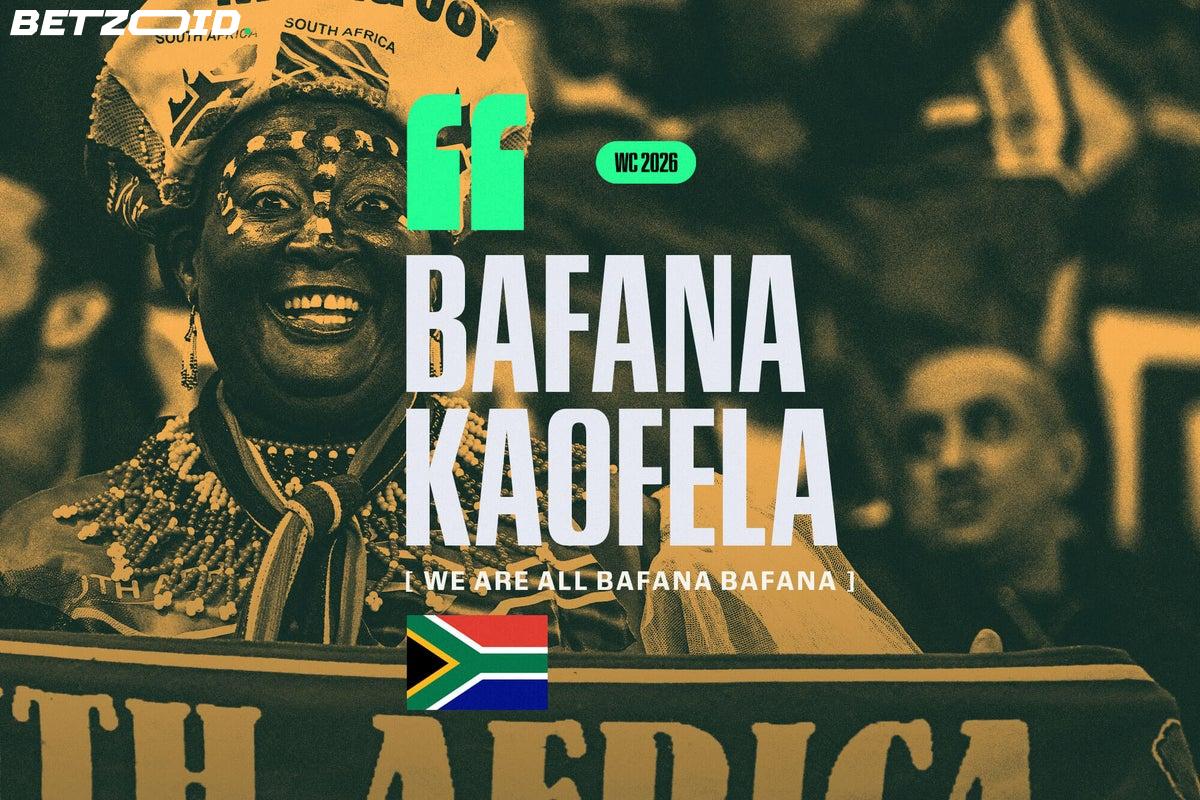
55,000 people showed up to watch South Africa lose to Panama in a warm-up match. That number tells you everything about where Bafana Bafana stand right now — and how far they've come.
The defeat in Cape Town didn't dampen anything. When Mbekezeli Mbokazi's 30-yard equaliser crashed into the top corner, the terraces erupted in the kind of noise that reminds you what football is actually for. A few years ago, this kind of scene felt unimaginable. "There was a friendly in Durban ahead of AFCON 2023 and only a few hundred people were there," recalls supporter Norika Naidoo, who was one of the few who bothered. "It wasn't just the torrential rain that put supporters off."
South Africa had missed three of the six AFCONs since hosting the 2010 World Cup — also their last appearance at that tournament. Captain Ronwen Williams was literally pleading for fans to come to games. Apathy had settled in like damp.
What changed — and why 2023 AFCON matters more than people realise
The shift started quietly in 2019 when Bafana Bafana knocked Egypt out of AFCON on their own soil — Mohamed Salah and all. "My parents had gone to bed and I woke them up celebrating," says Naidoo. A quarter-final exit to Nigeria followed, but the direction was changing.
Hugo Broos arriving in 2021, fresh from winning AFCON with Cameroon, gave the project structure. But the real lever was the 2023 AFCON in the Ivory Coast, where South Africa finished third. Nobody expected it. "Most South Africans thought we'd lose in the group stages," Naidoo admits. "As we kept winning, people became more interested. Before that, there was a lingering sense the players were doing us all a favour."
That bronze medal run did something results alone rarely manage — it changed the national conversation. The style of football connected. The emotional investment of the players matched what fans wanted to feel. That alignment is hard to manufacture, and South Africa have it right now.
The squad identity question that's quietly been answered
There's a detail in this story that doesn't get enough attention. At the 1998 World Cup in France — South Africa's first — 14 of the 23-man squad were based abroad. One player, Pierre Issa, hadn't even grown up in the country and joined the camp just a month before the tournament. By contrast, 24 of the 26 players who went to the Ivory Coast in 2024 were South Africa-based.
"It's much easier to identify with this team," says supporter Emilio Hartogh. "They play more like a club side." That cohesion is real, and it's reflected in how the domestic game has grown. The last Soweto derby between Kaizer Chiefs and Orlando Pirates sold out. In 2022, more South Africans watched that fixture on television than the World Cup final between Argentina and France.
- South Africa have appeared at two previous World Cups: France 1998 and home soil in 2010
- They have never made it out of the group stage
- Their AFCON record: winners in 1996, runners-up in 1998, third place in 2023
- Hugo Broos was appointed coach in 2021 after winning AFCON with Cameroon
The 1996 AFCON win — achieved two years after the end of apartheid — remains the emotional foundation of South African football, even if it doesn't get the global recognition of the rugby team's 1995 World Cup triumph. "Winning AFCON in 1996 was a much more significant moment for non-white people in South Africa," says Brian van Veen, who attended matches during that tournament. The sport has always carried weight beyond the scoreline there.
For the 2026 World Cup, the question isn't whether South Africa belong — they've earned that. The question is whether this generation, built on domestic cohesion and hard-won continental experience, can finally break the group-stage ceiling. Their odds won't be short, but a squad this connected and a fanbase this re-energised makes them a credible upset candidate in whatever group they land in. "The air feels different," says Hartogh, "similar to 2010 when the possibilities seemed so great that crime across the country had reportedly dropped significantly." That's not hype. That's what football means in South Africa.