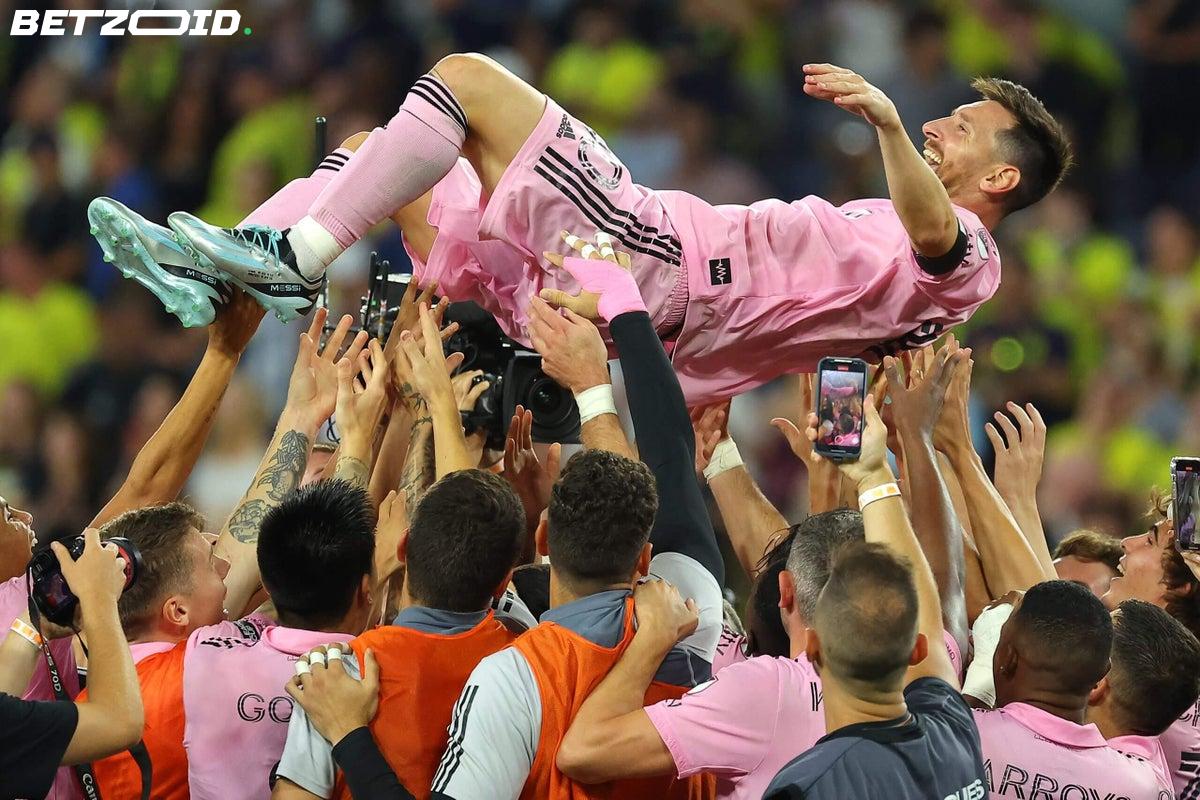
The first thing Lionel Messi asked when he sat down with Inter Miami ownership wasn't about the weather in Florida or the squad depth. It was: "Tell me all the trophies I can win." That's your answer to anyone who thought he came to MLS to retire quietly.
Those details come from The Messi Effect, a new book by journalist Tom Marshall out June 2, which traces how Messi's 2023 arrival reshaped not just Inter Miami but the entire structure of American soccer. The reporting is sharp, the access is real, and some of the scenes inside it are genuinely worth your time.
The initiation nobody expected
The team dinner story alone is worth the price of admission. MLS veterans Victor Ulloa and DeAndre Yedlin decided to put the new arrivals through a standard initiation: stand up, sing in front of the squad. Sergio Busquets — a man whose nickname was "The Silent Conductor" — went first, calm as ever. Jordi Alba followed with a full-throated rendition of Don Omar's reggaeton classic Pobre Diabla. The room erupted.
Then came Messi.
He stood on a chair, said "Hola, soy Lionel Messi," and sang a chant Argentine fans bellow about Maradona. The same Maradona whose legacy Messi has spent his entire career chasing. Within five seconds, the entire squad was on its feet. Napkins twirling, tables banging, thirty seconds of pure noise.
"There was so much noise," Ulloa recalled. "It was just like a huge party for thirty seconds until he stopped."
That moment mattered beyond the fun of it. Messi didn't hold himself apart. He read the room, took the leap, and bought in. That's not nothing when you're the most famous footballer on the planet joining a locker room full of players who grew up with your poster on their wall.
MLS still doesn't know what it wants to be
Here's where the book gets genuinely interesting for anyone tracking American soccer's trajectory — and where the competitive picture for the 2026 World Cup era starts to look less certain than the hype suggests.
Messi's arrival accelerated change: league owners voted to flip the calendar to align with global transfer windows, and competition structure reforms are coming. But the single most important question — roster rules — remains unresolved. Commissioner Don Garber says the league doesn't need to "tear up the playbook." Others in those same boardrooms think that's exactly what's required.
That unresolved tension matters. The collective bargaining agreement expires in January 2028, mid-way through the first summer-spring season. A new commissioner is likely to be hired within that same window. MLS is flying into one of the most consequential periods in its history with its biggest structural decisions still up in the air. Anyone betting on MLS expansion franchises or league-wide competitiveness should be watching those boardroom decisions closely — they'll define the ceiling of American club football far more than any single signing.
Inter Miami owner Jorge Mas put it bluntly, describing a conversation with Messi about a contract extension: "He's sitting there going, 'I'm filling every stadium.' And in his mind, it's like, we're killing it, we're helping the league, and they can't move fast. It's almost embarrassing."
That frustration is revealing. Messi isn't checked out — he's set to become a minority owner of Inter Miami when his playing days end, and he's already said publicly that "big changes" are still needed for teams to grow. He's invested in the outcome. The league just hasn't fully decided what that outcome should look like.
The Beckham comparison is instructive here. Beckham arrived in 2007, just years after MLS nearly filed for bankruptcy, and became a vocal league ambassador. Messi has done one press conference since landing in 2023. Different approach, same stakes — possibly bigger ones, given the 2026 World Cup lands on American soil and the eyes of global football will be watching whether MLS seized the moment or squandered it.
The Lionel Messi Stand at Nu Stadium is already named. The youth tournament is running. The ownership stake is structured. Inter Miami's ownership group is clearly more certain about cementing Messi's legacy at club level than the league is about its own future.
"His impact has got to last forever," said Jose Mas. "And if it doesn't, then we failed."