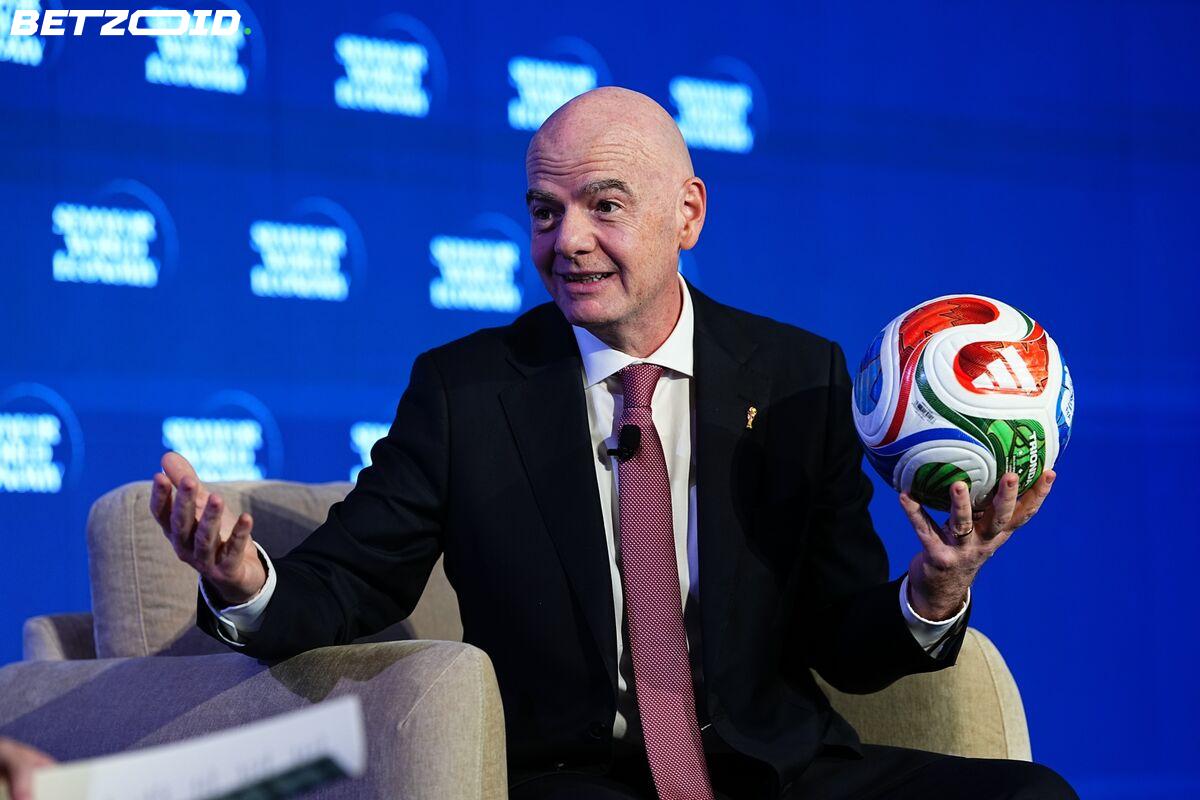
Gianni Infantino hasn't just presided over the biggest World Cup in history — he's been logging the air miles to prove it. The FIFA president has clocked approximately 57,700 miles flying between the three host countries, enough to circle the equator twice, and he's attended nearly half of the tournament's 104 matches along the way.
That number — 104 matches — is itself the story. FIFA's expansion to 48 teams means this World Cup is not just larger than anything that came before it, it's categorically different in scale. For context, the previous format produced 64 games. Infantino added 40 more to the calendar, and he's apparently committed to watching as many as his jet can physically reach.
What 48 teams actually means on the ground
The expansion was sold as inclusion — more nations, more footballing cultures, more commercial markets brought into the tent. Critics called it bloat. The truth sits somewhere in between, though the knockout rounds will ultimately determine whether the format holds up under scrutiny or collapses into a string of forgettable group stage mismatches.
What's beyond debate is the logistical weight of it all. Three host countries. Dozens of venues. A schedule that demands everyone — players, broadcasters, administrators, and apparently one very frequent-flying president — to be in perpetual motion.
57,700 miles is not a vanity stat. It reflects a tournament that has genuinely outgrown the idea of a single nation playing host, and raises real questions about what the World Cup becomes when it's too large for any one country to contain. The travel demands alone will shape how future editions are awarded, planned, and run.
Infantino championed this format. He's now quite literally living with the consequences at 35,000 feet.