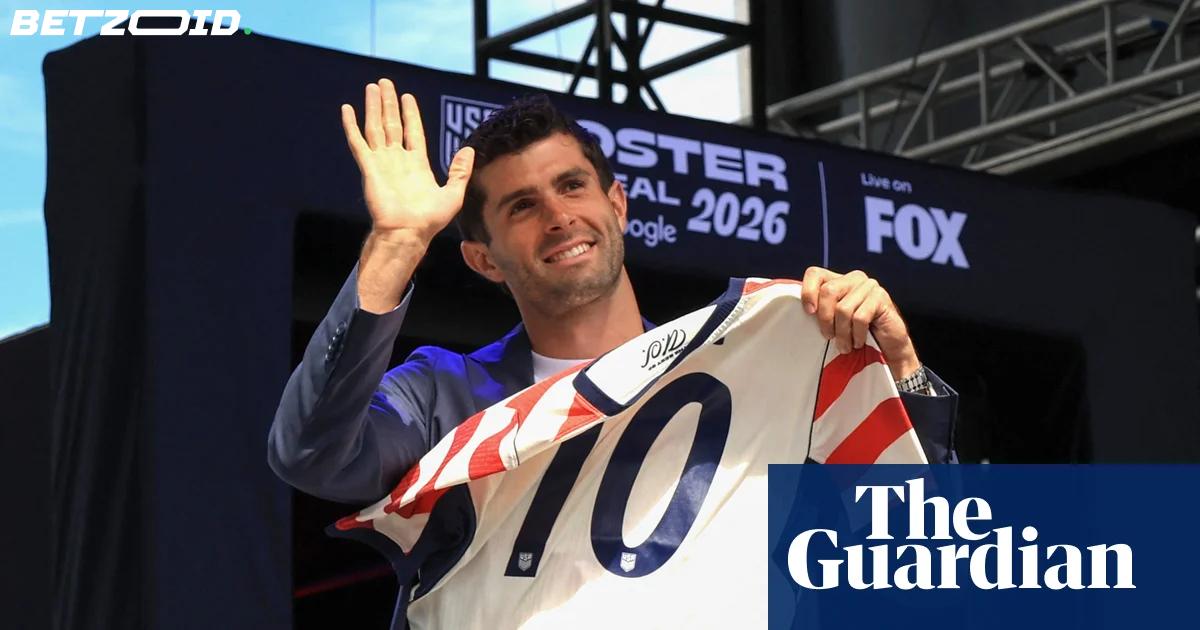
"He is going to score in the World Cup." Mauricio Pochettino didn't hedge it, didn't qualify it. He said it straight, even as Christian Pulisic hasn't found the net for club or country since December 28th.
That's a long wait for a player carrying the weight of an entire national program's attacking ambitions. Pulisic is 27, playing at AC Milan, front-and-center in every piece of USMNT pre-tournament marketing — and somehow goalless in 2025. If he were a substitute fringe player, nobody would blink. He isn't.
Pochettino acknowledged the form problem directly while also addressing the lingering awkwardness from last summer, when Pulisic opted out of the Concacaf Gold Cup to rest ahead of the new club season. The US went on to lose the final to Mexico. Pochettino was "disappointed." Pulisic was reportedly unhappy at being dropped from subsequent friendlies in response. Words were exchanged through podcasts rather than phone calls, which tells you everything about how smoothly that period went.
Confidence is the project now
That tension appears to have settled. Among the USMNT's stated priorities ahead of their group opener against Paraguay is rebuilding Pulisic's confidence. Pochettino called him a "special player" with the "right attitude and commitment." The language is supportive, but the subtext is clear — Pochettino knows his best player isn't at his best, and Paraguay can't be the moment he finds out whether that changes.
Pulisic's last international goal came in November 2024. Anyone betting on him to be the tournament's leading scorer for the US has been watching that form closely — and nervously. Whether Pochettino's public backing shifts something mentally, or whether Pulisic is simply waiting for a game that matters, is the central question hanging over this squad.
The bigger picture Pochettino is building toward
Beyond Pulisic, Pochettino used Thursday's press session to address a midfield setup that raised eyebrows when the squad was announced. Only four central midfielders in 26 picks — Tyler Adams, Sebastian Berhalter, Weston McKennie, and Cristian Roldan — with names like Gio Reyna and Sergiño Dest earmarked to fill in if needed despite minimal experience in an engine room.
Pochettino's reasoning: possession over protection. He wants players who can move the ball quickly and progress it into the final third, and he's comfortable operating without a traditional holding midfielder on the pitch at times.
"We don't need to play another holding midfielder," he said. "We need to have possession, more possession than the opponent — that is the idea."
That's a bold philosophy for a tournament where one bad day ends your summer. The defensive midfield depth concerns are real, and McKennie has spent most of 2026 playing higher up the pitch. If Adams — never the most durable player in the squad — picks up a knock, the options thin quickly.
On the broader question of US fan confidence after the March hammerings by Belgium and Portugal, Pochettino pointed to Argentina's 2002 experience: five years of wins under Bielsa, scalps against Germany and Brazil, then eliminated early at the tournament itself. His point being that pre-tournament form means almost nothing once the competition starts.
He's not wrong. But it's also exactly what a coach says when the pre-tournament form has been poor.