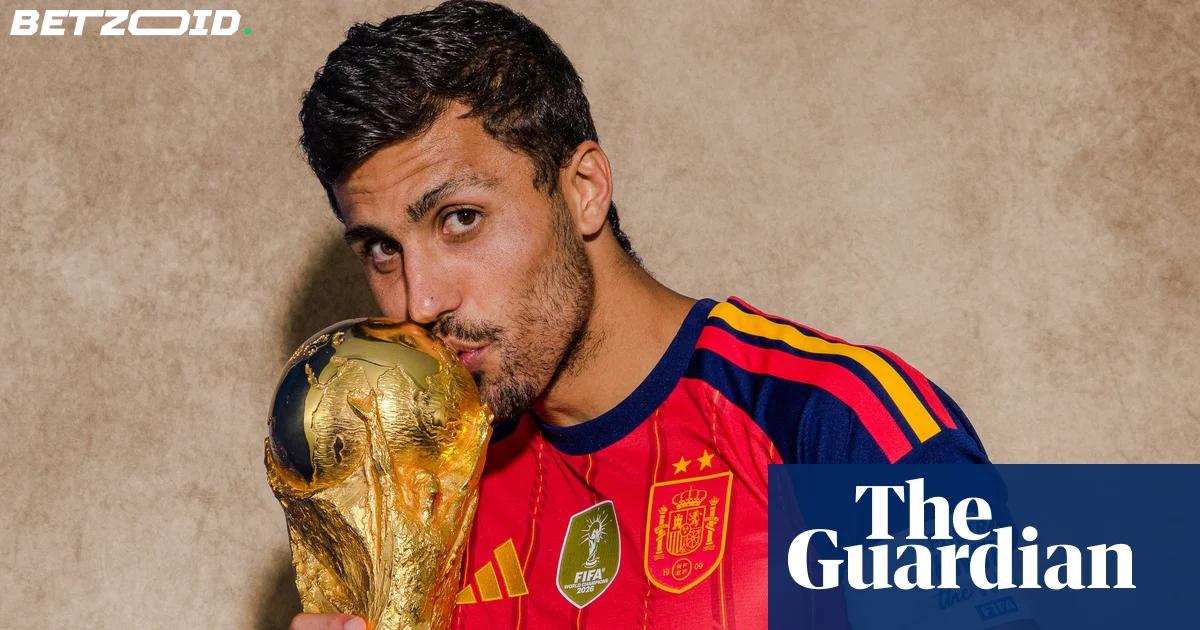
Zero goals. Zero assists. A pass completion rate that ranked 44th in the tournament. And yet Rodri walked away as World Cup player of the tournament — and nobody with eyes seriously argued otherwise.
That tells you more about what modern football actually rewards, versus what it likes to think it rewards, than any tactical breakdown could. In the most commercially driven World Cup ever staged, surrounded by a carefully curated galaxy of marketable stars, the best player was a 5ft 11in Spaniard who ambles between spaces and occasionally leans on people. Mbappé led the golden boot race. Messi, Bellingham, Haaland, Kane, Dembélé all stacked up the numbers. The parade of celebrities marched on. Rodri just quietly broke it up.
What Rodri actually does — and why it's nearly impossible to quantify
His 93.2% pass completion sounds elite until you discover it ranked 18th among non-centre-backs. He was 22nd for tackles per game, and 450th — four hundred and fiftieth — for interceptions. At fouling, a dark art he inherited from the great Fernandinho lineage at City, he managed only 97th. The stats don't make the case. They almost argue against it.
But Rodri completed a tournament-record 756 passes, and more importantly, he controlled which passes opponents didn't attempt. By existing in the right zones, he made Spain's shape coherent and made Messi — Messi — largely irrelevant in the final. That's not a thing you put in a highlight reel. That's a thing you only notice if you actually watch the game.
Jonathan Wilson put it cleanly: his great skill is simply being. Occupying space so intelligently that the game bends around him. Spain have built a lineage of this — Busquets before him, Martín Zubimendi likely after — but Rodri is the apex of that tradition in the current game.
The redemption piece matters too
Twelve months ago, the question wasn't whether Rodri was the world's best midfielder — it was whether he'd ever fully return. He tore his ACL just ten weeks after winning Euro 2024's player of the tournament. City's subsequent collapse across the 2024-25 season — starting only 17 league games without him — was the clearest possible argument for his value written in results.
His World Cup return wasn't smooth either. He was forced off during City's Club World Cup defeat to Al-Hilal, and Pep Guardiola said openly that the real Rodri wouldn't resurface until this summer, after a season spent carefully managing his minutes. That calculation proved exactly right.
There's a useful betting framework buried in that observation: the players who dominated this World Cup were disproportionately those who hadn't ground through 50+ high-intensity club games in the preceding season. Load management, rotation, squad depth — these aren't just fitness conversations. They shape who peaks in July.
Rodri is also the first non-creator to win the Golden Ball in 24 years. In a country and a competition that worships the individual and the spectacular, the defining player ended up being the most structurally anonymous one imaginable. That's not irony. That's just football, when it's working properly.