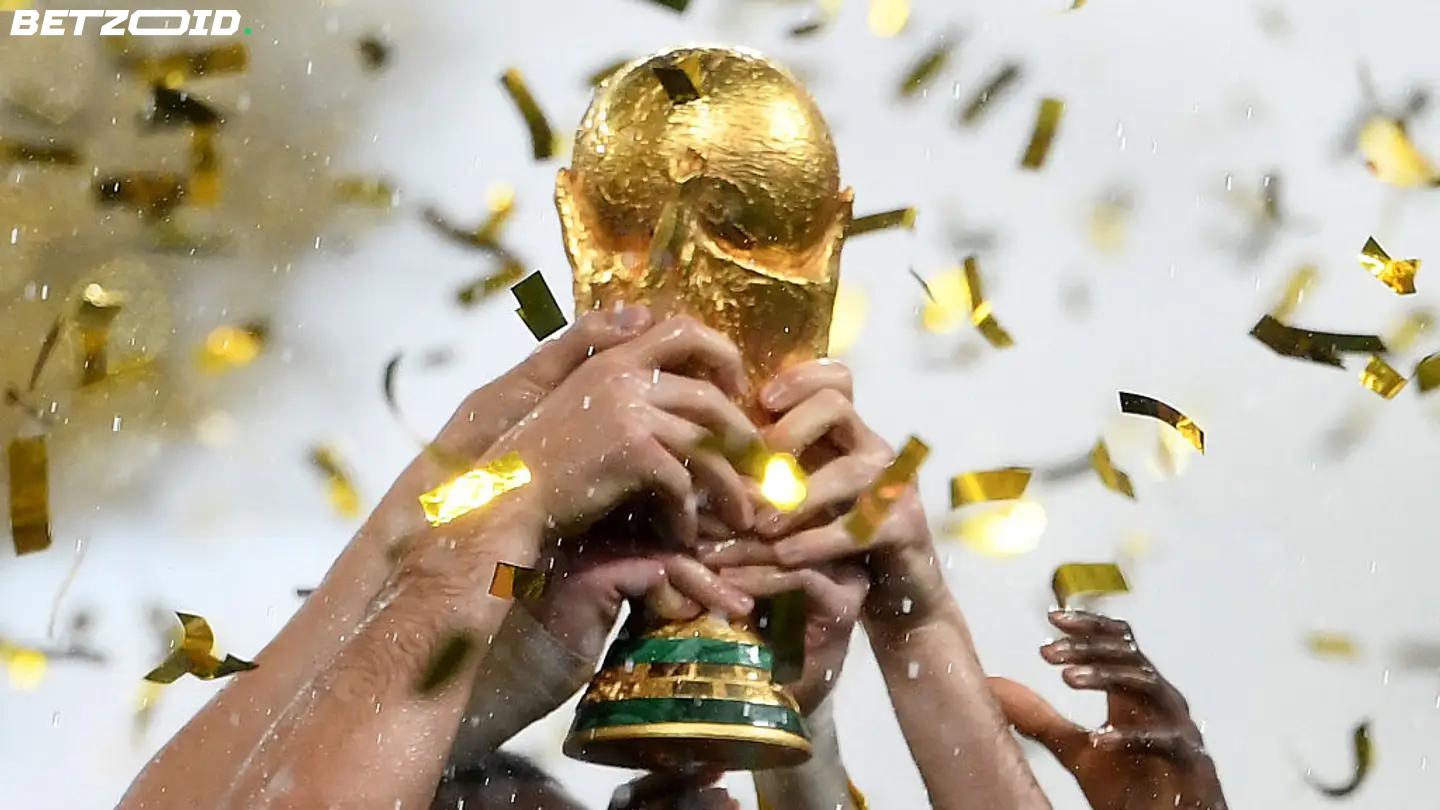
The World Cup happens once every four years because doing it more often would be, frankly, a logistical and sporting disaster. That's not just a conservative take — it's why FIFA's own proposal to go biennial collapsed under the weight of nearly universal opposition.
The 2022 final in Qatar between Argentina and France drew an estimated 5.4 billion viewers. The most-watched moment in sporting history. And yet even with that kind of appetite, the appetite for more World Cups isn't as simple as it sounds.
It's not just about scheduling — it's about what makes it special
Organizing a World Cup takes years. Venues, infrastructure, transport, security, stadium renovations worth hundreds of millions. The 2026 edition, spread across the United States, Canada and Mexico, required the kind of planning complexity that makes a domestic league season look trivial by comparison.
Then there's qualification. Six confederations — UEFA, CONMEBOL, Concacaf, CAF, AFC and OFC — all running lengthy campaigns, squeezed around domestic calendars that are already groaning. Add in the Euros, Copa América, AFCON, the Asian Cup and an ever-expanding Club World Cup, and you have a player welfare problem that no governing body has actually solved.
A biennial World Cup doesn't just double the workload. It eliminates the breathing room that makes the tournament feel like an event rather than just another competition on the pile.
The biennial idea: floated, studied, buried
Saudi Arabia's football federation pushed the idea of a World Cup every two years. FIFA president Gianni Infantino ran a feasibility study and publicly backed it, pointing to projections showing member nations could earn an additional $19 million from the increased cycle.
UEFA didn't want to hear it. Players didn't want to hear it. Domestic leagues — already losing players to international windows with increasing regularity — certainly didn't want to hear it. The backlash was forceful enough that the proposal was shelved entirely.
There's also the Olympic alignment factor. Since 1930, FIFA has deliberately staged the World Cup midway between two Olympics to avoid the two biggest events in global sport cannibalizing each other's audiences and host city resources. That's a system that has worked for nearly a century.
- Scale of organisation requires years of preparation per tournament
- Qualification campaigns must fit around packed domestic and continental schedules
- Player welfare concerns — burnout and injury risk increase sharply with a fuller calendar
- The World Cup cycle deliberately sits between Olympic Games
- The biennial proposal was shelved after opposition from UEFA, players and domestic leagues
The four-year wait isn't a flaw in the design. It's the reason 5.4 billion people stop everything to watch the final.