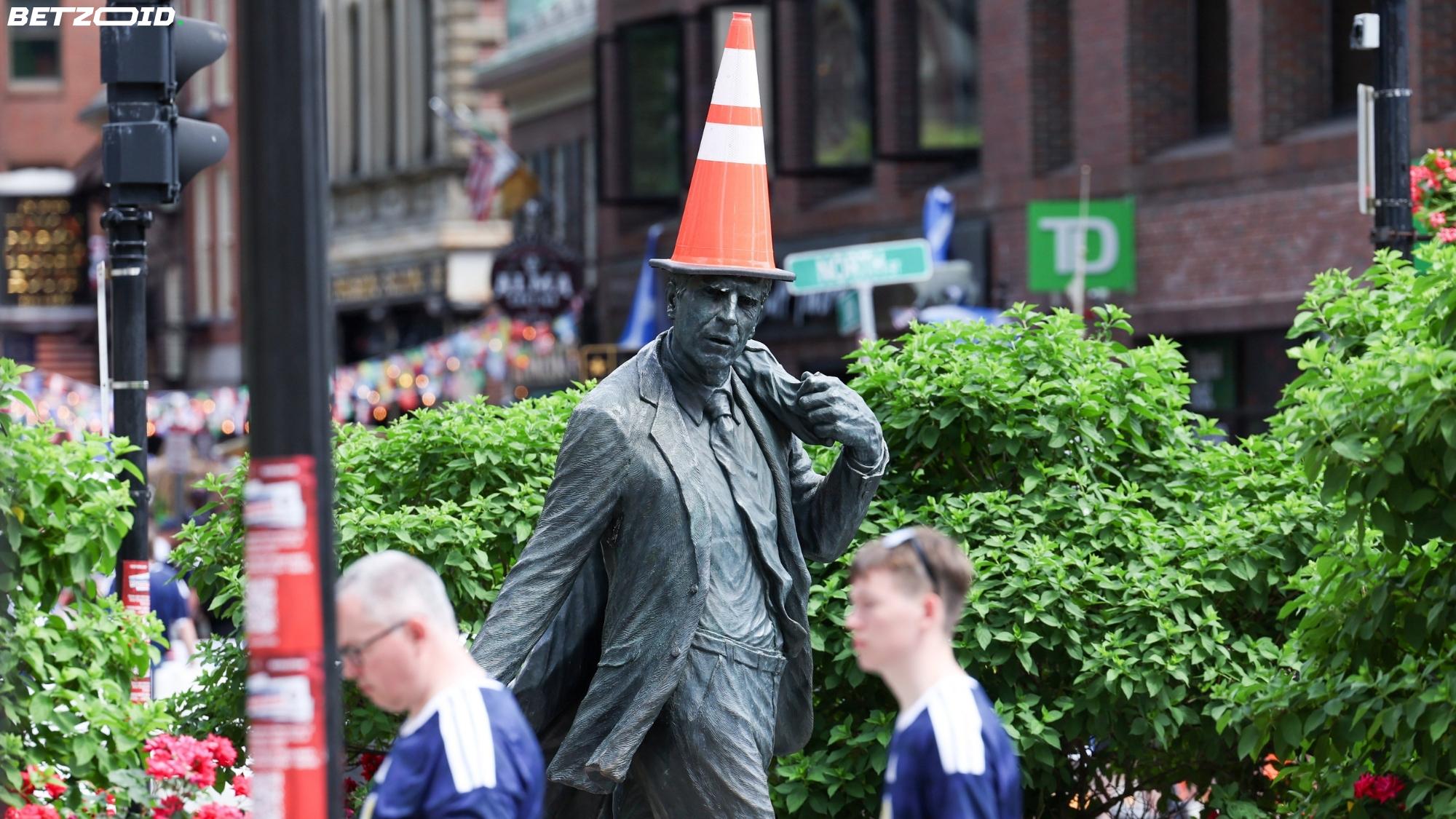
Boston woke up to orange traffic cones sitting on the heads of its most beloved statues. Former mayor Kevin White, basketball icon Bill Russell — all coned. Bostonians didn't do it. The Scots did.
Thousands of Scottish supporters have descended on Boston for the World Cup, and somewhere between emptying the city's beer supply and singing in the streets, one of them inevitably found a traffic cone. What followed was completely predictable to anyone who knows Glasgow.
Forty Years of a Very Glasgow Tradition
Sometime in the 1980s — nobody pinned down the exact night — a Glaswegian, almost certainly several drinks deep, placed a traffic cone on the head of the Duke of Wellington's statue outside the Gallery of Modern Art. It never really came down.
For four decades, that cone has been a fixture of Glasgow life. It gets swapped out for relevant occasions: a football-shaped hat when the city hosted the 2002 UEFA Champions League Final, a cone marked "yes" during the Scottish independence referendum in 2024. It has appeared on tourist merchandise and in city marketing campaigns. There's even a credible — if loosely sourced — claim that it inspired Banksy.
The Duke of Wellington without a cone would feel wrong to most Glaswegians at this point. It's not vandalism. It's identity.
Boston Got a Slice of It
So when you pack a city with Scottish football supporters, you don't get a quiet, well-behaved tourist crowd. You get the cone tradition exported across the Atlantic. It's one of those moments where the football culture travels further than the team itself.
No harm was done. No monuments were damaged. Bostonians who understand what's behind it should probably take it as a compliment — Glasgow doesn't share its traditions with just anyone.
The cone on the Duke of Wellington has outlasted governments, managers, and entire generations of Scottish footballers. It'll outlast this World Cup too.