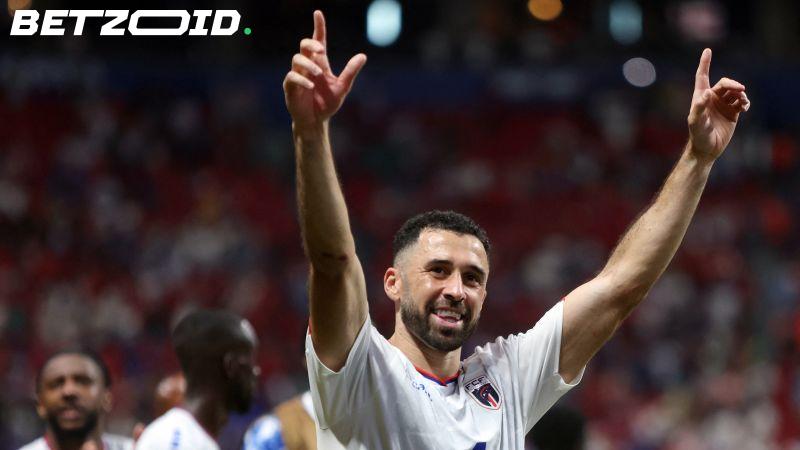
Cape Verde held Spain to a 0-0 draw, pushed Argentina to the 111th minute, and went home without a win. And yet nobody who watched the 2026 World Cup is forgetting them anytime soon.
Center back Pico Lopes was at the heart of it. "Before the ball was kicked, we were given 1% chance," he told CNN Sports. "It was just that sort of feeling of 'We belong here,' like we deserve to be here." In a group containing Spain, Uruguay, and Saudi Arabia, Cape Verde finished second. That's not a fluke — that's a team that knew exactly what it was doing.
The LinkedIn signing that went viral
Lopes' path to the tournament is the kind of story that writes itself. Coach Rui Águas spotted the Irish-born club player and reached out via LinkedIn — in Portuguese. Lopes, who doesn't speak the language, ignored it. Águas waited a year, followed up in English, and nearly got ignored again. "I wrote, 'Forget it,'" Águas recalled, laughing, "and a few hours later, he answered finally."
Lopes was 24, had no plans for international football, and had no idea a LinkedIn profile would change his career. "Never did I think setting up that profile would lead me to international football," he said. It did. By the end of the tournament, he was one of the most talked-about defenders on the planet.
The nation Cape Verde was representing is tiny — population around half a million, ranked 67th in the world, the second-smallest country by land area ever to qualify for a World Cup. They topped their CAF qualifying group ahead of Cameroon, a five-time Africa Cup of Nations winner. Nobody handed them anything.
Spain, Argentina, and a 40-year-old goalkeeper
Against Spain — the eventual champions — Cape Verde's 40-year-old goalkeeper Vozinha made seven saves and had the game of his life. Lopes is clear-eyed about what it took: "If they play like the way they did against us nine out of 10 times, they win the game, so you do need that bit of luck." Luck, yes. But also a defense that refused to crack.
Vozinha went from around 50,000 social media followers to nearly 30 million by the tournament's end. Cape Verde's odds of keeping a clean sheet against the world's second-ranked side would have been laughed at before kick-off. Nobody's laughing now.
Then came Argentina in the Round of 32. Messi, the Albiceleste, and a match that many called the game of the tournament — settled only by a goal in the 111th minute. "We sort of took the occasion out of the game and didn't worry about who we were playing," Lopes said. "We think we had them worried for a little bit."
They did. And that's the part that lingers. Cape Verde didn't just survive at this World Cup — they competed. Every betting market that had them as makeweights got it wrong in the most entertaining way possible. For a nation of half a million people, that means everything.
"You go back to Cape Verde and you realize just how much it meant for the people just to see the name Cape Verde amongst the nations," Lopes said. The kids on the islands will grow up with that. The football will follow.