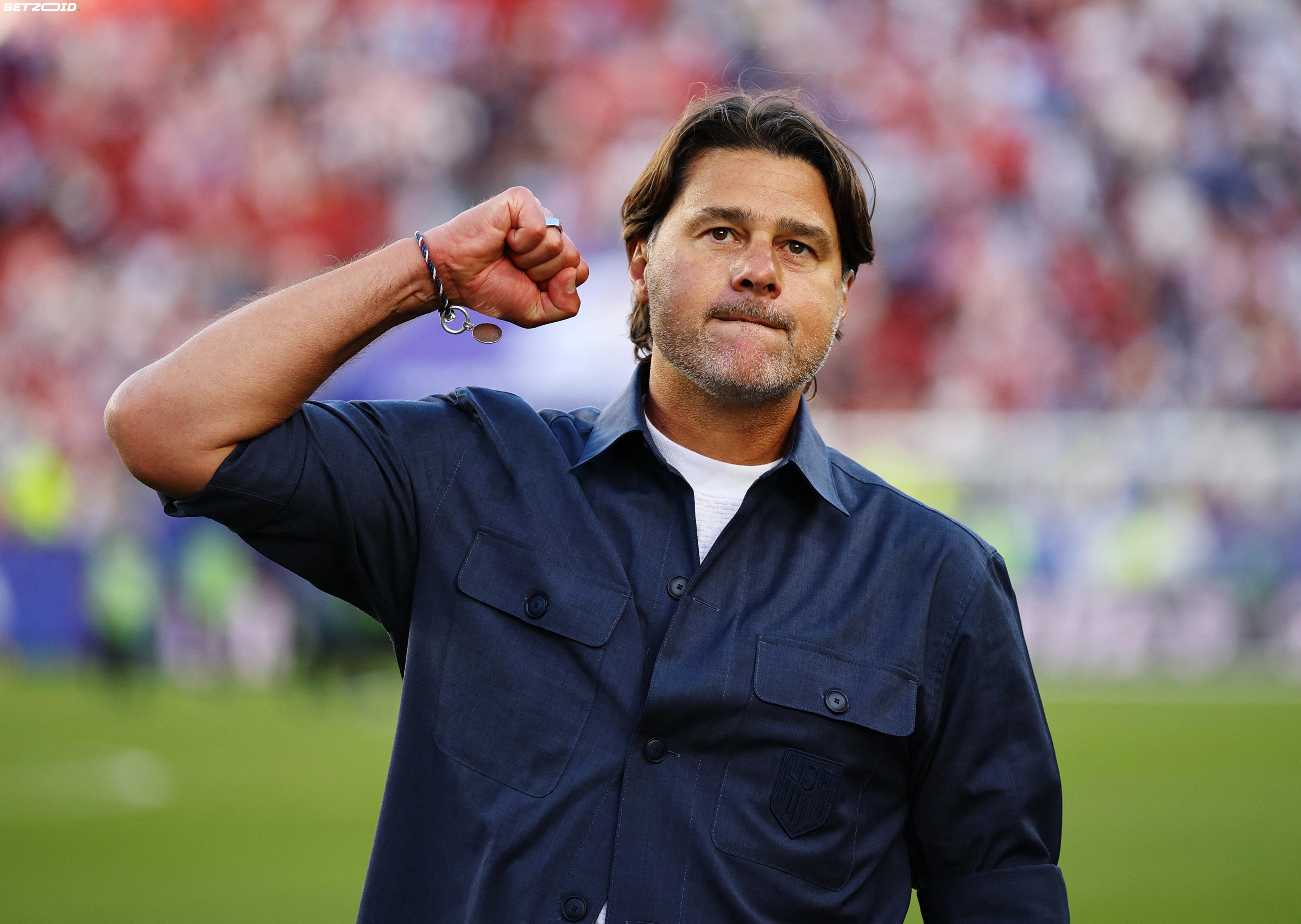
The 2026 World Cup cycle is done, and the U.S. men's national team is already turning the page. Mauricio Pochettino has signed on for another four years as head coach, and his first task in the new cycle is a stacked fall international window that will see the USMNT host Peru, Chile, Mexico and Canada. It's an early but telling test of where this team stands as it begins building toward 2030.
Pochettino staying on surprised plenty of people, and there's no shortage of skeptics wondering whether he'll see out the full deal. Regardless, several pressing questions now sit on his desk as the new era gets underway.
How does Cavan Sullivan fit into the squad?
The most immediate issue is what to do with 16-year-old Cavan Sullivan. He's broken into the Philadelphia Union first team since May and scored five goals across a five-game stretch in late August and early September, right before this camp. A move to Manchester City is already arranged, and plenty expect him to become a key USMNT player down the line.
Pochettino, though, has urged patience. After Sullivan suggested he could have helped the USMNT at the 2026 World Cup, Pochettino pushed back without naming him directly. "You're only entitled to speak a little out of place if you're Messi and you've won eight Ballon d'Ors," Pochettino said in interviews in Europe. "If you've won eight Ballon d'Ors, OK, you can talk with a certain arrogance. But even Messi, never are you going to hear him talking in this way. But if you are young and you start to talk that you can play here, you can play there, or you can play, I don't believe that these are in a right way to build your career in the best way." Whether that caution extends to keeping Sullivan out of the squad picture for now remains an open question.
Who partners Chris Richards at centre-back?
Central defense looks like the USMNT's biggest gap. Chris Richards is established, but nobody has emerged as his long-term partner. Tim Ream, the World Cup starter, is now 38 and has shown signs of decline for a couple of years.
Behind him, the options haven't stepped up. Celtic pair Cameron Carter-Vickers and Auston Trusty haven't carried their club form into the national team, Miles Robinson remains error-prone, George Campbell hasn't had much of a look, and Mark McKenzie hasn't taken the next step. Prospect Noahkai Banks was seen as a potential answer, but he's being heavily pursued by Germany, where he has developed, and his commitment to the U.S. is genuinely uncertain.
Can the U.S. rebuild its goalkeeping depth?
Goalkeeping used to be a position of real strength for U.S. Soccer, built on the legacy of Tony Meola, Kasey Keller, Brad Friedel and Tim Howard. Since Brad Guzan's retirement, though, the depth has thinned considerably. Matt Turner looked like the long-term option before his move to Europe stalled his development, particularly with the ball at his feet, and Matt Freese's high-profile error at the 2026 World Cup exposed just how shallow the position has become.
Young goalkeepers like Gaga Slonina, Chris Brady and Diego Kochen offer some hope, but finding a genuine long-term No. 1 is squarely on Pochettino's list of priorities.
How should star players balance camp and rest?
Christian Pulisic's decision to sit out the 2025 CONCACAF Gold Cup didn't sit well with a large chunk of the fanbase. He still went through a rough slump in form heading into the 2026 tournament and has dealt with fitness issues to start his 2026/27 club season, which raises the question of whether resting really paid off.
With Pulisic, Weston McKennie, Antonee Robinson and Tyler Adams all set to be around 30 by the next World Cup, the federation and its senior players may need a clearer, shared understanding of when skipping international windows makes sense and when it doesn't.
What's the role of MLS talent going forward?
Major League Soccer has long fed the national team pipeline, but its place in developing USMNT talent is worth examining as the league's global standing shifts. Pochettino's first two years in charge showed the upside of unearthing MLS talent, with Alex Freeman, Max Arfsten, Jack McGlynn and Sebastian Berhalter all becoming important squad pieces before each earned a move to Europe.
Even so, leaning too heavily on domestic talent has its limits. U.S. Soccer will need to weigh giving MLS players a genuine national-team pathway against the reality that the squad's highest ceilings still tend to come from players developed abroad.