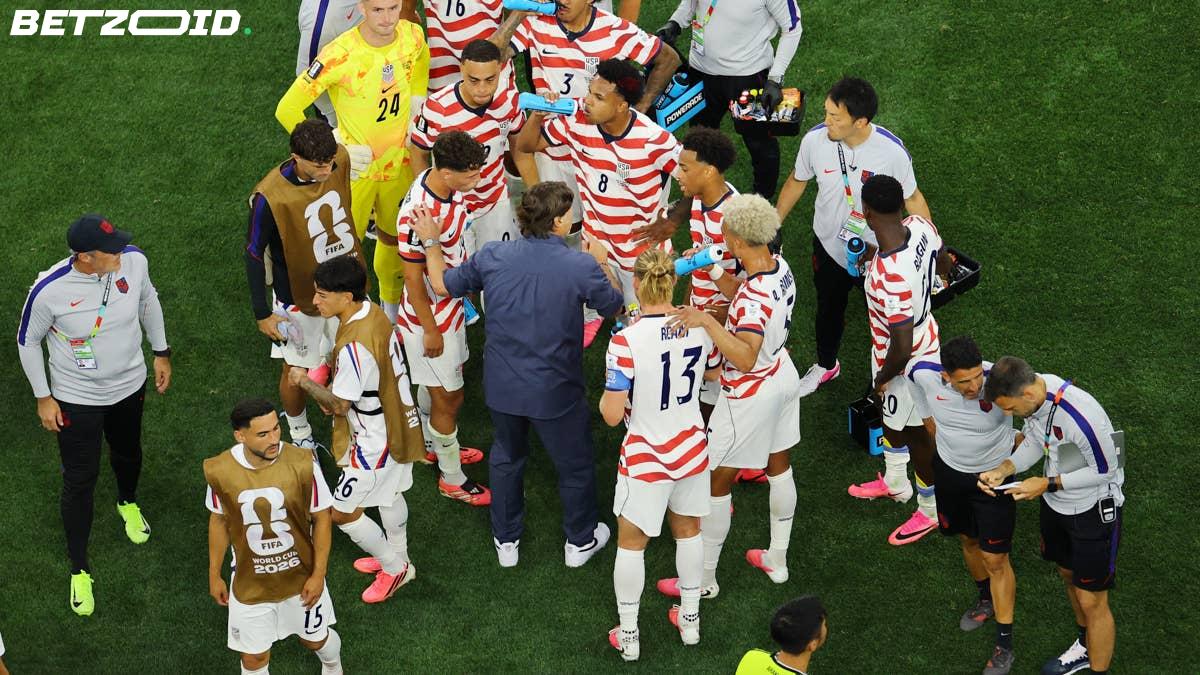
"We are one of the only networks in the world to NOT show ads during the World Cup cooling breaks. We prefer the old school way."
That was Telemundo's commentator, live on air during Canada vs. Bosnia and Herzegovina, drawing a line in the sand. And the contrast he was pointing to was hard to ignore.
FIFA made hydration breaks mandatory at the 2026 World Cup — no longer reserved for extreme heat conditions like Brazil 2014, but a fixture in every single match. The rule change opened a commercial window, and broadcasters walked straight through it.
Fox Sports Missed Live Play
The consequences showed up early. During the tournament opener between Mexico and South Africa, Fox Sports — holder of the English-language rights in the US — cut to commercials when the hydration break hit at the 22-minute mark of the second half. They didn't make it back in time. Play had already been live for roughly 10 seconds when their feed returned.
Ten seconds doesn't sound like much until a goal goes in during them.
Telemundo stayed on the stadium feed the entire time. Players catching their breath, coaches barking instructions, fans in the stands. The commentator framed it as a philosophical stance: "We should be able to see what the players do. We show fans, people enjoying, not the corporate direction of football."
He's articulating something a lot of purists feel. Football's rhythm is the product. Forty-five minutes of unbroken action, where tension accumulates and the game breathes on its own terms — that's what people are actually buying into. Mandatory breaks every half don't just pause the clock. They puncture the atmosphere.
What It Means for the Tournament
This isn't going away. The hydration breaks are locked in for every match, which means broadcasters have a guaranteed commercial slot baked into every game from here until the final. How networks choose to use that window — or not — will shape how millions of viewers experience this tournament.
Telemundo made a call. Fox Sports made a different one, and lost the feed doing it.
"The corporate direction of football" is a phrase that's going to stick around this summer.