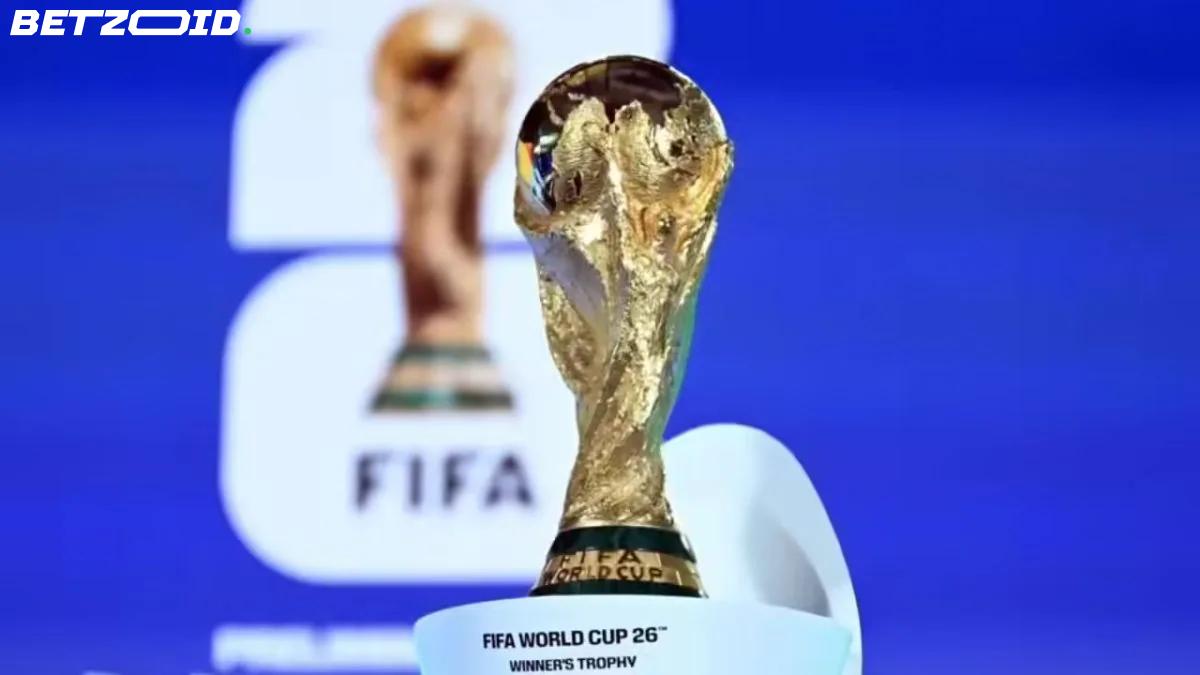
FIFA has nearly doubled the World Cup prize fund in four years. The 2026 tournament in the United States, Canada and Mexico comes with an $871 million financial package — up from $440 million in Qatar. That's not just inflation. That's a structural shift in what this tournament is worth.
The expansion from 32 to 48 teams and 104 matches across three countries drove the increase, with FIFA raising the figure from an earlier $727 million budget to account for the operational complexity of running football's biggest event across a continent.
Where the money actually goes
The headline number splits into two distinct pools. The $655 million performance-based prize fund rewards teams based on how far they progress. Every one of the 48 qualified federations also receives $10 million in qualification funding and $2.5 million in preparation grants — a guaranteed floor of $12.5 million per nation before a single match is played.
Then there's the club compensation side, which rarely gets the attention it deserves. FIFA has allocated a record $355 million to clubs through its Club Benefits Programme — $250 million covering the finals, $100 million for qualifying matches, and $5 million in administration support. Clubs receive at least $5,000 per player per day during the release window. A player eliminated at the group stage generates roughly $160,000 for his club. One reaching the final is worth close to $285,000. Clubs also collect $2,362 per qualifying appearance in the matchday squad.
Manchester City leads the expected beneficiaries with 19 players involved, followed by Bayern Munich (18), Arsenal (16), PSG (16) and Barcelona (14). If you're weighing those clubs' financial positions heading into 2026-27, the World Cup compensation adds a meaningful — if modest — line to the ledger.
Players don't see a cent directly from FIFA
The most persistent misconception about the World Cup is that FIFA writes checks to the players. It doesn't. Prize money goes to national federations, who then decide how — and whether — to pass it on.
The variation is stark. During the 2018 World Cup, Kylian Mbappé reportedly earned around £17,000 per match before donating it all to charity. England players received roughly £2,000 per match, which also went to charity. The US operates under a unique model: since a 2022 agreement, US Soccer pools and shares 80% of World Cup prize money equally across its men's and women's teams — one of the few meaningful equal-pay structures in global football.
Most federations keep their arrangements confidential. Some offer appearance fees, others tie everything to results. Players at smaller nations may see little of it at all.
Add the club compensation programme to the prize pool and FIFA's total World Cup-related financial commitment clears $1.2 billion. The 2026 tournament is the largest, the longest and now the most expensive World Cup ever staged.