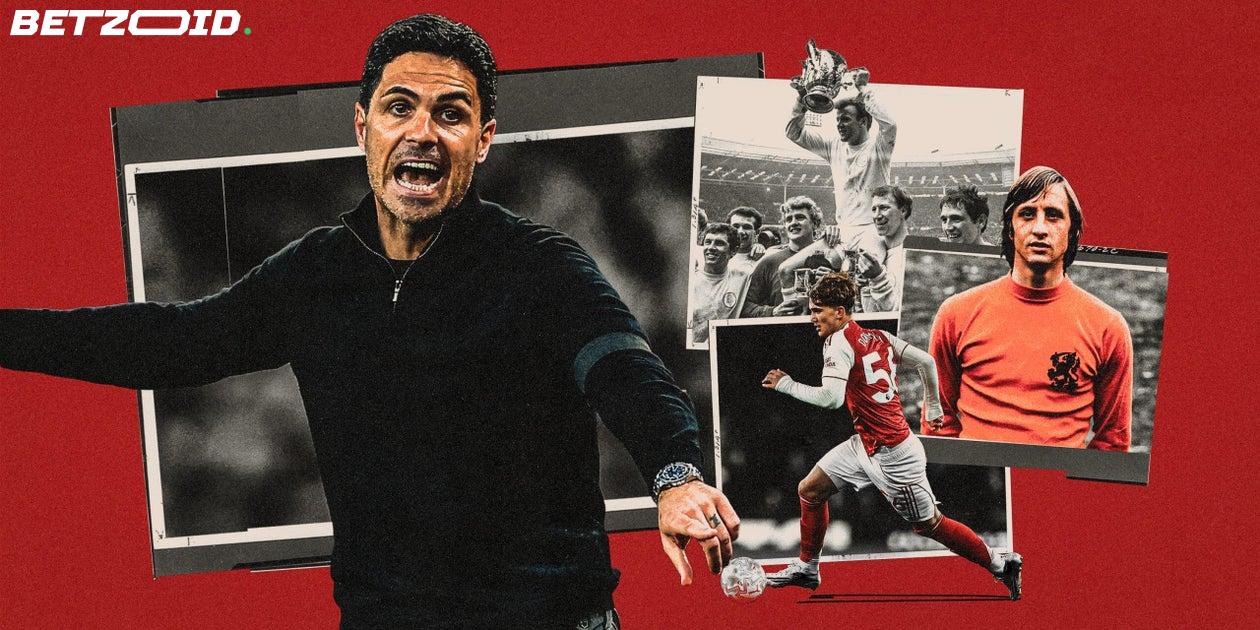
Arsenal won the Premier League. First time in 22 years. And the loudest debate isn't about the trophy — it's about whether anyone outside the Emirates actually enjoyed watching them win it.
That tells you something.
Mikel Arteta clinched it with a header from a corner against already-relegated Burnley. Twelve days earlier, neutrals were furious about a 1-0 win at West Ham built on a disallowed late equaliser — also at a corner. The symmetry is almost too neat. 'Set Piece FC' didn't just become a punchline; it became a defining identity.
Brighton's Fabian Hurzeler said it plainly in March after a 1-0 Arsenal win: "That's not football, what Arsenal did there." Peter Schmeichel called them "ugly." Emmanuel Petit — who won the title with Arsenal — admitted he gets bored watching them. Arteta's response to all of it? "What. A. Surprise." He is not losing sleep over this.
The Price of Pragmatism
The comparison that keeps surfacing is Don Revie's Leeds United. In the 1960s and early 70s, Leeds won promotion, two league titles, the League Cup, the FA Cup, and two Fairs Cups. They also finished second in the league five times, lost three FA Cup finals and two European finals. By any measure, one of the great English club sides. What do people call them? Dirty Leeds. Two words that erase thirteen seasons of achievement.
Arteta knows the risk. Arsenal finished second last season on 74 points, second the season before on 89, second the season before that on 84. Three consecutive runners-up finishes. Second is not nowhere — the Dutch Total Football sides of the 1970s lost two World Cup finals and are still spoken about with reverence — but in professional sport it becomes a habit that corrodes. Arteta broke the habit. He's decided that's what matters, and he'll let posterity argue about the aesthetics.
There's a reasonable version of that argument. Jock Stein famously wanted to win the 1967 European Cup playing football that made neutrals glad. He got both — the trophy and the smiles. But Stein also had Celtic, and Arteta had an Arsenal side whose natural footballers — Eze, Saka, Odegaard, Trossard, Lewis-Skelly — have spent most of the season operating under what feels like a structural handbrake.
The Moments That Hint at Something Else
The handbrake has slipped, occasionally, and those moments stand out precisely because they've been so rare. Sixteen-year-old Max Dowman coming off the bench against Everton and running through to score into an empty net — the Emirates losing its mind in real time. Eberechi Eze's volley against Bayer Leverkusen in the Champions League, so clean it almost overshadowed Declan Rice's equally excellent second goal.
These aren't footnotes. They're evidence that the players can do it. The question is whether Arteta will let them do it more often from here.
Arsenal are in the Champions League semi-finals. The Premier League title is theirs. Their last four league results read: 1-0, 3-0, 1-0, 1-0 — the kind of sequence rival fans mock and would kill for. If they go deep in Europe playing the same way, the 'Corner-kick champions' tag will harden into something permanent. If Eze and Saka and Dowman are given the freedom to express themselves at that level, the story changes.
Arteta said before the Everton win: "It's about playing the best possible football you can amid the game's demands. That's it." Maybe that's the honest version of where they are right now — not a philosophy, just a ceiling they haven't broken through yet.
The ceiling exists. The players to break it exist. Whether the manager will let them is the only question that matters going into next season — and into whatever this Champions League run becomes.
"Second again, ole, ole," as Arteta put it. It stings. He made sure it wouldn't happen again. Now comes the harder part: making people glad it didn't.