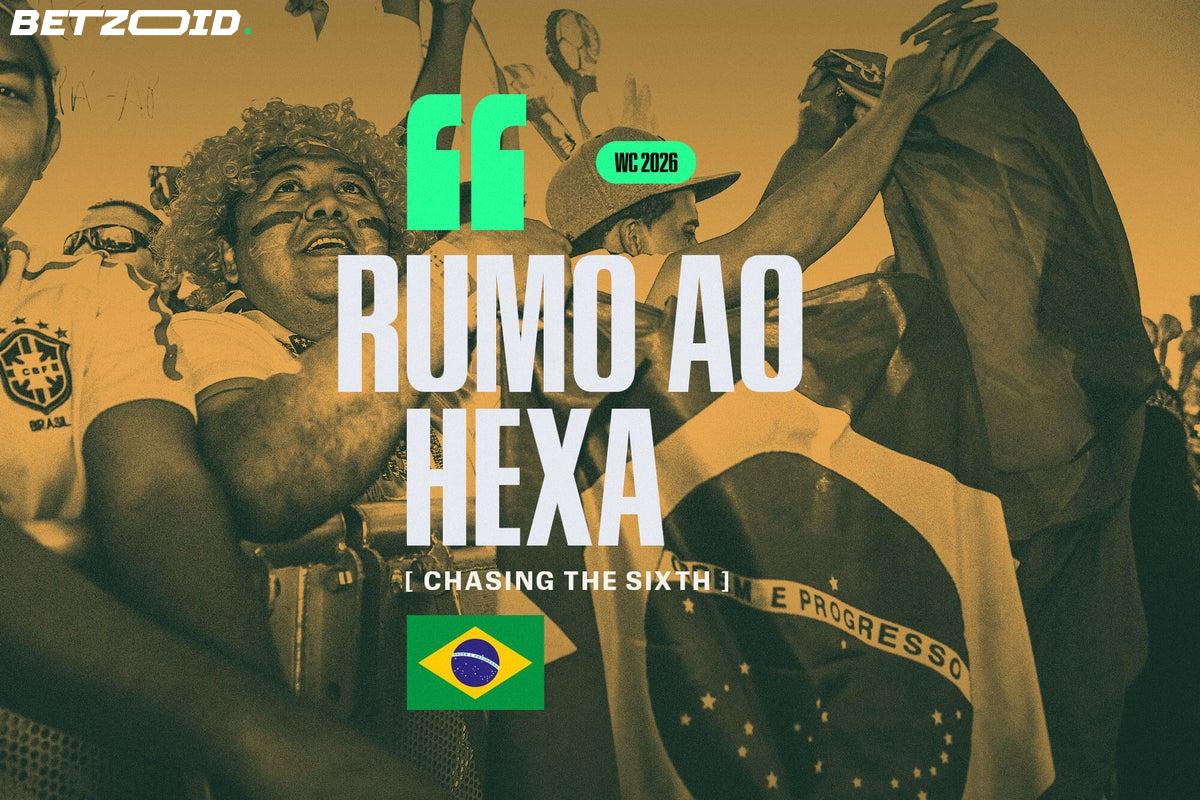
"The Brazilian shirt is the heaviest in the world. No washing line can hold it." That line, from Brazilian supporter Rodrigo Ferraz Olimpio, tells you everything about what it means to follow the Seleção into a World Cup.
Brazil arrive at the 2026 edition carrying five titles — more than any nation in history — and the full psychological weight of 24 years without one. A whole generation of fans has grown up knowing Brazil as the team that should win the World Cup, not the team that does. That gap between expectation and reality is the central tension of Brazilian football right now.
The Hexa or bust mentality
The phrase doing the rounds is rumo ao hexa — chasing the sixth. It surfaces every four years like clockwork, and every four years ends in elimination and collective grief. But that doesn't stop anyone believing. It's almost a point of national pride that they believe anyway.
"People carry around this desire for one more title," says Paloma Vieira, 29. Ferraz Olimpio frames it with generational urgency: "That's a whole generation waiting for the sixth World Cup."
What makes Brazil's relationship with the tournament genuinely complicated is that the lows cut just as deep as the highs. The 1950 defeat to Uruguay — still referred to by some as "Our Hiroshima" — and the 7-1 collapse against Germany on home soil in 2014 are two of the most psychologically damaging results in World Cup history. Both live rent-free in the Brazilian football consciousness.
A fanbase that stops the country — and knows its own flaws
When Brazil play at a World Cup, the country shuts down. Streets get painted green and gold. Ticker tape hangs from electrical wires. Workplaces empty. "Brazil stops completely," says Andre Savastano, 39. "It becomes a real party." That collective energy is genuine, and the travelling support heading to New Jersey, Philadelphia and Miami in 2026 will bring it with them — samba, drums, 90 minutes of singing.
But Brazilian fans are also bracingly self-aware about their own psychodrama. "There is always this moment of huge excitement, usually when we put in a good performance against a poor team," says Savastano. "Then comes this feeling of 'I knew it' when Brazil go out."
Joao Jannetta, 27, puts it even more bluntly: "The world has a much more positive view of the team than Brazilian people do. Culturally, Brazilians have this habit of thinking that everyone else is better."
That contradiction — superiority complex and inferiority complex coexisting in the same fanbase — is genuinely unique in international football. It also makes Brazil one of the harder sides to price up in tournament markets. The talent has been there in patches; the coaching situation under Carlo Ancelotti has been stop-start; qualifying was mediocre. And yet you'd still be taking on that collective belief if you backed against them deep in a knockout stage.
- Brazil have won the World Cup five times: 1958, 1962, 1970, 1994, 2002
- Their last title came 24 years ago in Japan/South Korea
- They play their 2026 group games in New Jersey, Philadelphia and Miami
- Carlo Ancelotti is their current manager after four coaches cycled through qualifying
"Brazilians are real believers," says Ferraz Olimpio. "Even in the difficult moments."
Twenty-four years is a long time to believe. The question in 2026 is whether belief is finally backed by a squad capable of delivering it.