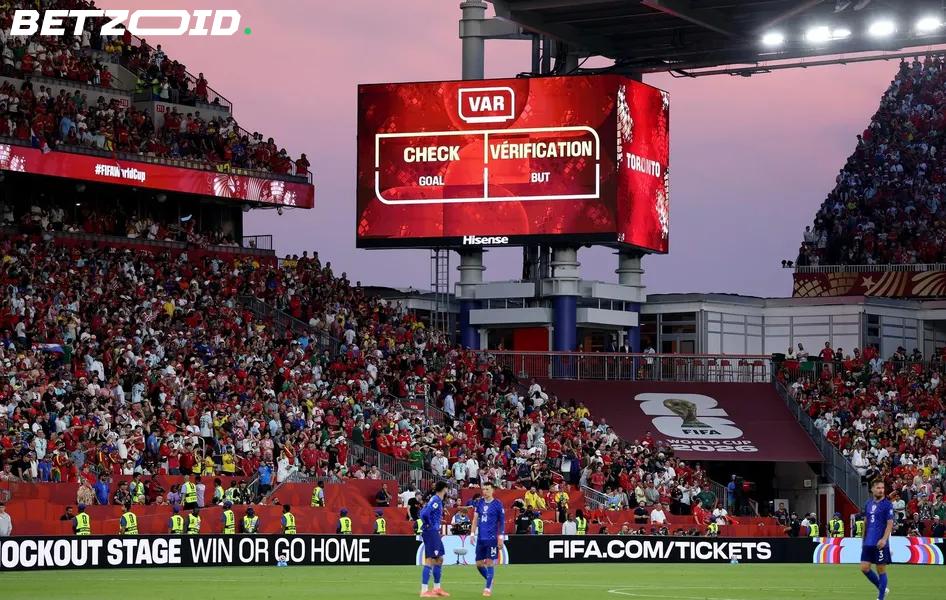
"All these decisions take the joy out of football." That was Croatia manager Zlatko Dalic, after his side's World Cup ended on a goal disallowed because Igor Mantanovic may have grazed the ball with the tips of his hair.
Not his forehead. Not his shoulder. His hair. A touch so slight it didn't change the ball's trajectory by a single degree. And yet Portugal are through to the next round, and Croatia are on a plane home.
The system, technically speaking, worked perfectly. A microchip inside the Adidas Trionda match ball detected the contact, a "heartbeat graphic" appeared on broadcasts, and FIFA confirmed the offside was correct. Roberto Martínez wasn't wrong when he said: "The balls now have a chip, and it's very clear that's why the VAR intervened. It's not a subjective opinion."
When precision becomes its own problem
But that's exactly where the debate lives. Football has never been a game purely about precision. It's a game played by humans, watched by humans, felt by humans. When a moment of apparent celebration — a 94th-minute equalizer in a World Cup knockout tie — gets erased by data that nobody in the stadium could see, perceive, or feel, something shifts.
That something is emotional legitimacy. And no sensor can manufacture it.
The 2026 tournament had largely avoided controversy through the group stages. The knockout round blew that open inside a week. Several decisions that would never have been questioned at previous World Cups are now the story — not the football, not the players, not the goals.
None of this is entirely new. The back-pass rule in the 1990s changed the game's DNA. Goal-line technology ended a specific category of injustice. VAR has overturned mistaken identity calls, missed penalties, and dangerous fouls referees couldn't physically see. The direction of travel has been consistent: more information, fewer obvious errors.
More information doesn't mean less controversy
What FIFA's investment in AI, player tracking, and ball sensors has actually done is relocate the argument. It used to be: did the referee see it? Now it's: was the technology applied correctly, and should that level of precision even apply?
The US red card via VAR earlier in the tournament showed another crack — slow-motion replay distorts perception of intent and speed in a way real-time never does. Human judgment hasn't been removed from the equation. It's just been moved upstream, to the people deciding which angles to review and how to interpret what the data shows.
Subjectivity hasn't left the game. It's wearing a different outfit.
Whether Croatia's elimination was sporting justice or a technical overreach depends entirely on what you think football is supposed to be. The technology was right. Dalic's anger was also right. Both things are true, and that tension isn't going away — it's just the new normal.