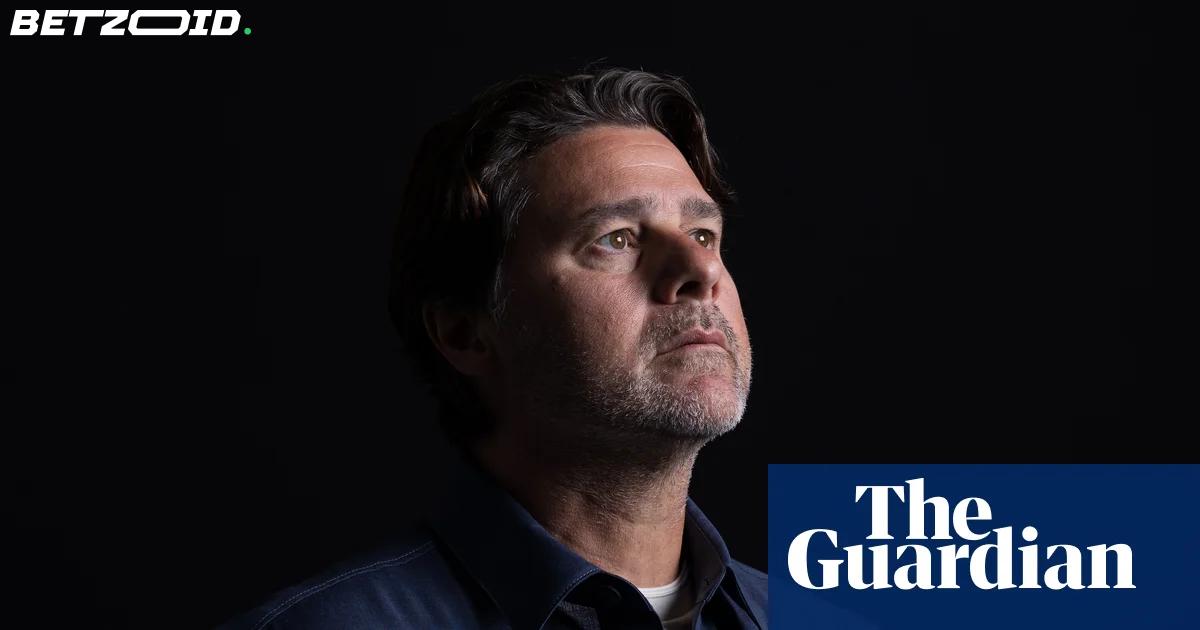
"Tottenham is the only club I am always open to help. In whatever division." That line, delivered without a flicker of hesitation, tells you everything about where Mauricio Pochettino's heart still sits — even after Chelsea, PSG, and a World Cup with the United States.
This summer, it nearly happened. Spurs made contact. Pochettino was stirred. The sticking point wasn't the club's toxic injury record or their wobbling squad — it was pure timing. He was contracted to the US through the World Cup, and walking out on that wasn't something he was willing to do. Then Tudor imploded, Spurs panicked into Roberto De Zerbi, and the door closed.
"When I was free, I never received a contact," Pochettino says. "And when I was working, I received a contact but I cannot make the decision to come back. It was a little bit unlucky."
The Spurs Question That Won't Go Away
Spurs have maintained that De Zerbi was their primary target all along — that they weren't sitting around waiting for Pochettino to become available. Maybe. But the Argentine's candour makes it hard to accept that version as the whole story. He says these things publicly, with a smile, because he means them. That's rare enough in football management to be worth paying attention to.
He watched De Zerbi get handed over £300 million in transfer funds this summer — money Pochettino could only have dreamed of during his five-and-a-half years in north London. His reaction? "I am happy because I feel Tottenham is still my club." Genuinely generous, or the most dignified form of regret? Probably both.
When Daniel Levy was ousted as chairman last September, Pochettino's response was telling. He'd kept in touch with the man who sacked him. "I think he feels like I did when I was sacked," he said — describing how painful it was to receive a letter, pack your things, and never get to say goodbye to the 200 or 300 people who were your family. No text. Nothing. "That was really, really tough for me."
England, Argentina, and the Falklands Complication
He's also not closing the door on England. Not now — he's clear about that, and half-joking that the US Soccer federation would have his head if this became a headline. But in principle, in the future, if he's free? "Maybe, yes."
He's aware of the friction his Argentinian nationality would create. The Falklands conflict. The history on the pitch. Argentina knocked the US out of the World Cup semi-final 2-1 just weeks ago. He doesn't pretend none of that exists, but he doesn't see it as the end of the conversation either.
- Pochettino grew up in Murphy, a small Argentine town with a significant Irish and British population
- He points to Racing Club, River Plate, and Newell's Old Boys as clubs with English-language names — a product of British influence on Argentine football
- He still owns a family home in north London and considers England a second home
"An Argentinian guy thinking to maybe one day defend the flag of England and we were involved in a war," he acknowledges. "It is true that it can be controversial." But his belief is that diplomacy and dialogue can find a way. Whether the FA would ever go that route is a different question entirely — and Thomas Tuchel has the job for now.
The four-year extension with the US changes his calculus regardless. This isn't the short-term arrangement he had before the World Cup, when clubs could theoretically tempt him away. A longer commitment means any club coming in will face a more complicated negotiation — and Pochettino knows it. "Maybe now if someone calls in the future, it's a different, different type of thing," he says. He's committed to the 2030 World Cup cycle. That's the plan. But in football, plans bend.
Spurs, meanwhile, are locked into De Zerbi with a serious transfer war chest behind him. The reunion that almost happened this summer is shelved for now — and given how quickly football changes, "now" might be the most honest word in this whole story.