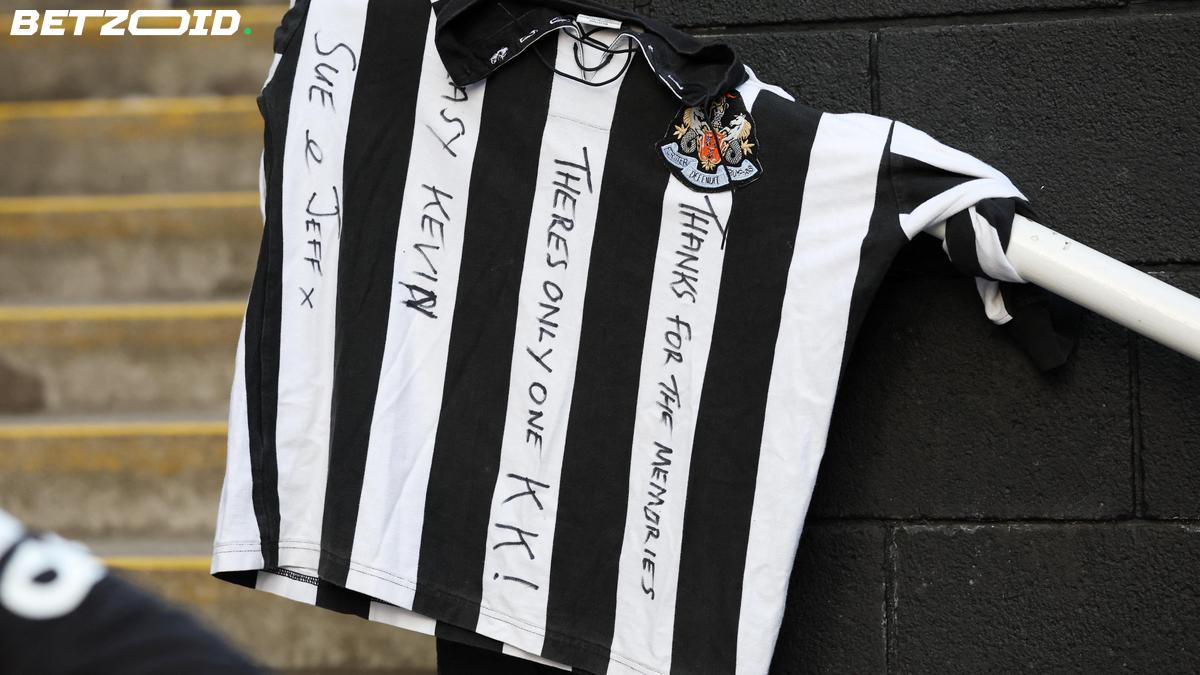
Kevin Keegan has died at 75. Newcastle United confirmed the news on Monday, July 20, 2026 — weeks after Keegan himself revealed he had been diagnosed with stage four cancer. One of the four Englishmen ever to win the Ballon d'Or. Twice. There won't be many like him again.
"One of the most iconic, influential and deeply loved figures in our club's history," Newcastle said. That's not a throwaway tribute. Keegan played for the club, retired there, nearly won the title there as a manager, and came back again. St. James' Park ran through his career like a thread.
What made Keegan different
He wasn't the most naturally gifted player of his era — he'd have told you that himself. What he had was relentless work rate, a sharp eye for goal, and something most technical players never develop: the ability to make everyone around him feel the game mattered as much as it did to him. Born in Doncaster on February 14, 1951, he came up through fourth-tier Scunthorpe before Bill Shankly brought him to Liverpool in 1971.
At Anfield, he formed a partnership with John Toshack that delivered an English league and UEFA Cup double in 1973, two more league titles, an FA Cup, another UEFA Cup where he scored in both legs of the final, and the European Cup in 1977. In that final against Borussia Mönchengladbach, it was Keegan who drew the foul from Berti Vogts — the penalty Phil Neal converted to make it 3-1.
Then he left. In 1977, before it was remotely fashionable for English players to go abroad, Keegan moved to Hamburger SV for what was reportedly the highest salary in European football at the time. Hamburg's players resented it initially. Within two years, he'd won them over, delivered a Bundesliga title, and taken home back-to-back Ballon d'Or awards in 1978 and 1979.
"For Hamburg fans he will remain above all a crowd favorite, an exceptional player, and one of the best footballers ever to wear the rhombus on his chest," the German club said.
The coaching years — and that moment
The playing career ended at Newcastle in 1984, after a stint at Southampton where he finished as the English top scorer with 30 goals in 1981-82. The coaching career that followed is defined by two things: the almost, and the toilet.
In 1995-96, Keegan's Newcastle led the Premier League by 12 points at one stage. They finished second. Manchester United won the title. During the run-in, after Ferguson had suggested Newcastle's opponents weren't trying hard enough against them, Keegan went on live television and delivered what became one of the most raw, unscripted moments in Premier League history: "I'd love it if we beat them, love it." He meant it. That's what made it land so hard.
His England spell lasted 20 months. They went out in the group stage of Euro 2000. A 1-0 home loss to Germany in the final match at the old Wembley — the last competitive game played there — ended it. Keegan told FA officials he was resigning in an emotional conversation held, reportedly, in a toilet cubicle beneath the stadium. Fitting, in a way, that even his exits had a kind of raw, human honesty to them.
He scored 21 goals in 63 England appearances and played at the 1982 World Cup — his only one, after England failed to qualify in 1974 and 1978.
"His legacy at Liverpool will be forever etched in history," the club said. "He was regarded as a hero wherever he went."
Two Ballons d'Or. A European Cup. A chart hit in Germany. A perm that half of Europe's footballers copied. And a league title that slipped through his fingers as a manager in the cruelest way imaginable. Kevin Keegan was 75.