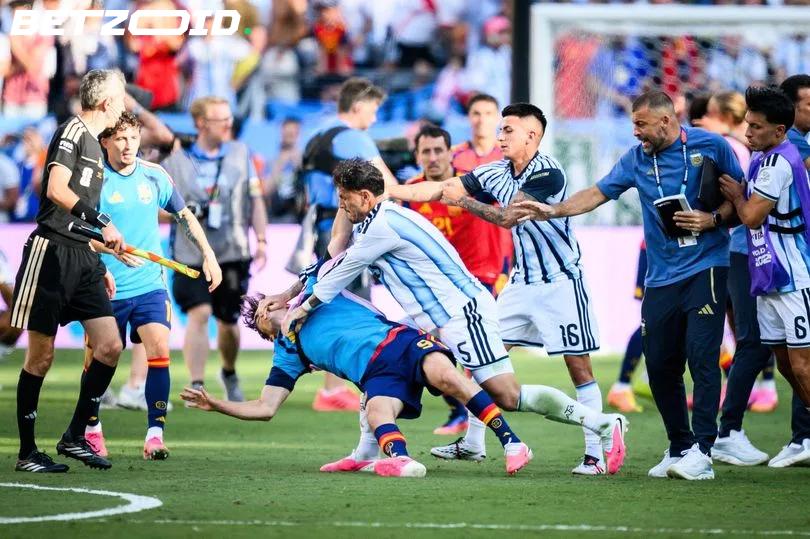
Argentina's players behaved appallingly after losing the World Cup Final to Spain, and FIFA's disciplinary process has been a slow, messy grind ever since. Now there's a partial resolution — but only partial.
FIFA has approved the Argentine FA's request to allow the bans handed out after the post-match chaos to be served in Class A friendly matches. That sounds like a technicality, but it matters enormously. Argentina's next competitive fixture isn't until the 2028 Copa América. Without this ruling, the suspensions would have sat in limbo for years, which serves nobody — not the players, not the federation, and not the integrity of the punishment itself.
Who got what, and when do they return?
The headline figure is Leandro Paredes — 10 games and a £66,500 fine for kicking Eric García and shoving Gavi while Spain were celebrating their 1-0 extra-time victory. Ten games is a serious ban by any standard, and he earned every bit of it.
- Nahuel Molina: seven-match ban
- Roberto Ayala (coach): three-match ban
- Thiago Almada: one-match ban
Argentina currently have no fixtures scheduled, but there's space for six before the year ends. If the international calendar plays out similarly to European nations — four games across the merged September/October window, two in November — Almada and Ayala could both be back in the picture by early October. Molina would have one game left to serve, likely in March 2027. Paredes faces four remaining — potentially two in March and two in June.
The AFA isn't done, though. The federation confirmed it's still pursuing a reduction in the length of the bans and is waiting for the written justification before filing appeals through FIFA's Appeals Committee, with CAS as a final backstop if needed.
The broader punishment isn't going away
The suspensions are only part of it. The AFA was fined £237,000 for a catalogue of incidents at the tournament — including players unveiling a 'The Falklands are Argentine' banner after the England semi-final, which FIFA ruled a breach of rules around using sporting events for non-sporting demonstrations. Add in findings of discrimination and racist abuse from Argentina supporters, and the full picture is considerably darker than a post-match scuffle.
Argentina must also play their next home game in a stadium operating at 50 percent capacity. That's the kind of sanction that stings a federation financially and reputationally — particularly for a nation that treats international football as something close to a religion.
The AFA's statement framed everything as a defence of rights and a commitment to due process. Which is fine — every accused party has that right. But the footage of what happened after the final doesn't leave much room for moral high ground.