"Fans are the key," said Pep Guardiola. "The key for this business to go on." It's a simple point — and FIFA appears to be doing everything in its power to ignore it.
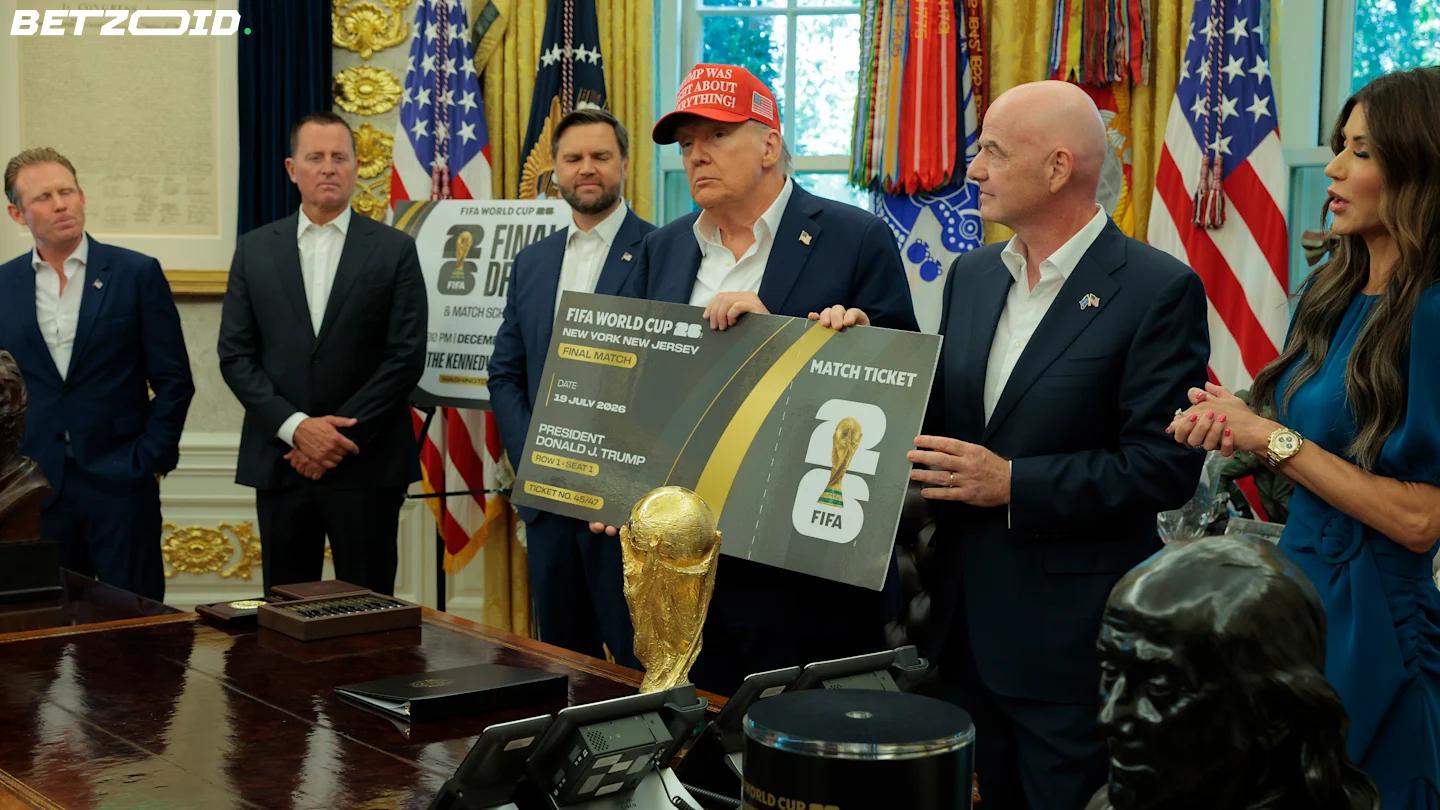
Four tickets to the 2026 World Cup final at MetLife Stadium are currently listed at $2,299,998.85 each on FIFA's own official resale platform. That's not a private box. No catering. No meet-and-greet. Just a Category One seat — closest to the pitch, to the right of a goal — where you can admire the players up close but struggle to actually read the game. For the price of Mohamed Salah's monthly salary, you get a view that thousands of other seats in the same stadium also provide.
FIFA cut themselves into the scalping business
This is the direct result of FIFA embracing the secondary ticket market for the first time in World Cup history. Loose resale regulations in the United States and Canada — who between them host 91 of the tournament's 104 matches — allow sellers to list tickets at whatever price they choose. FIFA takes 15% from the seller and 15% from the buyer on every transaction. If someone actually buys that $2.3 million ticket, FIFA pockets roughly $690,000 from a single seat.
Football Supporters Europe put it cleanly last year: "The fact that scalping is legal doesn't mean FIFA must become the scalper."
FIFA's response has been consistent: this is just standard North American market practice. Their spokesperson pointed to "industry trends across various sports and entertainment sectors" to justify the approach. Which is technically true — and completely beside the point.
What the numbers actually mean
Nobody is buying the $2.3 million ticket. That's almost certainly a placeholder designed to fish for an absurd offer. But the cheapest Category One seat for the final is still listed above $16,000 — roughly three months' wages for the average New Jersey resident. The equivalent ticket for the 2022 World Cup final in Qatar cost around $1,600. That's a tenfold increase in three years.
Guardiola, one of the few managers in football who could comfortably attend multiple games without checking his bank balance, didn't sugarcoat his frustration. "Before I remember the World Cup — years, years, years ago — was like a celebration of the joy of football for the nations going there. Everyone traveled all around the globe, from the other continents, to see your country, to play there. And it was affordable."
He stopped short of a full broadside — "I'm not there, so I don't know the reason why" — but the message landed all the same.
The World Cup was conceived in 1930 by Jules Rimet, a French diplomat scarred by the First World War, who believed football could unite nations. His philosophy on financial loss: "never fatal." FIFA's current leadership appears to have taken the opposite view — that no profit opportunity, however tone-deaf, should go unexploited. Whether that strategy holds up when the stadiums start filling, or failing to fill, is the real question hanging over New Jersey next summer.