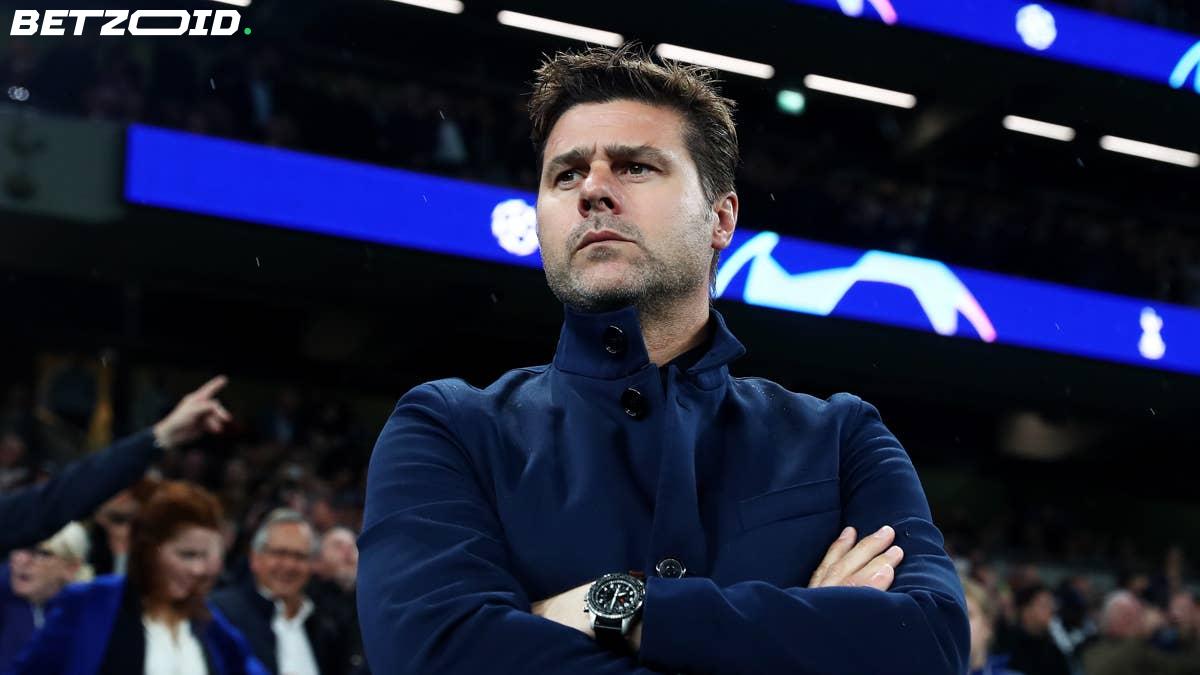
"It's annoying me a little bit, the VAR." That's Mauricio Pochettino, the man tasked with leading the United States through a home World Cup, admitting on The Overlap that he's not a fan of the technology that now shapes the game more than almost any tactical decision he could make.
It's a candid line. And a revealing one.
Pochettino isn't just venting about slow decisions and disrupted momentum — though that's clearly part of it. His concern goes deeper. He thinks VAR is changing how the game is taught, how it's felt, and what it's becoming. "It's changing the way that we also educate our young kids in that game," he said. That's not a throwaway complaint. That's a coaching philosophy being challenged by the sport's own governing bodies.
Pochettino's Bigger Problem With Where Football Is Heading
The VAR frustration is tied to something larger he sees happening, particularly in the American market he's now operating in. Pochettino drew a sharp line between football and the entertainment-first sports culture that surrounds him in the U.S.
"Football is not an entertainment game. It's a competitive game, and that is what we are forcing it to change into."
He's not wrong that the pressure exists. American football, basketball, and hockey are engineered experiences — stoppages, replays, and production values baked into the structure. Football's appeal has always been the opposite: 90 minutes, minimal interruption, tension built from continuity. VAR chips away at exactly that.
What makes this more than just a philosophical gripe is context. The 2026 World Cup will use VAR throughout, with semi-automated offside technology expected to speed up some decisions. Pochettino can dislike it all he wants — he still has to prepare his players to operate within it, exploit it, and not be undone by it.
What This Means for the USMNT's World Cup Preparations
Pochettino came to the job with a CV that includes a Champions League final with Tottenham and silverware at PSG. He knows high-stakes football. But managing a squad through a home tournament — where every VAR call against the U.S. will be amplified by 80,000 fans and wall-to-wall coverage — is a different kind of pressure entirely.
Any team going deep in 2026 will likely have at least one result shaped by a video review. How Pochettino coaches his players to respond in those moments, mentally and tactically, may matter as much as the formation he picks. That he's openly skeptical of the system is honest. Whether it becomes a distraction is the question worth watching.
"We are now forcing that unbelievable sport to become an entertainment game, and that is what I hate." Strong words. He's coaching in America, preparing for a World Cup that the global television industry will treat as exactly that.