"Only 2 percent of kids playing organized soccer in America came from households that made less than $50,000." Landon Donovan said that. Let it sit for a second.
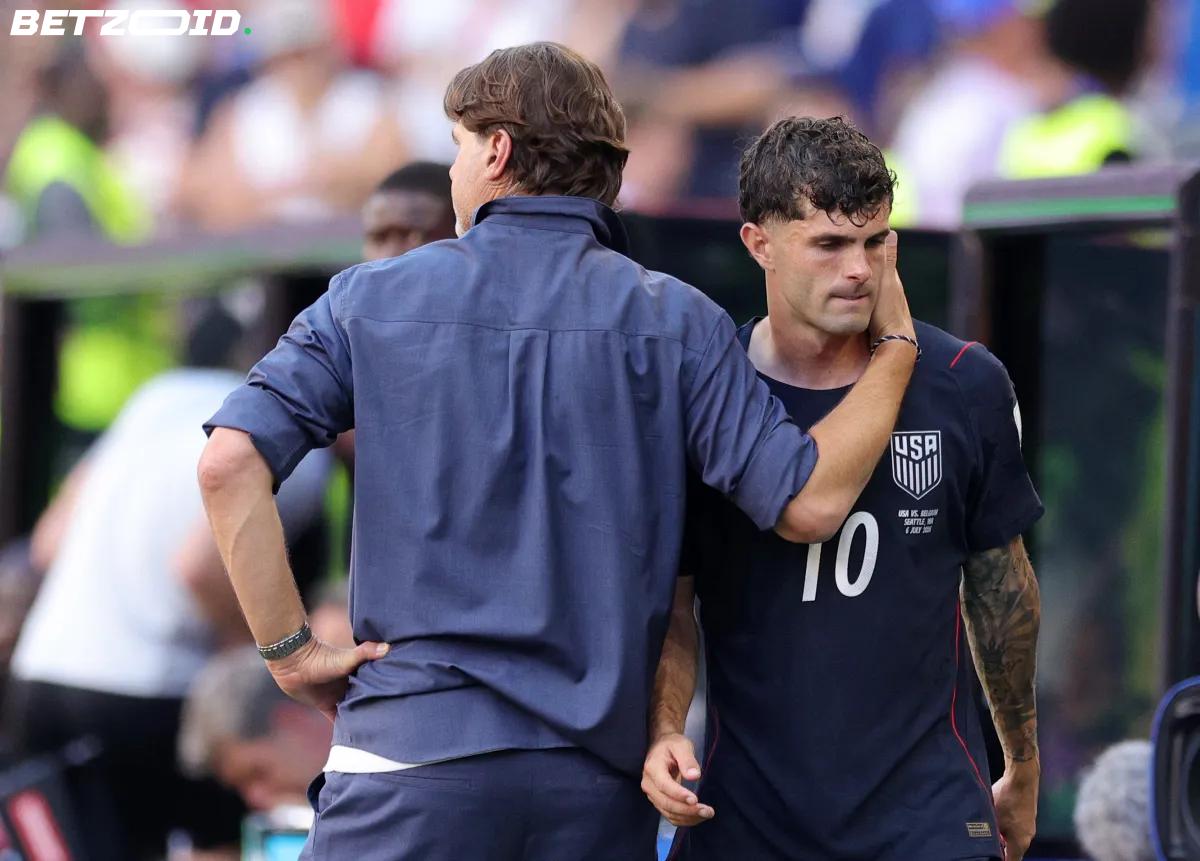
Belgium beat the United States 4-1 in Seattle to end the Americans' World Cup at the Round of 16 — the same stage they've exited in three of their last four tournaments, and the heaviest World Cup defeat they've suffered since 1934. And right on cue, the conversation that follows every American elimination fired back up: is pay-to-play the reason the U.S. can't produce a men's team capable of beating the world's best?
$4,000 a year to find out if your kid is good enough
American families pay between $3,000 and $10,000 per year for competitive youth soccer. Coaching, travel, tournament fees, facility rentals — all of it falls on parents. American families spent an average of $1,016 on a child's primary sport in 2024, up 46 percent since 2019. In France, England, Germany, Spain, Brazil and Argentina, the elite pathway works in reverse: professional academies absorb the costs entirely, treating development as an investment recouped through future transfers.
Stan Collymore, who came through English football and played for Liverpool and Aston Villa, laid it out plainly. His mother paid roughly £200 total across six or seven years of junior soccer. "99.9 percent of greats to play the game wouldn't have made it in America," he wrote. "Because they couldn't afford $4,000 plus to play."
That's the structural problem in one sentence. A system that charges for access selects for income before it selects for talent. In a country of 340 million people, that's an enormous amount of ability being priced out before it's ever discovered.
Alexi Lalas, the former national team defender and Fox Sports analyst, pushed back — framing youth soccer as a competitive market and asking who would fund a free alternative. Kevin Frazier, on The Dan Patrick Show, wasn't having it: "Every four years, we lose, and we go through this thing... and he gives his explanation. He's like, 'the pay-for-play system works.' Alexi, you benefited from it. You are part of the problem."
The Belgium result and the limits of the argument
To be fair to the other side: the current USMNT squad was largely developed through free MLS academies and European clubs. The players on the pitch in Seattle weren't suburban club kids whose parents maxed out credit cards for tournament weekends. They were professionals at top European sides. Tim Howard put it bluntly before the elimination: "The U.S. cannot, unequivocally, win the World Cup. The U.S. would have to play the greatest game they've ever played... four games in a row."
That's a coaching and quality problem as much as a development one. Mauricio Pochettino couldn't bridge that gap in one cycle. No coach could.
But that argument and the pay-to-play argument aren't mutually exclusive. A system that filters by income before it filters by ability shrinks the talent pool before the professional pathway even begins. Reform advocates point to FIFA's own mechanisms — training compensation and solidarity payments, which direct transfer fee shares back to clubs that developed players between 12 and 23 — as proof that grassroots development can be financially self-sustaining. Those mechanisms barely function inside the U.S., partly because the federation has argued they could breach American antitrust law, and MLS does not pay solidarity fees to independent domestic youth clubs.
- Expanding free professional academies beyond existing MLS markets
- Implementing domestic training compensation and solidarity payments so grassroots clubs profit from developing talent rather than charging for access
- Subsidizing coaching education and coaching licenses for volunteer parents
- Rebuilding low-cost local leagues and school-based soccer as genuine pathways into the professional pipeline
Congress has noticed. In May, Senator Chris Murphy and Representative Chris Deluzio introduced the "Let Kids Play" Act, targeting private equity involvement in youth sports, hidden fees and lack of scholarship funding. It hasn't advanced since introduction.
Meanwhile, 30 million Americans watched Belgium dismantle their national team — the most-watched soccer telecast in U.S. history. Combined English and Spanish-language viewership for the Round of 32 win over Bosnia and Herzegovina hit over 36 million. Group stage matches averaged 5.1 million viewers on English-language television alone, up 92 percent from 2022. The appetite is not the problem.
"We're seeing numbers for some of these matches that we don't see for anything but the NFL," said Fox Sports' Michael Mulvihill.
Four in ten Americans watched their national team this summer. The question Doug Andreassen, former president of Washington state's youth soccer association, framed before the elimination hasn't changed: "Follow the money. The costs have escalated. Travel, food, hotels, coaches, gear, tournament fees... It's an overall system that we've got to fix."
Fox paid $485 million for the English-language rights to this tournament. FIFA is projecting record revenue. The money is there. The question is whether any of it reaches the bottom of the pyramid — or whether the next Landon Donovan is still working out how to afford registration fees.