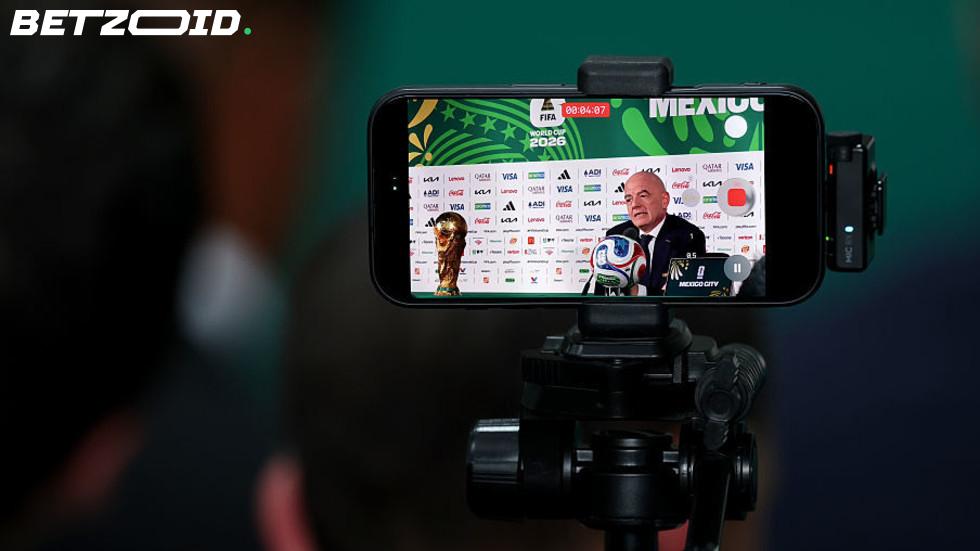
"This is the most dangerous World Cup ever." That's not a protester with a megaphone outside a stadium — that's a FIFA insider who has worked for the organisation since 2004, speaking on May 29. And the sports media covering this tournament already knows it.
Of 16 travelling journalists surveyed across six countries — TV, radio, print — fourteen said the World Cup should have been postponed. Two said it should have been stripped from the US and Canada entirely and handed to Mexico alone. Every single one expressed unease. Every single one got on the plane anyway. The mortgage doesn't care about your principles.
The disappearing act
The pattern was already visible before kick-off on June 11. LinkedIn posts criticising US foreign policy, FIFA corruption, or the awarding of FIFA's Peace Prize to Donald Trump — quietly edited, quietly deleted. One journalist, working for a European broadcaster, explained through a smiley-face emoji that her agent warned any social media criticism of the US government could mean being turned away at the border.
Alexander Abnos of The Guardian US wrote in plain terms that the US "is not fit to stage soccer's showpiece event" and that moving the World Cup out entirely would be "entirely justified." Weeks later, he was filing on Messi mascots, stadium visual guides, and the USMNT's "first memeable moment." He's not the worst offender. He's just the clearest example of how fast the pivot happens once the press pass is in hand.
FIFA's leverage over media organisations is structural, not conspiratorial. Want your reporters in the stadium? Play ball. What FIFA wants, FIFA gets — and the goodie bags help everyone feel better about it.
The security picture nobody is reporting
FIFA pumped around $650 million into security for this tournament. That figure alone should be a story. In Russia and Qatar, that level of spending wasn't considered necessary. The difference: the US and Canada are actively involved in conflicts in Palestine, Lebanon, and Iran. A significant number of people globally have reason to want to make a statement on the world's biggest stage.
The last successful attack at a mega-event was Atlanta 1996 — a single death, an anti-abortion activist. At the 2018 World Cup Final in Moscow, a group disguised as police officers stormed the pitch during France vs Croatia with hundreds of millions watching. It rattled Croatia badly enough that some believe it changed the outcome of the match. Nobody was killed. That won't be the template everyone follows.
German fans are already debating among themselves whether to travel. In one Eintracht Frankfurt supporters' group with over 1,000 members, the worry isn't the matches in Houston or New Jersey — it's the game against Côte d'Ivoire in Toronto. "It is a soft underbelly," one fan from Wiesbaden wrote. "Bombs and bedlam."
Fan groups are scared. FIFA's own marketing department staff are reportedly turning down the chance to attend — a first, according to the insider who has worked there since 2004. The sports press, by and large, is writing about mascots.
England's media, which spent years moralising about beer bans in Qatar and gulag fantasies in Russia, has nothing to say. The BBC's idea of World Cup controversy in 2022 was warm lager. Actual security fears in 2026? Crickets.
The football is on. The tournament that should have been postponed — according to the majority of the journalists covering it — will generate billions, fill airtime, and bury every inconvenient question under a avalanche of match content. The flash has already gone off. Most of the press just wants to get through it without incident and file their copy. "As long as there are no terrorist attacks and some good football" — that's where the bar has been set.