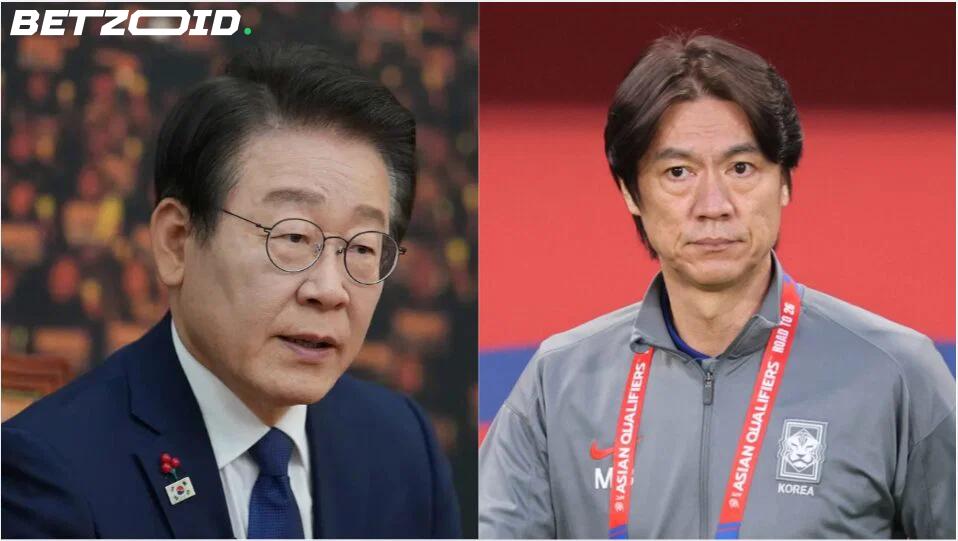
"I'm not only surprised by this unexpected result, but completely bewildered." That's South Korean President Lee Jae Myung — not a pundit, not an angry fan on social media. The head of state, ordering a formal government investigation into how his country's national football team was managed.
Hong Myung-bo resigned within minutes of South Korea's group-stage elimination at the 2026 World Cup, taking full responsibility after a campaign that ended with one win and two losses. It should have been the end of the story. Instead, it opened a much larger one.
A second chance that went the same way as the first
This was already a controversial appointment before a ball was kicked. KFA president Chung Mong-gyu reportedly preferred a foreign manager and actively tried to block Hong's selection — only to be overruled by other executives. That internal fracture never really healed, and it's now the centre of the presidential investigation.
Hong's record doesn't help his case. His first stint as South Korea manager ended after the 2014 World Cup, also winless in group play. Giving him a second run was a gamble the KFA's leadership couldn't agree on at the time, and they're paying for it now in a very public way.
South Korea entered this tournament having gone unbeaten through qualification, ranked 32nd in the world, with Son Heung-min leading the side. They were the second-highest-ranked team in Group A. Losing to Czech Republic would've been bad. Losing to 60th-ranked South Africa — with Son dropped by Hong for that decisive match — was the kind of result that ends careers and triggers exactly this kind of fallout.
The situation at home is uglier than the scorelines
Korean police have confirmed they received reports of a death threat against Hong, allegedly posted online by a 41-year-old American citizen. Restaurants and shops in South Korea have put up signs banning Hong from entering. The KFA has quietly cancelled all homecoming events — no airport welcome, no official reception. The squad is flying back in separate groups.
Compare that to 2014, when the team also lost all three group games and still got a homecoming ceremony. The temperature around this exit is different. Angrier. More organised.
President Lee has asked the Ministry of Culture, Sports and Tourism to investigate "the precise circumstances of this incident" and develop measures to prevent recurrence. With taxpayer money tied to World Cup participation, this isn't framed as a football argument — it's a public accountability issue now. Any future KFA leadership decisions will carry a political dimension they didn't have before.
"I can not say every decision has been the right one," Hong said after resigning. "But I can tell you that I have made every decision with Korean football in mind." Whether that's believed by anyone inside the KFA, let alone the government, is another matter entirely.