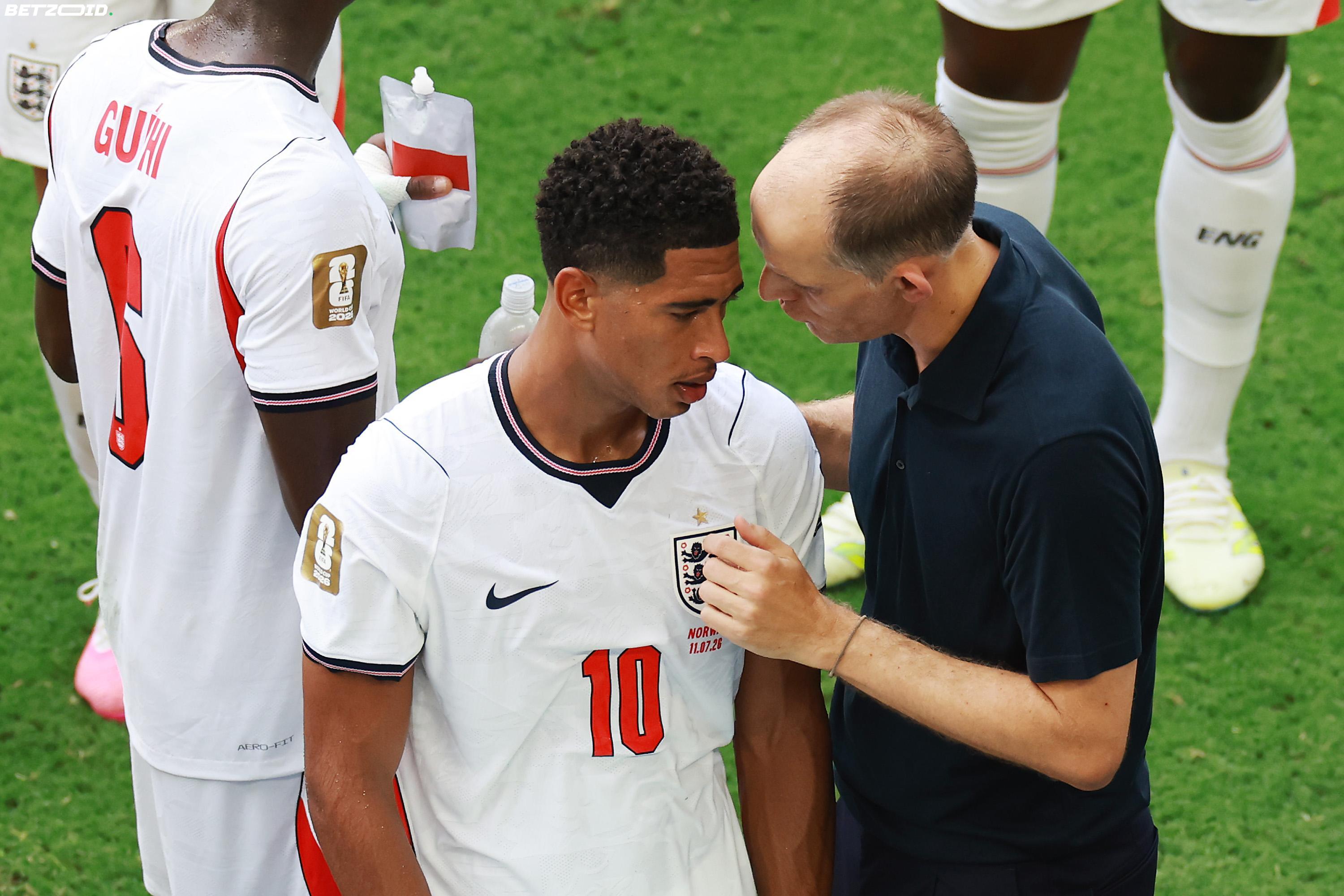
"Maybe he doesn't know what it's like to play in those kind of conditions." That's Jude Bellingham, standing in a mixed zone in Miami heat, having just scored the winner in extra time to put England into a World Cup semifinal, and essentially telling his manager to wind his neck in.
Thomas Tuchel had just told ITV he was "not happy" with the performance against Norway — sloppy, too many mistakes, "we were lucky today." Fair enough from a coach. Bellingham's response, delivered twice, was not the diplomatic brush-off you'd expect from a player still riding an adrenaline wave. It was a pointed, considered dig. The second version — after he'd had time to cool down in the dressing room — even took a swipe at Tuchel's modest playing career. This wasn't heat of the moment. This was a statement.
Eighteen months of friction, finally in the open
The tension between England's best player and their manager has been simmering since Tuchel took the job in early 2025. It started with a word — "repulsive" — used by Tuchel in a talkSPORT interview when describing how Bellingham's on-pitch rage could come across. He apologised. Bellingham and those around him were not appeased. Then, while Bellingham was recovering from shoulder surgery, Tuchel dropped him for the October internationals despite him being available. The message was clear enough.
Before the World Cup, Bellingham admitted he'd "lost his smile" after Euro 2024 and felt like a scapegoat under Southgate. He said the interim camp under Lee Carsley had "brought out the joy" again. Reading between the lines: Bellingham wanted an environment where he felt valued, not managed. Tuchel, a manager who wins everywhere he goes and has the ego to prove it, was never going to be that coach.
What makes this all so compelling — and what matters most for England's chances against Argentina — is that none of it has stopped either of them performing. Bellingham has six World Cup goals, including back-to-back braces in knockout rounds. He became the first player to do that since Diego Maradona in 1986, and he didn't handball any of them in. Tuchel, for his part, has built a team specifically around getting the best out of a player he's simultaneously been needling into form.
A system built around a player Tuchel is still training to behave
The structure Tuchel has constructed is deliberate. With Declan Rice and Elliot Anderson as the engine behind him, Bellingham gets license to roam high, get beyond Kane, run the channels. It taxes him physically — he's still doing enormous defensive work — but it suits him. The fact that his only real competition for the No. 10 role is his close friend Morgan Rogers is not a coincidence. Tuchel has cleared the field while keeping Bellingham just uncomfortable enough to stay sharp.
Phil Foden isn't at this World Cup. Neither is Cole Palmer. Tuchel made those calls, presumably after watching the Euro 2024 chaos — three elite players crowding the same ten yards of turf — and deciding he wasn't going through that again. For those players, watching from home, Bellingham's treatment looks generous by comparison. He got dropped for a friendly against Wales. They got dropped from a World Cup squad entirely.
England are 90 minutes from a World Cup final, and their best player and their manager have a relationship that functions like a controlled explosion — productive so far, but with no guarantees about what happens next. Argentina await. Neither Tuchel nor Bellingham does quiet exits.