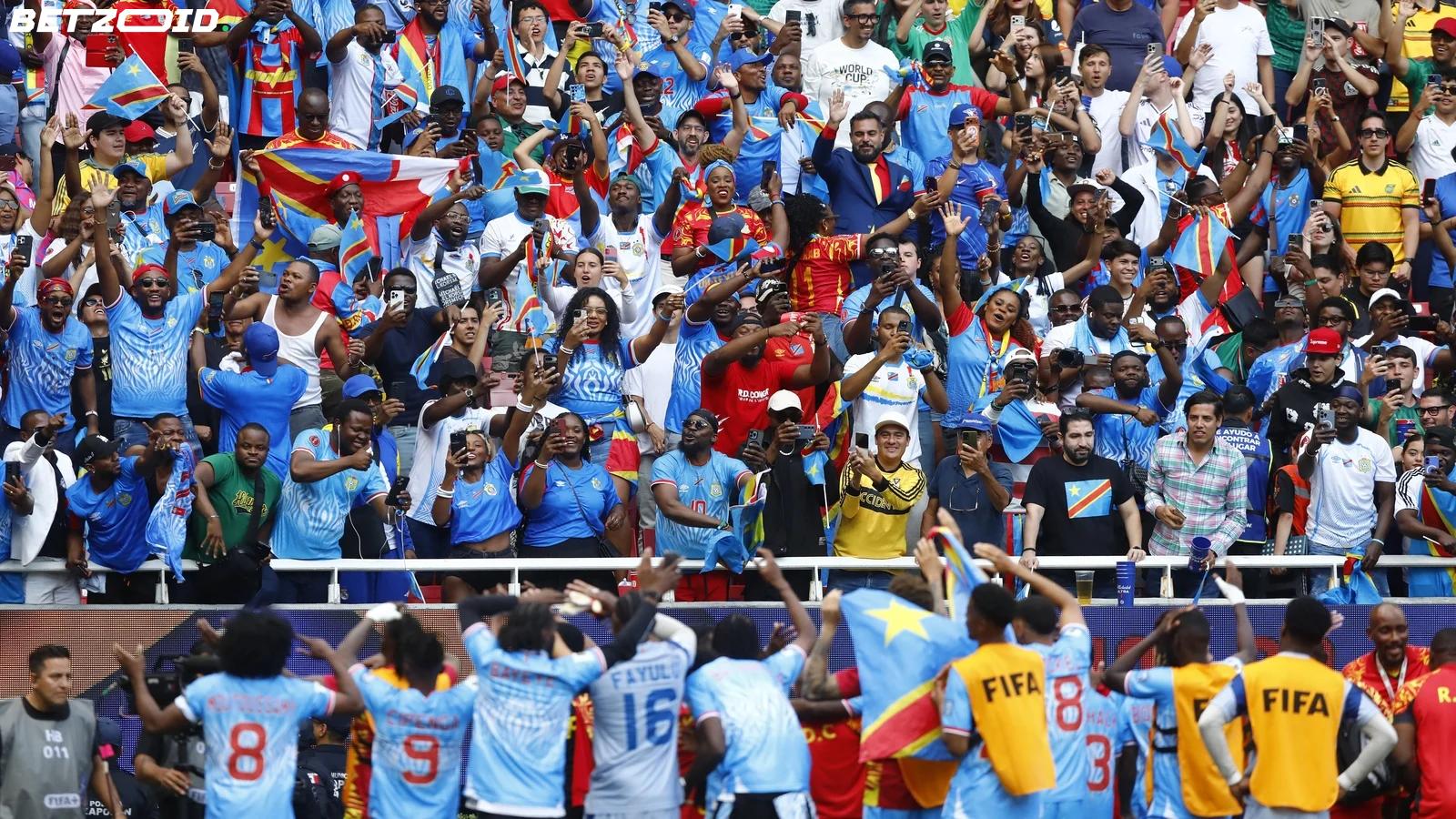
"We cannot be any clearer." That's Andrew Giuliani, Executive Director of the White House Task Force for the World Cup, laying down the terms for DR Congo's participation in this summer's tournament. The Congolese squad must maintain an airtight bubble during their current training camp in Belgium for 21 consecutive days before they'll be allowed to set foot on US soil.
The context: the WHO has declared a public health emergency of international concern following an Ebola outbreak in the east of DR Congo. At least 177 people are suspected dead. Nearly 750 suspected cases have been recorded. The strain in question — Bundibugyo — has no approved vaccine or specific therapeutics, unlike the more familiar Ebola-Zaire strain. That's what makes this outbreak genuinely serious, not just alarming on paper.
DR Congo cancelled its planned training camp in Kinshasa and relocated to Belgium. They have a friendly against Denmark in Liège on 3 June, and another against Chile in southern Spain on 9 June — both outside the affected region. The CDC also imposed travel restrictions barring non-US passport holders who've been in DR Congo, South Sudan, or Uganda within the previous 21 days. Those restrictions, issued on 18 May, are due to lift on 17 June — the exact date DR Congo are scheduled to play Portugal at Houston Stadium.
The squad itself isn't the problem
Here's the part that matters most for their actual World Cup chances: almost every member of the squad, including French head coach Sébastien Desabre, is based outside the DR Congo entirely. West Ham's Aaron Wan-Bissaka, Newcastle's Yoane Wissa, former Manchester United defender Axel Tuanzebe — these are Premier League players living in England. Their exposure risk is minimal.
Professor Anne Moore of University College Cork put it plainly: "My gut feeling is that it won't have any impact. I think if a soccer team is in a training camp and are professional players, they'll be removed from it."
The harder question is supporters. Tracking which fans have been in the affected regions, and whether they can prove distance from the outbreak, is logistically messy. That's a problem for border agencies, not the football federation — but it's a real one.
What this means for Group K
DR Congo are in Group K alongside Portugal, Colombia, and Uzbekistan. This is their first World Cup appearance since 1974, when they competed as Zaire. Tuanzebe's extra-time header against Jamaica in March got them here. They're not turning back now.
Their schedule — Portugal in Houston on 17 June, Colombia in Guadalajara on 24 June, Uzbekistan in Atlanta on 27 June — requires US entry by mid-June at the latest. The 21-day bubble starting from the date of issuance (18 May) means they'd need to have been isolated since around that date. Giuliani confirmed 11 June as the planned arrival date in Houston, which lines up.
For anyone with DR Congo on their World Cup outright or group-stage cards, the participation risk looks low. The football risk — being a 50-year World Cup absentee taking on Portugal and Colombia — is a different conversation entirely.
FIFA says it is "aware of and monitoring the situation" and working with the CDC, WHO, and host governments. Houston's local journalist Ethan Bratton summed up the mood in the city well: "Don't panic, but definitely pay attention."
That feels about right.