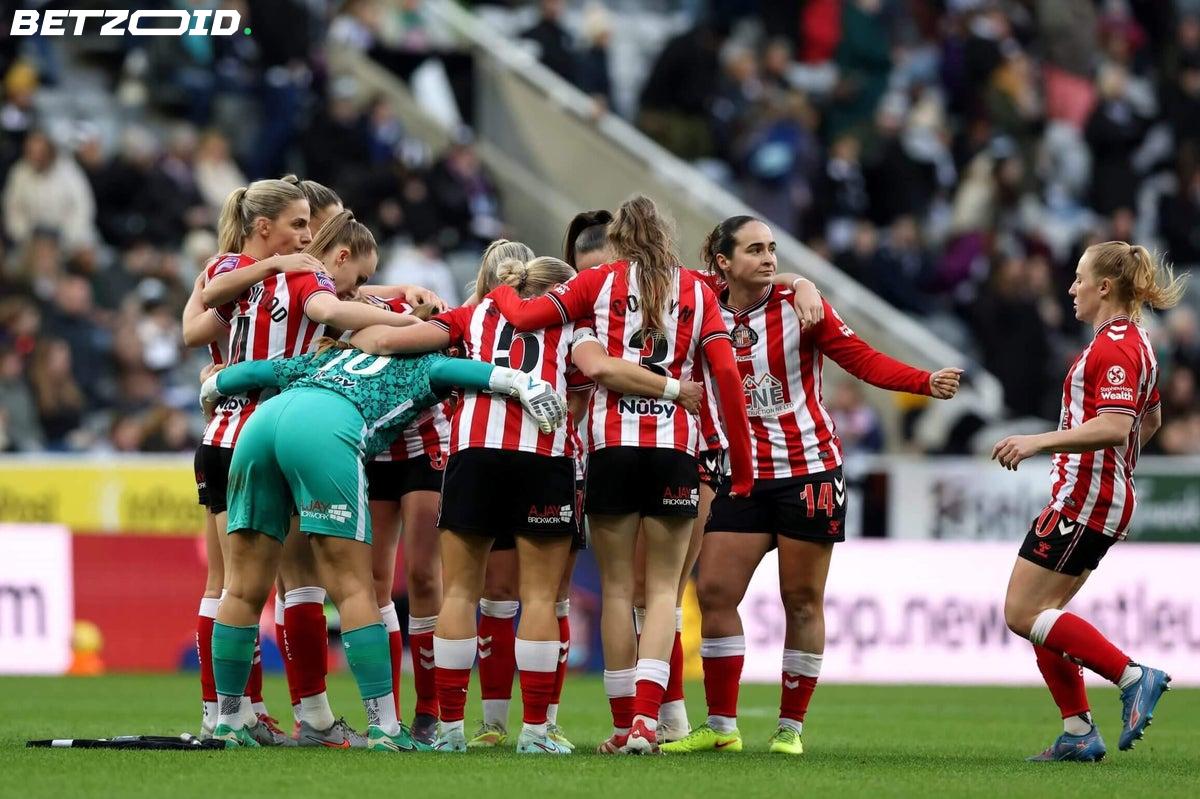
Sunderland Women are about to get a serious financial backer. The club has agreed to sell roughly 80 per cent of their women's team to Bay Collective, the multi-club ownership group backed by Sixth Street — the same U.S. private investment firm that bankrolled Real Madrid's Bernabeu renovation and bought a chunk of Barcelona's domestic TV rights. Women's football on Wearside just entered a different conversation.
The deal is expected to be the largest transaction ever involving a WSL2 club. For context, that bar wasn't exactly set high — Bristol City Women's majority stake sale to Mercury 13 in November 2025 was the previous reference point — but the scale of Sixth Street's financial firepower suggests this isn't a PR move. Sunderland's men's team will hold onto a minority share. The new controlling entity, Bay Collective UK Limited, was incorporated in April 2025, with Kay Cossington — the FA's former women's technical director who oversaw England's Euro 2022 triumph — as its sole director.
What Bay Collective actually brings
Cossington called it "a partnership for the long-term" and spoke of creating "a platform for sustained success at the highest levels of the women's game." That's the kind of language that sounds like a press release until you look at the money behind it. Sixth Street paid a record $53m franchise fee to launch Bay FC in the NWSL in 2023 and has continued investing since. This is a group that builds, not flips.
The aim is clear: get Sunderland Women back into WSL1. They haven't been in the top tier since 2017-18, when they were relegated for failing to even apply for a license. Last season, the club spent £1.4m on their women's team — the lowest disclosed figure among the 17 WSL1 and WSL2 clubs who published accounts. The WSL1 average runs roughly seven times higher. That gap doesn't close in one window, but sustained Sixth Street-level investment changes the trajectory entirely.
What exactly the sale proceeds will fund remains unclear — whether it flows into player recruitment, infrastructure at the Academy of Light, or repays some of the £45m Sunderland's men's team currently owes to Louis-Dreyfus-linked entities. Probably a mix of all three.
The PSR angle is real but secondary
Unlike the Chelsea, Aston Villa and Everton women's team deals — which involved internal restructures designed to generate paper profits that fed directly into PSR calculations — Sunderland haven't played that game here. No internal sale inflated the books beforehand. The transaction will generate profit in the men's accounts, but the club insists that's a byproduct, not the point.
It's also worth understanding how limited that PSR benefit actually is going forward. After this season, Premier League clubs switch to a squad cost rule which completely ignores women's team asset sales. The window for using these deals as PSR engineering tools is essentially closed. Sunderland didn't need it anyway — their combined pre-tax losses over the past two seasons total just £12.6m, and with allowable deductions for academy and infrastructure spending, they were almost certainly PSR-positive heading into 2025-26.
Approval from WSL Football is still required before the deal is finalised, but assuming that comes through, Sunderland Women will begin next season with the most significant outside investment in WSL2 history — and a stated mission to end their nine-year absence from the top flight.