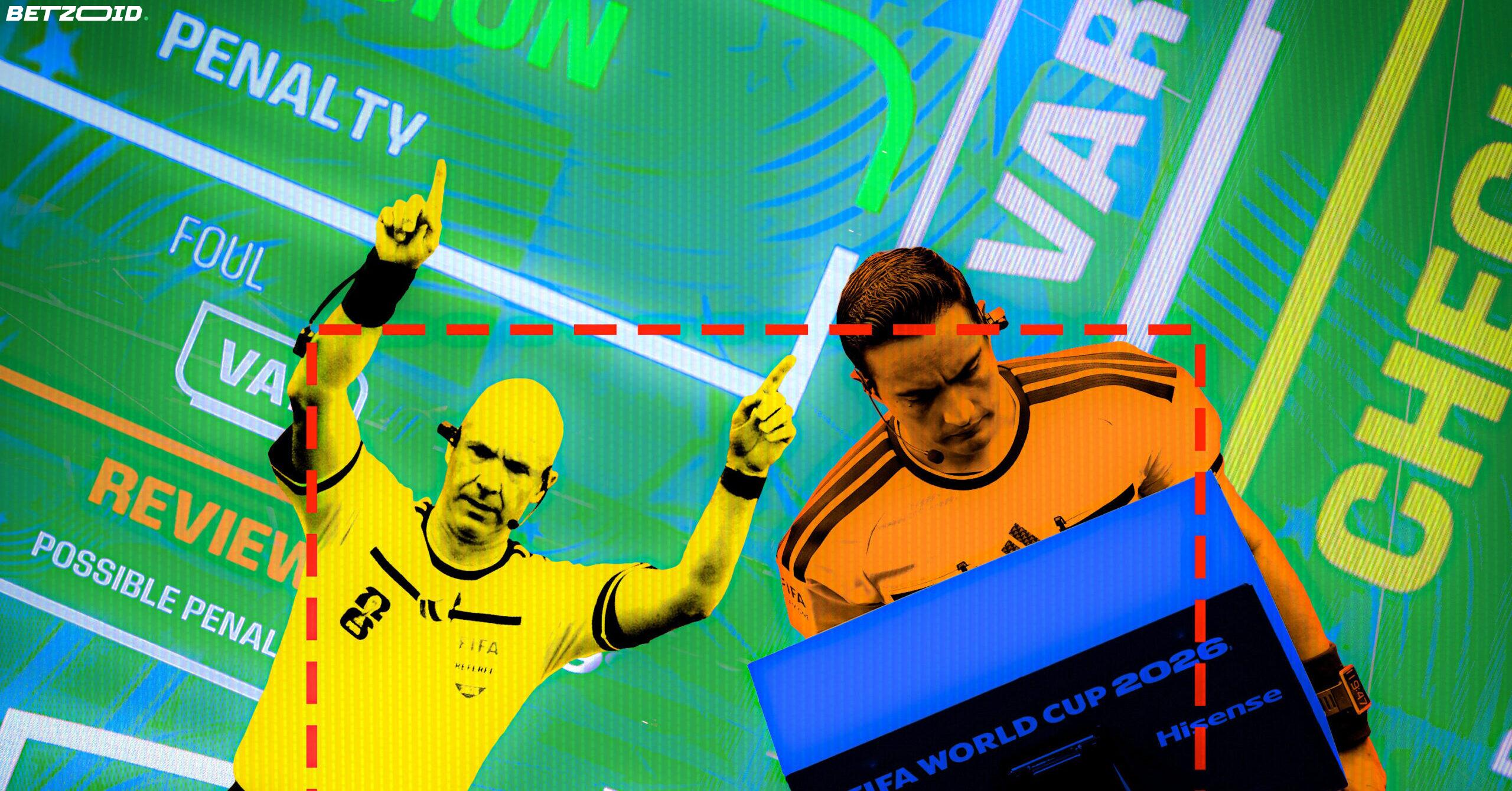
Argentina and Spain will play Sunday's World Cup final. Before we get there, we need to talk about the system that's done its level best to undermine almost everything good about this tournament.
VAR has been a catastrophe at the 2026 World Cup. Not occasionally. Not in edge cases. Systematically, repeatedly, and in ways that have convinced millions of people — not all of them unreasonably — that the tournament is being manipulated. A technology sold as a trust-builder has become the sport's single greatest source of paranoia.
The incidents that defined the problem
Start with Folarin Balogun's red card against Bosnia-Herzegovina. Balogun stepped on a defender's ankle — poor timing, bad luck, the kind of tackle that gets a yellow at most in the eyes of most professional referees. The on-field official let it go. VAR flagged it for review. And here's the design flaw that made everything worse: under VAR's four-scenario review framework, the referee couldn't upgrade the call to a yellow. His only options were to do nothing or send Balogun off.
He chose red. Donald Trump called FIFA president Gianni Infantino. A supposedly independent commission overturned the suspension. A global conspiracy theory ignited. VAR didn't create Trump or Infantino's corruption, but it handed them the match to strike on. What would have been a footnote became an international incident — and the call still wasn't right.
Then came Egypt vs. Argentina. Mostafa Ziko scored what would have been a 2-0 lead for Egypt in the round of 16. VAR disallowed it for a foul that had occurred nearly 20 seconds earlier, 100 yards away at the other end of the pitch. The foul was real. The question of why that particular foul, in that particular match, warranted archaeological excavation while others go uncalled every three minutes of every game — that question has no clean answer. Egypt went on to lose. The conspiracy theories about VAR protecting Messi and Argentina spread further.
One match later, in the quarterfinal against Switzerland, VAR used an obscure "mistaken identity" provision — normally reserved for situations where the wrong player gets booked by accident — to transfer Leandro Paredes's yellow card to Breel Embolo, who had dived to win the foul. Since Embolo already had a yellow, he was sent off. Switzerland, who had just equalized, finished the match with ten men. Argentina won.
Embolo dived. Fine. But that kind of simulation happens in every match of this tournament without VAR blinking. The only reason it was reviewable at all was because the referee had already shown a card — to the wrong player. The mechanism for correcting one bad call created a worse one.
The deeper damage VAR does to the game
Beyond the specific incidents, there's the corrosive effect VAR has on the experience of watching football. You score. You don't celebrate — not fully, not yet. You watch the referee's ear. You wait. And when confirmation finally comes, the moment is already half-dead. The spontaneity that makes football worth watching has been traded for a legal review process with a 50% accuracy rate on the calls that matter most.
VAR's defenders will say getting the call right is the priority. But that argument only holds if VAR were actually getting calls right. It isn't — not consistently, not in the moments that define tournaments. It's producing worse controversies in place of smaller ones, generating conspiracy theories instead of defusing them, and slowing a sport whose entire appeal is built on flow and momentum.
- Balogun's red card: VAR intervened, the call was wrong, and it triggered a political scandal
- Egypt's disallowed goal: VAR reached back 20 seconds to cancel a goal against the defending champions
- Embolo's red card: a provision designed for mistaken identity was repurposed to send off a player for simulation, costing Switzerland their World Cup
The system was built to increase trust in officiating. At this World Cup, it has done the opposite at every significant juncture. Argentina and Spain play Sunday. Whatever happens in that final, VAR will be watching — ready to make it worse.