"We're seeing numbers for some of these matches that we don't see for anything but the NFL." That's Fox Sports' president of insight and analytics Michael Mulvihill — and he's not selling you something. The 2026 FIFA World Cup, now 25 days into its 39-day run across North America, has genuinely cracked the American sports mainstream in a way that years of MLS expansion and Premier League broadcasting deals never quite managed.
The U.S. men's 2-0 win over Bosnia-Herzegovina on July 1 drew 24.4 million English-language viewers on Fox — the most-watched English-language soccer telecast in U.S. history. Factor in Telemundo and Peacock's Spanish-language numbers and that figure climbs toward 40 million. The Round of 16 clash with Belgium in Seattle is expected to break that record immediately.
It's not just the USMNT pulling the crowd
Here's the part that should genuinely surprise anyone who's argued for decades that Americans only tune in when their own team plays: a Scotland vs. Haiti match, airing opposite an NBA Finals clinch game, pulled 6 million viewers. Uruguay against Cape Verde drew 6.2 million. Fox averaged 5.05 million viewers per telecast across the 72 Group Stage matches.
Those aren't niche numbers. Those are legitimate prime-time numbers for a network airing a match between countries most of the audience, by Mulvihill's own admission, can't find on a map.
What's driving it isn't star power — or at least not star power alone. Mulvihill is direct about this: "The feeling that sports viewing is about knowing the star players — that's been turned upside down by this tournament." The fan experience, the outdoor watch parties, the communal energy of a summer that doesn't have a defining movie or album competing for attention. The World Cup stepped into a cultural vacuum and filled it completely.
Fox's social numbers underline the scale: 6 billion views across digital and social platforms since June 11, over 1,000 individual videos each clearing 1 million views, and more than 6 million new followers gained in under a month. Watch party attendance — now measured properly by Nielsen's updated out-of-home metrics — is contributing roughly 25% of the total audience for each match.
What this means as the tournament reaches its final stretch
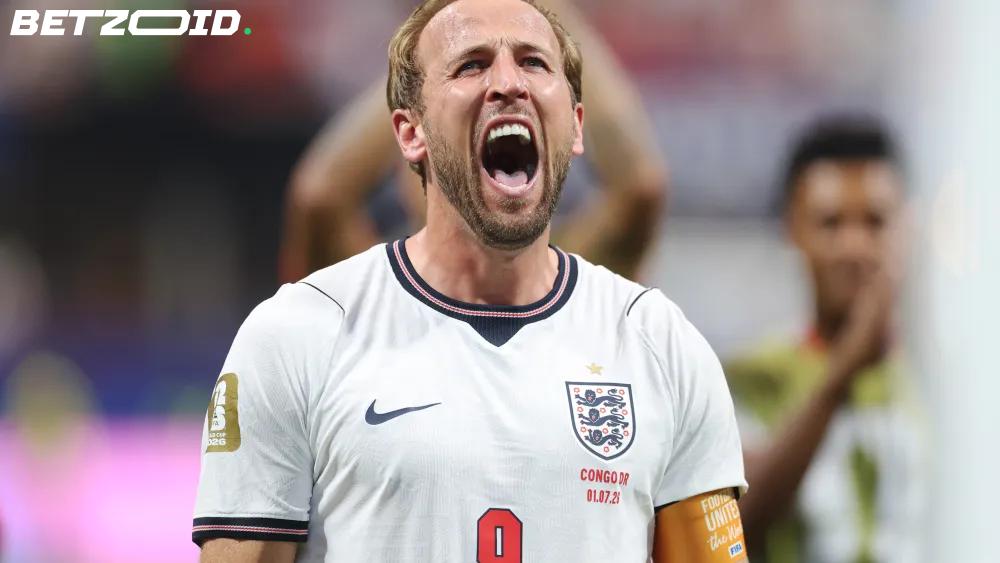
England's 3-2 win over Mexico on July 5 put Harry Kane, Jude Bellingham, and Declan Rice into the American cultural conversation in a way that Premier League broadcasts have been trying to achieve for years. France's Mbappé had his showcase in a 1-0 win over Paraguay on July 4. These aren't just sporting moments — they're the kind of cross-platform events that shift how casual fans engage with the sport going forward.
There's also the political subplot: President Trump reportedly lobbied FIFA over Folarin Balogun's red card following the Bosnia win, and Balogun received an unusual reprieve, clearing him to play against Belgium. Whatever you make of the intervention, it's a sign of how deep the tournament has embedded itself into the national conversation.
- U.S. vs Bosnia-Herzegovina: 24.4 million viewers (English-language record)
- Mexico vs Ecuador: 10.4 million on Fox Sports
- Scotland vs Haiti: 6 million (airing against NBA Finals clinch game)
- Uruguay vs Cape Verde: 6.2 million
- Group Stage average: 5.05 million per match on Fox
The final is scheduled for July 19 at MetLife Stadium in New Jersey. If the trajectory holds — and there's no indication it won't — it will be the most-watched soccer match in American television history by a distance. Anyone pricing futures or tournament markets should note that every USMNT win doesn't just move the needle on football sentiment in America. It moves it on viewing figures, sponsorship valuations, and the sport's long-term commercial footprint in the country.
Goalkeeper Matt Turner put it more simply after the Bosnia win: "We're taking on our own traditions and cultures, and I think that's the way it should be. We really needed this tournament in order to find our identity alongside our fans."