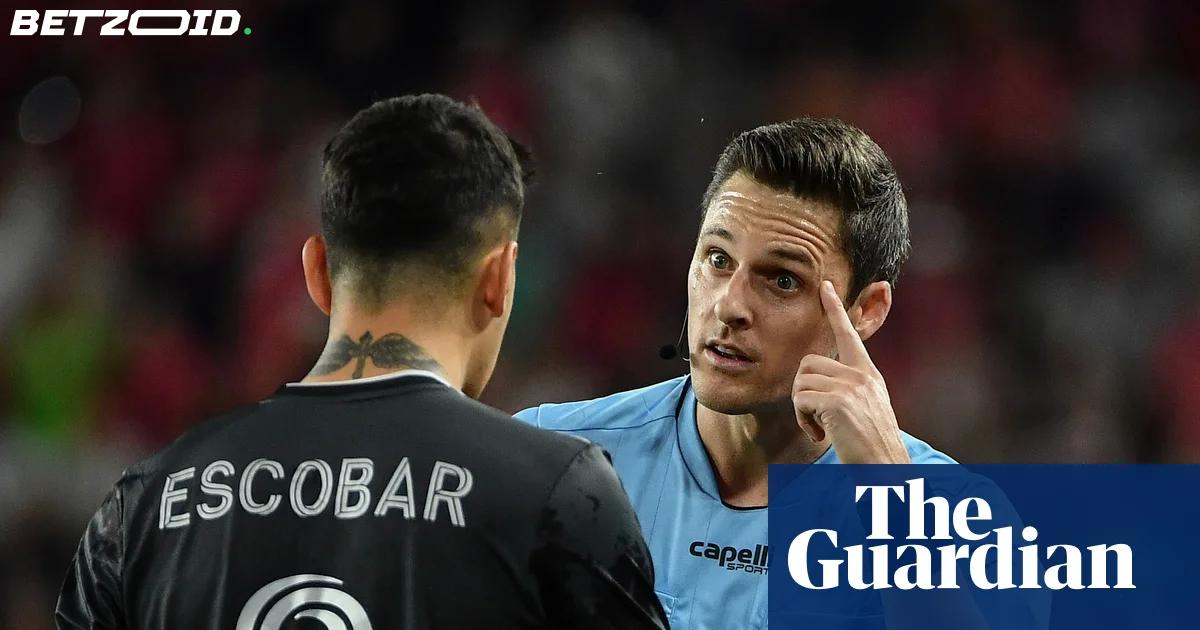
"I hate going to the monitor," Joe Dickerson admits. That's a striking thing to hear from the man who'll be sitting in the VAR booth for this summer's World Cup — but it also explains exactly why Fifa picked him for the job.
Dickerson, named US Soccer's male referee of the year in 2025, won't be in the center circle at this tournament. He'll be the voice in the on-field referee's ear, calling up replays, flagging contentious decisions, and guiding the most scrutinized officiating system in world football through one of its biggest stages yet. His own discomfort with the monitor, he argues, keeps him honest. He won't be trigger-happy with reviews.
What VAR actually looks like from the inside
The booth runs three officials: a VAR communicating with the referee, a support VAR maintaining wider coverage while the VAR reviews a specific incident, and an assistant VAR keeping notes. Every one of them has gone through identical training — including a 10-day seminar in Brazil where officials worked through clips until the most common calls became instinct.
"We know that 90-something percent of the decisions we will see at the World Cup, we will consider almost black and white," Dickerson said. That confidence isn't arrogance. It's the result of hundreds of hours drilling into handball calls, soft penalties, and the moments attackers manufacture contact. The grey areas are smaller than fans assume. The ones that get called wrong are genuinely hard — subtle angles, split-second contact, situations where even frame-by-frame review doesn't hand you a clean answer.
The calls that are most likely to define this tournament's VAR narrative: handballs, ball-before-man challenges, and simulated fouls. Those are the ones referees still genuinely disagree on, even after all the prep work. Any major decision in a knockout match will land on those exact categories — which matters if you're watching odds shift in real time during the later rounds.
Machiavelli, Nietzsche, and offside lines
Off the pitch, Dickerson is working toward a master's degree at the University of Chicago. His thesis focuses on Machiavelli's political philosophy — specifically the argument that empathy and leadership are embedded in writing that looks, on the surface, purely amoral. He also draws on Nietzsche and Confucius. His conclusion is that refereeing and philosophy overlap more than people expect.
That's not as strange as it sounds. VAR has been a philosophical battleground since the day it launched. In February, Uefa's director of refereeing admitted the process had become "too microscopic." By the end of the European season, the Premier League voted against extending VAR checks to corner kick incidents — the same checks Fifa has specifically requested for this World Cup. The sport is mid-argument with itself about where technology ends and judgment begins.
Dickerson's view on fan hostility toward VAR is notably measured: "You can't eliminate the public's bias from any analysis of VAR — and that's not a bad thing." He sees the passion behind the anger as the same thing that makes football worth watching. Subjectivity, emotion, and strong opinions aren't bugs in the system. They're the point.
The World Cup's tournament format — short, high-visibility, no second chances — does tighten the margin for VAR controversy compared to a league season where outlier decisions get buried in a 38-game calendar. Whether that makes the system feel fairer or just concentrates the pressure into fewer, higher-stakes moments is the question nobody's answered yet.