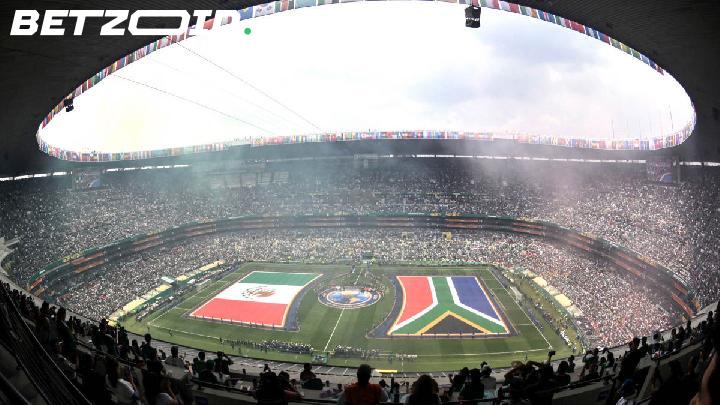
Sixteen stadiums. Three countries. One tournament that will either live up to the hype or expose how bloated a 48-team World Cup can feel. The venues themselves, at least, are not the weak link.
The 2026 FIFA World Cup spans the United States, Mexico, and Canada — and the range of stadiums reflects exactly how different those football cultures are. Some are living history. Others are corporate-funded temples of modern sport. All of them will host moments people talk about for decades.
Mexico's crown jewel — and the weight it carries
Estadio Azteca is the anchor. Opened in 1966, it's the oldest stadium in the tournament and, by reputation, the most loaded. Maradona's Hand of God happened here. Pelé lifted the trophy here in 1970. No other ground in this World Cup carries that kind of baggage — and that's before a single ball is kicked in 2026.
The stadium has been through significant renovation to bring its facilities in line with modern expectations — hospitality suites, upgraded media infrastructure, better player areas. It still serves as home to Club América, Cruz Azul, and the Mexico national team. Azteca hosting the Group A opener between Mexico and South Africa on June 11 is exactly the kind of fixture that venue was built for.
The other two Mexican host cities will carry some of that reflected prestige, but Azteca is the one that moves the needle — for fans, for broadcasters, and yes, for anyone pricing Group A futures.
The USA's venues and the $2 billion final
MetLife Stadium hosts the final on July 19, 2026. It cost over $2 billion to build, opened in 2010, and already has a Super Bowl (XLVIII, 2014) on its résumé. Home to the NFL's Giants and Jets, it's the largest venue in the American portion of the draw — four LED video boards at each corner, sightlines designed for a sport where the ball moves fast and the crowd needs to stay locked in.
Hosting a World Cup final is a different beast from hosting the NFL. Whether the atmosphere matches the occasion will depend entirely on who's playing — a Brazil vs. Argentina final fills that stadium differently than, say, Morocco vs. Netherlands.
BC Place in Vancouver rounds out the Canadian contingent. Retractable roof, four-sided centre-hung video board installed during a 2011 renovation, and a track record that includes soccer, rugby, baseball, and Canadian football. The Vancouver Whitecaps call it home. It's a flexible, modern venue — not iconic, but functional in the way a tournament this size needs its supporting cast to be.
The full list of 2026 World Cup host stadiums
- Estadio Azteca — Mexico City, Mexico (opened 1966; home to Club América, Cruz Azul, Mexico national team)
- MetLife Stadium — New York/New Jersey, USA (opened 2010; home to New York Giants and New York Jets; hosts the final on July 19, 2026)
- BC Place — Vancouver, Canada (retractable roof; home to Vancouver Whitecaps)
The remaining 13 venues span cities across the US and Mexico, each with their own capacity figures and character. From historic football grounds to purpose-built modern arenas, the infrastructure for this tournament is genuinely world-class — which only raises the stakes for the football itself to match it.
The Round of 32 schedule will confirm exactly which grounds host which knockouts. Azteca for the opener. MetLife for the final. Everything in between is still taking shape.