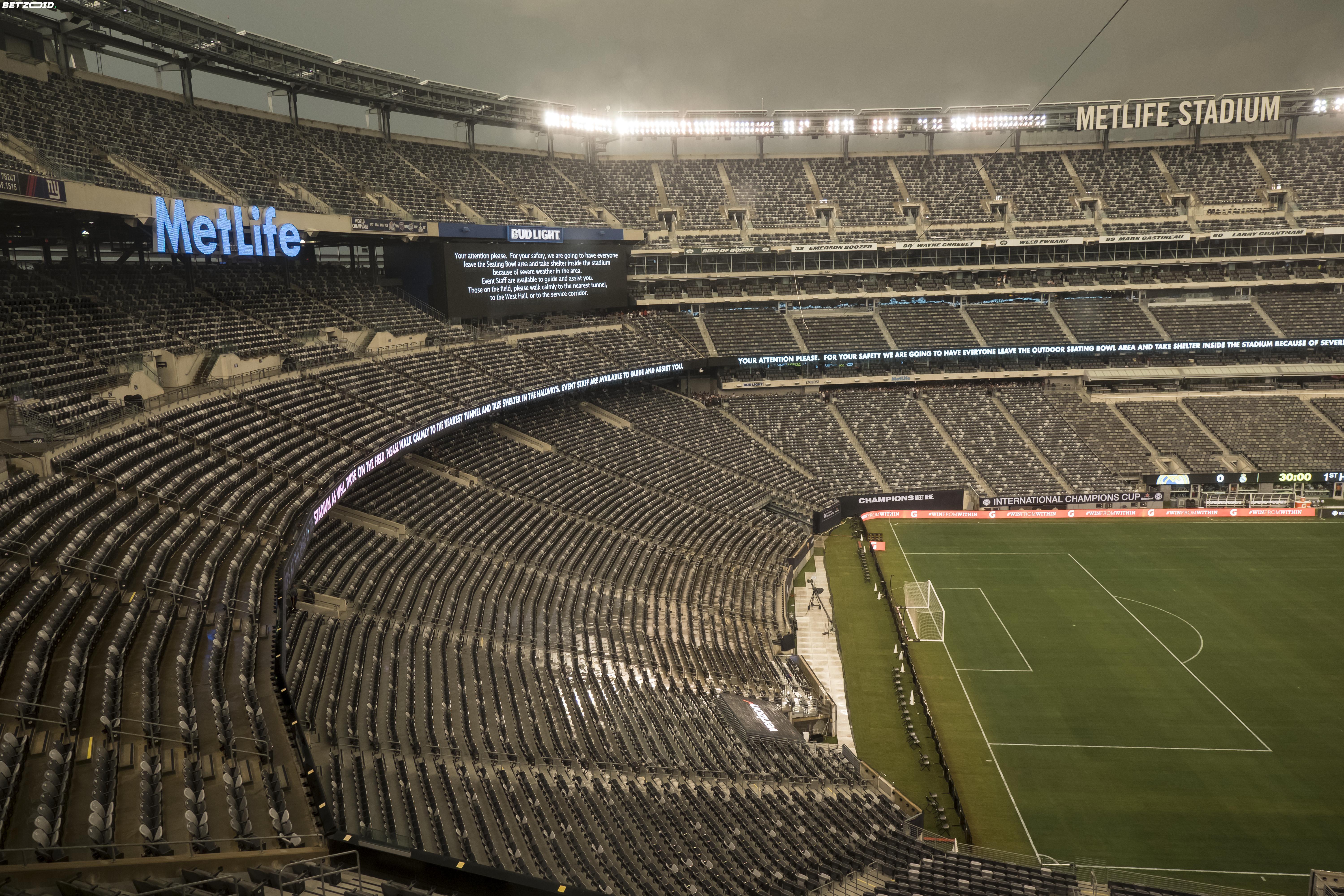
North America doesn't do weather quietly. And the 2026 World Cup, spread across open-air stadiums from New Jersey to Dallas, is one thunderstorm away from a serious operational headache.
No matches have been delayed by weather yet — but the forecast for Norway vs. Senegal at MetLife Stadium on June 22 has raised the question that was always coming: what actually happens when lightning rolls in?
The 30-minute rule
The standard protocol across U.S. sports events is straightforward. If lightning is detected within a set radius of the stadium — typically eight or ten miles, depending on the venue and officials — play stops immediately and a mandatory 30-minute delay begins. If another strike is detected inside that window, the clock resets. All of it.
Players go back to the dressing rooms. Fans leave their seats for the concourse. Nobody's on the pitch or in the stands until the all-clear sounds.
FIFA, when asked for specifics, gave a response that was notably light on specifics: the federation confirmed it has "dedicated meteorological support throughout the tournament" and will follow "public safety standards." They didn't confirm the radius, the exact delay length, or anything else that would actually help fans plan around it. Draw your own conclusions about how ready they are to communicate in real time.
The Club World Cup was a warning shot
Last summer's Club World Cup match between Chelsea and Benfica in Charlotte was halted by a lightning delay that stretched to nearly 90 minutes. That incident sparked a genuine debate about whether U.S. summer weather and major international football are compatible — not just logistically, but in terms of the product on the pitch after players sit cold for an hour and a half.
The World Cup will only amplify that conversation if it happens on a bigger stage. A knockout match stalled by storms, with broadcasters cutting to empty stands and confused commentary, is not a great look for a tournament already working hard to prove North America deserves this event.
With summer heat, afternoon humidity, and the sheer number of open-top venues on the schedule, the question isn't really if a delay happens — it's when, and how smoothly FIFA handles it when it does.