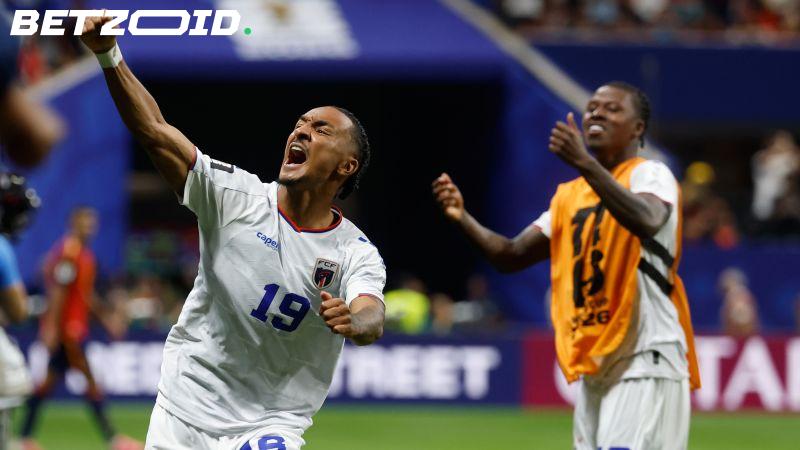
Cape Verde haven't won a single game at this World Cup. They also haven't lost one. And right now, they're one of the most talked-about teams in the tournament.
In their first-ever World Cup appearance, the archipelago nation of 530,000 people held Spain — pre-tournament favourites — to a 0-0 draw despite facing 27 shots, seven on target. Then they came back from 2-1 down against Uruguay, the original world champions, to level at 2-2. Goalkeeper Vozinha has become a national hero. The nation is giddy. Statistically, Spain's barrage alone should have produced at least two goals. It produced none.
That's not a fluke. That's a result.
What a draw is actually worth
Draws have come thick and fast in this World Cup's group stage — 14 of the first 48 matches ended level, a higher rate than usual. And yet the conversation around them keeps defaulting to disappointment, particularly from audiences in North America, where the concept of a tie is culturally dismissed. There's even an idiom for it: "A tie is like kissing your sister."
But the math doesn't lie. One point beats zero points. Iran, a team that has never made it out of the group stage, is now within reach of advancing after draws against Belgium (0-0) and New Zealand (2-2). A draw in their final game against Egypt could be enough. For a side with their history, that's not settling — that's a genuine achievement.
Philipp Gollner, a football historian and podcast host, puts it plainly: "Imagine you're playing a kind of a fortress, a team that never gives away any point at home, and you go there and you battle them to nil-nil. That ought to count for something."
It should. And from a betting standpoint, this shift in competitive balance matters. The traditional powerhouses are no longer guaranteed to bully smaller nations into submission — which means the draw market in group stages deserves far more serious attention than it typically gets.
Why the gap is closing
The deeper reason for all these draws isn't luck or bad finishing — it's structural. Football cultures are converging. Players from smaller nations are being trained in international academies and competing weekly in Europe's top leagues. Coaches across the board are now drilling defensive organisation as a primary tactic: pressing, tight formations, denying space.
"Even if you don't have a brilliant offense, and if you don't have a Messi, you can still try to close shop in the back," Gollner says.
Curaçao — population 158,000 — held Ecuador to a 0-0 draw with goalkeeper Eloy Room making 15 saves, tying a World Cup record. Fans danced in the streets. The Netherlands and Japan played out a 2-2 draw that commentators immediately called an instant classic. A scoreless game between two evenly matched sides, or a game where a heavy underdog digs in and refuses to buckle, can be as tense and watchable as any 4-3 thriller.
Former USWNT midfielder Sam Mewis, who knows what it feels like to be expected to win every game, acknowledges the nuance: "Unless you're really an underdog fighting away from home against all odds, most players are too competitive to think a draw is a win."
She's right about elite teams. But for the Cape Verdes and Curaçaos of this tournament, a draw isn't a failure of ambition. It's the ambition, fully realised.
- Cape Verde: 0-0 vs Spain, 2-2 vs Uruguay — still in contention to advance
- Iran: 0-0 vs Belgium, 2-2 vs New Zealand — a draw vs Egypt could see them through
- Curaçao: 0-0 vs Ecuador — Room's 15 saves tied a World Cup record
- Netherlands vs Japan: 2-2, already being called one of the tournament's best matches
"Not every encounter in life is decided with a winner or a loser," Gollner says. "Sometimes there's a compromise that both sides have to live with."
Cape Verde are living with theirs just fine.