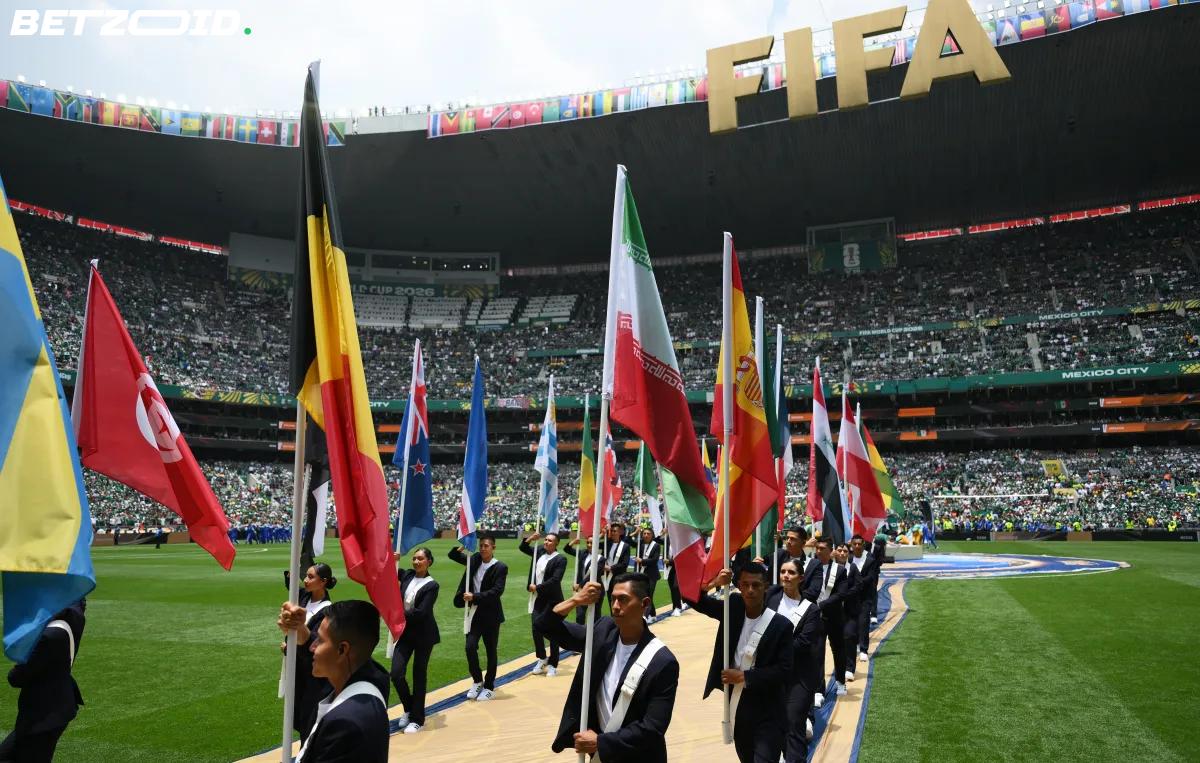
The 2026 World Cup is underway — and before a ball was kicked competitively, the US immigration system had already made its mark on the tournament. Referees, team officials, photographers, and ordinary fans have all been turned away or blocked from attending. This isn't a footnote. It's a defining context for a World Cup unlike any before it.
The referee who never got his moment
The starkest case is Omar Artan. The Somali referee — CAF's Referee of the Year in 2025 and one of only 52 referees appointed by FIFA for the entire tournament — was detained for 11 hours at Miami International Airport before being refused entry. He held a diplomatic passport. He had a valid US visa. None of it mattered.
CBP cited "vetting concerns." Somalia sits on Trump's travel ban list. Artan would have been the first Somali referee ever to officiate a World Cup match. That record now belongs to someone else.
Iran's situation is more complicated, and more politically charged. The 2026 World Cup is the first in history where a host nation is actively at war with a participating team — the US and Iran have been in conflict since February. Several key managerial and administrative members of Iran's delegation were denied visas entirely. The players themselves only received clearance 10 days before their opening match, and they're operating under restrictions that would be unthinkable for any other side: flying in the day before each game, then returning to a base in Tijuana, Mexico. Trump said publicly he didn't think Iran's team should stay on US soil "for their own life and safety." Whatever you make of the politics, it's an extraordinary statement about a team that qualified legitimately for the tournament.
Staff, photographers, and fans caught in the net
Iraq's experience has been less dramatic but no less disruptive. Photographer Talal Salah was denied entry after more than 10 hours of detention and a phone search at O'Hare. Star striker Aymen Hussein — a player Iraq genuinely needs for a deep run — was also held for nearly seven hours and had his device inspected before eventually being let through. The disruption to a team's preparation in the final days before a tournament opener is not trivial. Any team missing its striker for seven hours of airport questioning the week of a World Cup match has a legitimate grievance.
Then there are the Scottish fans — not exactly a group you'd expect to flag immigration concerns. Several had their ESTA travel authorizations flipped from "approved" to "travel not authorized" with no explanation. Some are now scrambling to apply for full visas, a process that takes weeks. Trump addressed it at a White House briefing, saying the US was working to "make sure the right people come into our country." Some fans may simply miss the tournament entirely.
- Omar Artan – Somali referee, FIFA-appointed, denied entry at Miami after 11 hours of detention
- Iran delegation – Multiple managerial and administrative staff denied visas; players admitted under severe travel restrictions
- Talal Salah – Iraq team photographer, denied entry at O'Hare after 10+ hours and phone search
- Aymen Hussein – Iraq striker, held for nearly seven hours at O'Hare, eventually permitted entry
- Scottish fans – Multiple supporters had ESTA approvals revoked without explanation
- Fans from 39+ countries – Fully or partially restricted under Trump's travel framework; visa processing paused or limited in a further 75 countries
That last point is the one with the longest tail. A US travel framework now fully or partially restricts entry for nationals of 39 countries, with visa processing frozen or severely curtailed in 75 more. The 2026 World Cup was supposed to be the biggest in history by attendance and scope. For a significant portion of the planet, it's already over before kickoff.