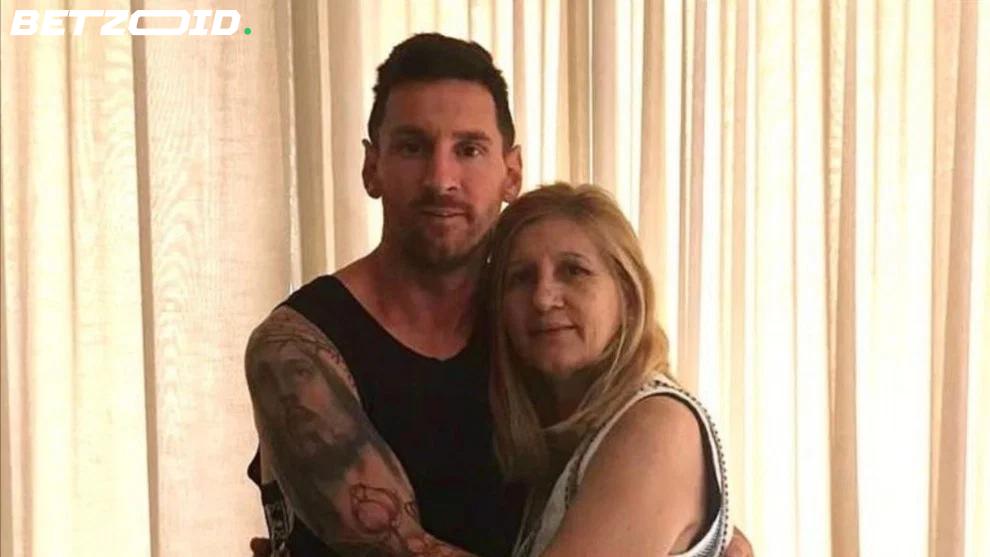
"What makes me proud is who Leo is as a person." Jorge Messi said that — not about a Ballon d'Or, not about the 2022 World Cup, but about his son as a human being. That framing tells you everything about how Lionel Messi was raised.
Jorge Messi worked at Acindar, a steel manufacturing plant in Villa Constitución. Celia Cuccittini worked part-time at a factory and cleaned homes. They grew up in the same Las Heras neighborhood of Rosario, married in 1978, and built a modest, stable life. What they did next — uprooting that life for a ten-year-old's football dream — wasn't inevitable. It was a choice, made under real financial pressure.
A diagnosis that changed everything
When Messi was ten, doctors confirmed he had Growth Hormone Deficiency. The monthly treatment was expensive, long-term, and beyond what Newell's Old Boys or other local clubs could fully cover. That medical reality is what pushed the family toward Barcelona — the club agreed to help fund his treatment, and suddenly Spain became the only viable path forward.
The move fractured the family in ways Jorge has spoken about plainly. "The first three years Leo saw his mother only every four months." Celia eventually had to split time between Rosario and Barcelona, managing the family across two countries. Messi, still a teenager, admitted he was "really sad and homesick" but never considered leaving. That kind of resolve in a kid that age doesn't appear from nowhere.
He has Celia's face tattooed on his left shoulder blade. That's not symbolism for a magazine feature — it's a fairly direct statement about where he thinks his story starts.
Italian roots, Argentine grit
Both Jorge and Celia have Italian heritage, which tracks with Rosario's demographic history — the city absorbed waves of Italian immigrants in the late 19th century, and that lineage runs through countless Argentine families. Messi later acquired Spanish citizenship through his years at Barcelona, but his identity has always been anchored in Argentina, something the 2022 World Cup made viscerally clear.
When Argentina lifted the trophy in Qatar, Jorge and Celia were there. After everything — the treatment costs, the separations, the criticism of their son for not "feeling it" for the national team — they were there.
Celia addressed that criticism directly in a 2018 television appearance: "When people say that he doesn't feel it or that he plays for the national team out of obligation, that hurts as a mother and as a family."
Jorge put it simply in Bruno Pisano's book My Son The Soccer Player: "He always played for fun and we were happy to see him play not because we thought he'd be a triumphant success but simply because he enjoyed it and did it well."