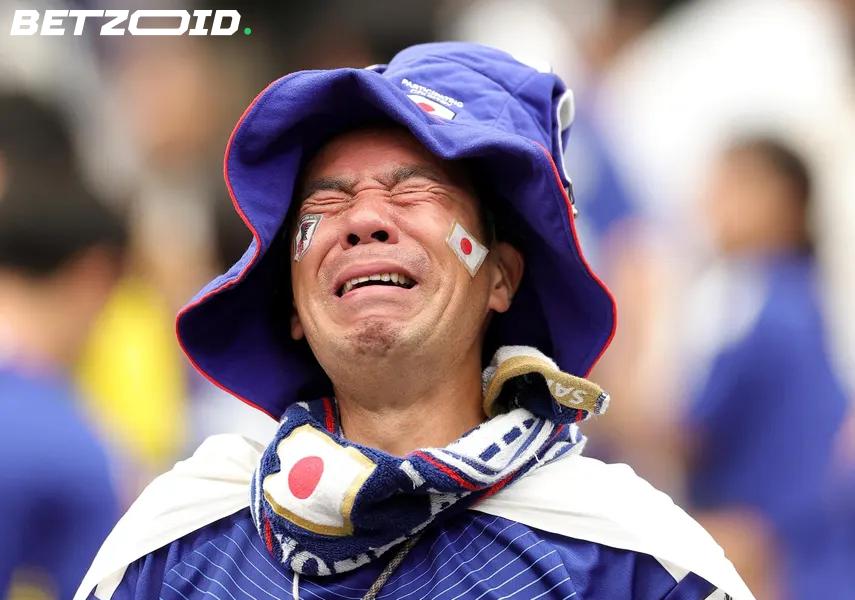
Asia sent teams to this World Cup and watched most of them go home early, quietly, without leaving much of a mark. It wasn't a fluke. It was a pattern — and one that gets harder to explain away with each edition.
Start with the basics: China and India didn't even qualify. Combined, that's roughly three billion people with no national team in the tournament. China's only World Cup appearance was in 2002. India has never qualified outright in the modern era. Both countries had broadcasters so uninterested that FIFA ended up accepting significantly less than its asking price for rights fees — a telling detail that rarely gets the attention it deserves.
The reasons differ. China has structured itself around basketball, with mass participation taking priority over elite football development. India runs on cricket and Bollywood, a cultural pairing so dominant it leaves almost no oxygen for football to breathe. These aren't short-term problems. They're structural, generational, and deeply embedded.
Japan's ceiling, South Korea's collapse
Japan did qualify, and reached the last 32, which sounds reasonable until you remember that Japanese clubs have won the AFC Champions League eight times. Urawa Red Diamonds are among the competition's all-time top winners. Continental dominance should mean something — and at the World Cup level, it doesn't. That gap is the real story.
Japanese players largely ply their trade outside the elite European clubs, which limits their exposure to the highest standard week in, week out. South Korea, by contrast, can call on Lee Kang-in at Paris Saint-Germain and Kim Min-jae at Bayern Munich — and still exited in the group stage. Their coach resigned. The government intervened. Son Heung-min, now at Los Angeles FC, couldn't drag the team through, and for a squad with that level of individual quality, crashing out at the groups isn't a disappointment — it's a failure that demands real answers.
South Korea's early exit makes their price in any future tournament look generous until they demonstrate they've actually addressed what went wrong here.
Qatar's fading generation, Saudi Arabia's ticking clock
Qatar won the Asian Cup in 2019 and 2023. That golden generation is now ageing, and without the motivation of a home World Cup to build around, the path forward is genuinely unclear. A successful 2036 Olympic Games bid might provide some structural focus, but that's a long runway for a very uncertain destination.
Saudi Arabia's situation is more urgent. They host the 2034 World Cup and finished bottom of their group. Cristiano Ronaldo's arrival at Al-Nassr generated enormous global coverage, but it did nothing to produce a deeper domestic talent pool — which was probably predictable from the start. The spending looked like a statement. It turned out to be a distraction.
Officials in Riyadh have roughly a decade to build a national team capable of making the knockout rounds on home soil. Based on this tournament, that looks like a stretch.
Iran drew all three group games and went home without a win, which was almost the least of their concerns. Geopolitical tensions meant their training camp had to be relocated from the United States to Mexico. Special immigration measures were implemented for the squad's entry and exit. Whatever tactical preparation was planned, it happened under circumstances no other team at the tournament faced.
- Jordan and Uzbekistan both made their World Cup debuts and exited in the group stage — a result that arguably justifies FIFA's decision to expand the tournament, even if the outcomes were predictable.
- Japan remain Asia's benchmark but hit a ceiling that continental trophies can't explain away.
- South Korea's squad has European pedigree and still couldn't get out of the groups.
- Saudi Arabia's 2034 hosting rights now carry a serious credibility problem.
The pattern across every Asian confederation team points to the same underlying issue: the gap between continental success and global competitiveness hasn't closed. If anything, this tournament showed it's still wide open.