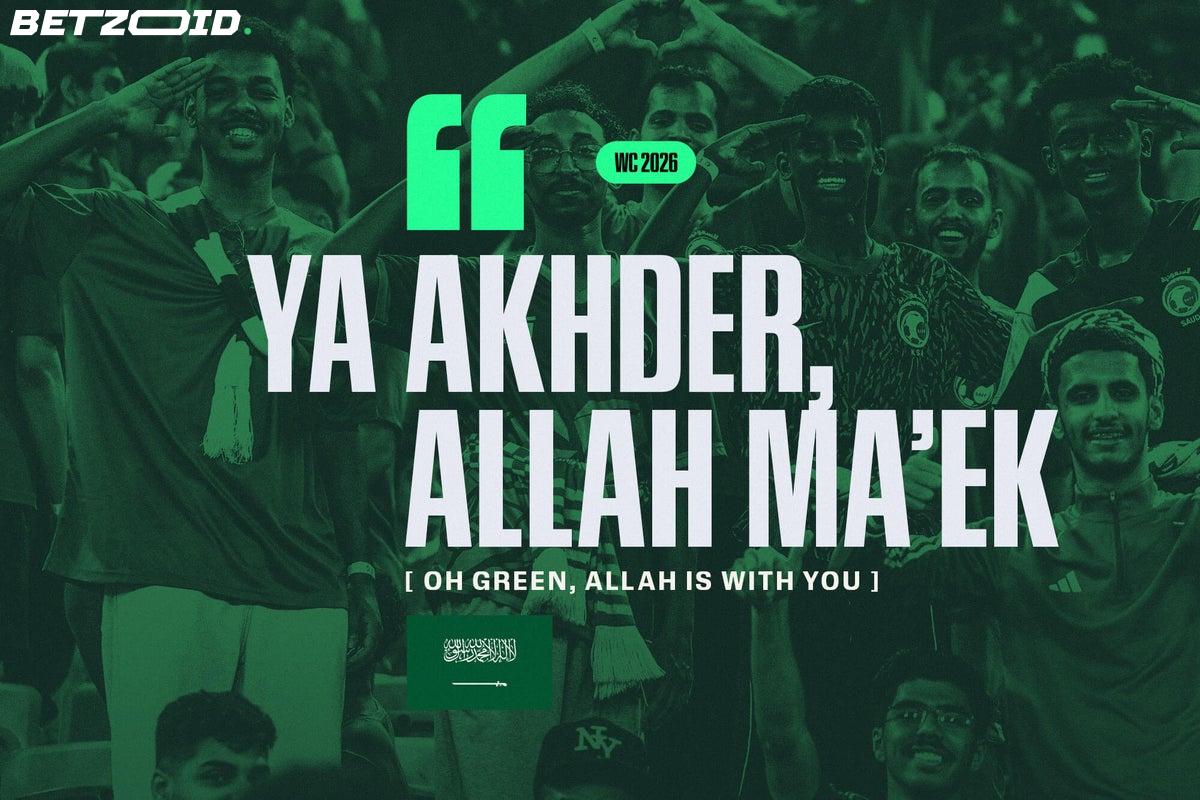
"For Saudis, football is emotional fuel," says Galaway Aladdani, 46, who was in the stands in Qatar when Saudi Arabia did the unthinkable and beat Lionel Messi's Argentina. He's not wrong — but fuel burns unevenly, and right now, a lot of that energy is going somewhere other than the national team.
The Green Falcons open their 2026 World Cup Group H campaign against Uruguay on June 15 at Hard Rock Stadium in Miami. They arrive with a new head coach — Greek manager Georgios Donis, appointed just 59 days before that opener after the federation parted ways with Hervé Renard — and a fanbase that is passionate but honestly conflicted about how far this squad can actually go.
Club first, country second — and that's a problem
The Saudi Pro League's explosion in global profile has had a complicated effect on the national team. Cristiano Ronaldo, Karim Benzema, Neymar — the influx of foreign stars at clubs like Al Hilal and Al Ittihad has raised the league's ceiling dramatically. What it's done to local player development is another story.
"Today, local players struggle to find opportunities," Aladdani says. "With more than eight foreign players in some teams, Saudi players often don't get enough playing time. That makes it very hard for new talent to emerge."
Arafan Al-Ghamdi, a retired sports administrator from Jeddah, draws the sharpest comparison: "Look at the Morocco national football team. Our league may be stronger financially, but their national team is stronger because many of their players compete at elite European clubs." That's the trade-off Saudi football has made — and it shows in the Falcons' squad depth heading into North America.
The club tribalism feeding all of this is vivid. Manar Al-Ghamdi, a 38-year-old statistics lecturer, supports Al Ittihad — inherited loyalty from her father. Her husband backs Al Hilal. When those two clubs meet, she says simply, "we do not agree on anything." That's the texture of Saudi club football right now: intense, personal, tribal. The national team inspires something different — unity, pride, but not quite the same fire.
Argentina changed everything — for one day
That 2-1 win over Argentina in Qatar still echoes. The day after the result, Saudi Arabia declared an official public holiday. People flooded into public squares, sang, beat drums, waved green flags. Manar Al-Ghamdi remembers the spontaneous chants about Messi breaking out in the moment — unscripted, unrepeatable.
"The whole country was united," she says. And then the Falcons lost their next two group games and went home.
That's the tension Saudi fans are navigating heading into 2026: the memory of a moment that felt historic, set against fifteen years of underperformance at the global level. The Argentina win was genuine. It was also, in Aladdani's own word, "exceptional" — meaning it was the exception, not the standard.
- Saudi Arabia have won just four matches across six World Cup appearances
- They have not reached the knockout stages since their debut in 1994
- Head coach Hervé Renard was dismissed with under two months to go before the tournament opener
- Georgios Donis takes charge having previously worked in the Saudi Pro League and with AEK Athens
The expectations from the fanbase are calibrated accordingly. "We do not ask to win the World Cup," says Manar. "We only ask for spirit, commitment and performances that make the people proud." Arafan Al-Ghamdi, who still cites 1994 as Saudi Arabia's peak on the world stage, is more direct: "We do not ask for miracles. We only want a good level of performance, because we know the team is not in its best condition."
Late coaching changes rarely produce tournament miracles — and the odds on Saudi Arabia advancing from a group containing Uruguay reflect that reality. The emotional fuel is there. Whether Donis can light anything with it in 59 days is the question nobody in Riyadh or Jeddah has a comfortable answer to.