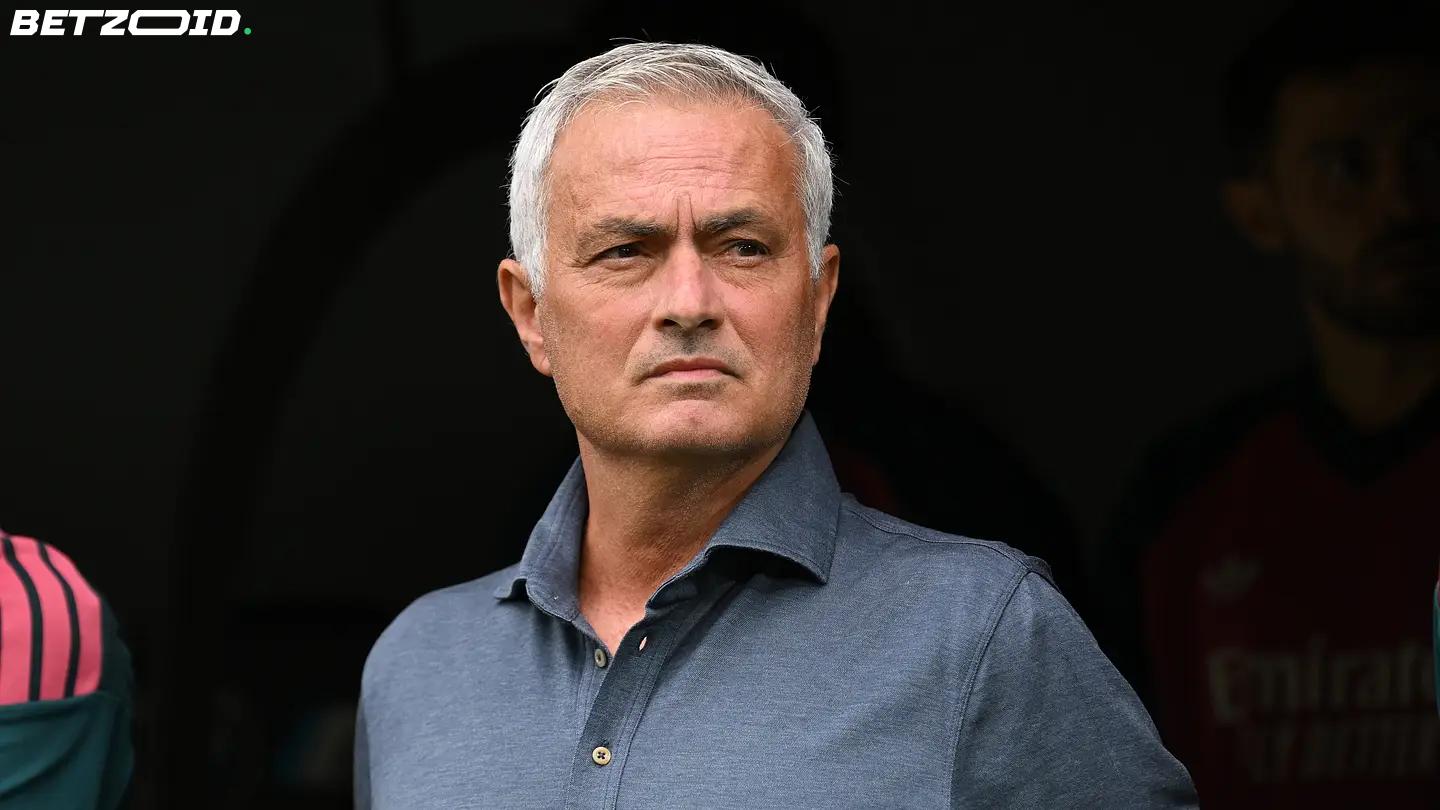
Real Madrid spent €225 million this summer and still managed to leave the window with their most obvious weakness unaddressed. That tension is going to define their season.
Six first-team additions, the club's biggest outlay since 2019, a new manager in José Mourinho, and a captain change with Federico Valverde inheriting the armband from the departed Dani Carvajal. Los Blancos look rebuilt on paper. Whether the rebuild holds up in February, in the Bernabéu, when it matters most — that's a different question.
The attack is not the problem
Kylian Mbappé chasing a third straight Pichichi. Vinícius Júnior coming off a FIFA Best Men's Player award and finally settled after signing his extension. Jude Bellingham operating as a genuine No.10 with the kind of license he had with England at the World Cup. On paper, this is as good as any front three in Europe.
Then there's Yan Diomande. At €125 million, Madrid's record signing, he's not a rotation option — he's expected to own the right wing. He's being eased in carefully, but that investment only makes sense if he's starting the games that count by December. Arda Güler, Brahim Díaz, and Carlos Espí — a 21-year-old striker earmarked as a Joselu-style impact sub — add real depth. When Rodrygo returns from injury, Mourinho will have selection headaches most managers would take.
Thibaut Courtois is still among the world's best goalkeepers. Marc Cucurella, who Mourinho reportedly demanded specifically for the left-back role, and Bernardo Silva add experience and physicality to a squad that previously felt a little soft around the edges.
The midfield problem no one wants to say out loud
Rodri said no. Spain's World Cup-winning captain turned down Real Madrid — one of the most striking rejections in recent transfer history — and Madrid's response was essentially to move on without finding an alternative. That's a gamble.
Since Toni Kroos retired, Madrid have been without a genuine deep-lying controller, someone who sets the tempo and protects the defense when the press breaks down. Aurélien Tchouaméni is the squad's only specialist defensive midfielder and, while underrated in some quarters, he's not that player. Valverde, Camavinga, Silva, and potentially a repurposed Güler fill the two pivot roles in Mourinho's preferred 4-2-3-1, but none of them are natural fits for the system's more disciplined defensive demands.
In the big games — Clásicos, Champions League knockouts — that absence will be tested. Madrid's title odds and European price hinge partly on whether Mourinho finds a workable combination, or gets exposed in transition against teams with a genuine midfield anchor.
Centrally at the back, the picture is solid but not elite. Antonio Rüdiger at 33 with managed minutes, Dean Huijsen growing into a ball-playing role, Ibrahima Konaté and Éder Militão in reserve. Functional. Trent Alexander-Arnold at right back brings creativity but, by his own admission, offers less defensively — and Madrid lack a genuinely defensive option on that side.
Real Madrid's strongest starting XI
- GK: Thibaut Courtois
- RB: Trent Alexander-Arnold
- CB: Antonio Rüdiger
- CB: Dean Huijsen
- LB: Marc Cucurella
- CM: Federico Valverde
- CM: Aurélien Tchouaméni
- RW: Yan Diomande
- AM: Jude Bellingham
- LW: Vinícius Júnior
- ST: Kylian Mbappé
Mbappé is still waiting for his first major trophy since joining Madrid in 2024. The squad around him is better now than it was last season. Whether the midfield structure Mourinho builds can hold everything together is the question that will determine if this window was a success — or an expensive step sideways.