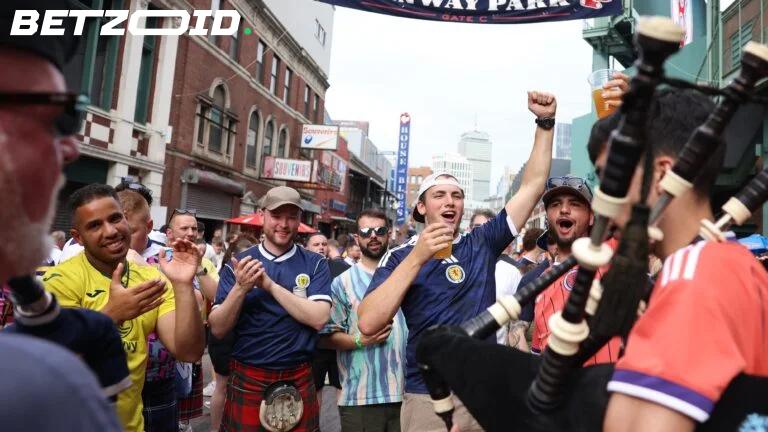
"Boston, you've embraced us like long-lost cousins who turned up unannounced, drank all your beer, decorated your statues, and somehow remained welcome." That's the Tartan Army signing off on one of the more genuinely wholesome stories the World Cup has produced — a full-page thank-you ad placed in The Herald, a Scottish newspaper, mirroring one The Boston Globe had already run for them.
Two fanbases, two cities, two full-page newspaper ads. That's not something you plan. It's something that happens when a travelling support actually earns goodwill rather than just claiming it.
What the Tartan Army actually did in Boston
It wasn't just singing in pubs. Over nearly two weeks, Scotland fans attended Red Sox games at Fenway Park, donated to local charitable causes, turned train stations into impromptu singalongs, and — inevitably — draped traffic cones over the city's statues. The Globe's ad captured it neatly: "You turned Fenway into a football ground, and an ordinary June into something we'll be talking about for years."
Boston's response went beyond sentiment. Mayor Michelle Wu signed a letter of intent to formally pair Boston and Glasgow as sister cities starting next year. New England Patriots owner Robert Kraft has raised the idea of the Patriots playing an NFL game in Scotland. A fanbase showed up, behaved well, and left the city wanting more of them. It's a rare outcome.
The Herald's ad closes the loop with the kind of line that will follow the Tartan Army into every tournament from here: "Until next time Boston: No Scotland, No Party."
Scotland didn't win the World Cup. They may not have even made it past the group stage with anything to spare. But they've walked away from Boston with a sister city, a potential NFL partnership, and a reputation that most nations' supporters would trade a lot for. Sometimes the off-pitch story is the one worth watching.